Global demand for performance apparel is expanding, but a growing market does not guarantee a reliable supplier. Grand View Research estimated the global sports apparel market at approximately US$213.8 billion in 2023, with projected growth through 2030. For buyers, that scale creates opportunity—and more choices to evaluate. Custom tracksuit manufacturing depends on practical details: fabric consistency, fit grading, decoration quality, production capacity, and dependable delivery.
Material choices deserve close attention. Textile Exchange’s Materials Market Report 2024 estimated that polyester represented about 57% of global fiber production in 2023. That figure highlights why buyers should ask manufacturers about fabric composition, recycled-content claims, testing, and documentation—not just color cards. A sample that looks good under showroom lights may feel different after repeated washing. Small details matter.
This guide reviews seven custom tracksuit manufacturers for global buyers, focusing on capabilities that can be checked: product range, customization options, sampling process, quality controls, and communication. It also considers whether a supplier can explain minimum order quantities and timelines clearly. No supplier is perfect. A polished website is not proof of consistent production, and an attractive quote may leave important costs unclear. Use the shortlist as a starting point, then verify claims directly, request a sample, and confirm specifications in writing before placing an order.
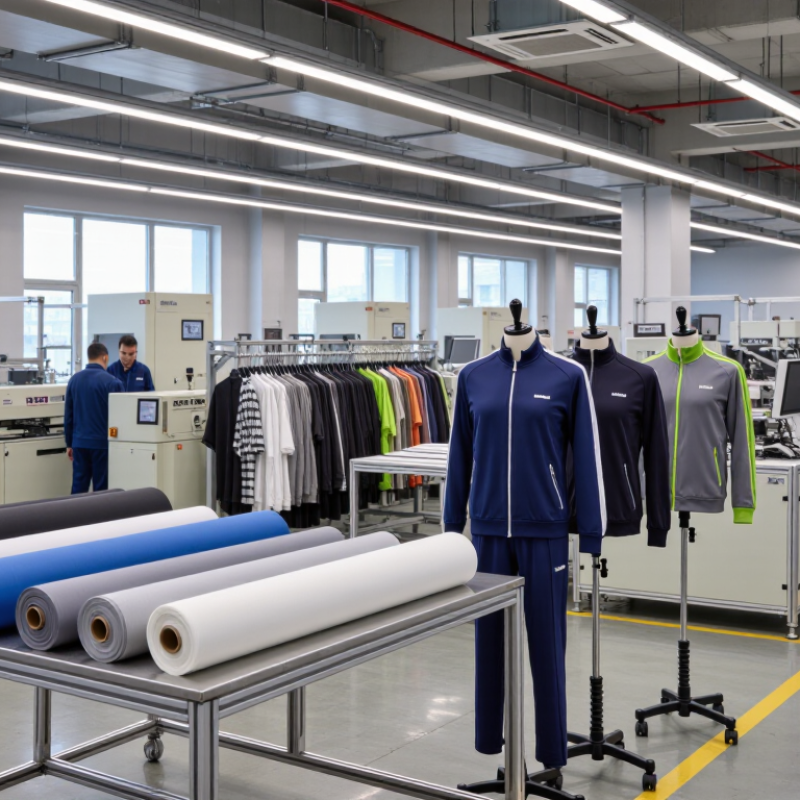
Understanding Custom Tracksuit Manufacturing for Global Buyers
Custom tracksuit manufacturing begins with a clear product brief, not just a sketch. Buyers define the intended use, fabric weight, colors, trims, and size range. A training set may need breathable, stretchable fabric, while a warm-up suit may prioritize durability and a soft inner finish. Small details matter. Zipper length, pocket depth, and waistband tension can change how a garment feels.
A useful tech pack gives the factory measurements, stitching references, artwork placement, and approved materials. The sample then tests those choices in real form. A first sample can look right yet feel restrictive when worn; appearance alone is not proof of fit. Request movement checks, wash testing, and measurement records before approving bulk production. This step is often rushed.
Global buyers should also confirm minimum order quantities, sample timelines, production capacity, and shipping terms in writing. Size grading needs careful review because body measurements and fit preferences vary across markets. Ask how fabric shades and finished measurements are checked during production. Small differences can happen between batches, so agree on acceptable tolerances early. Not every factory process will be equally transparent. Clear questions, documented approvals, and realistic lead times help buyers spot gaps before they become costly delays.
Key Criteria for Evaluating Tracksuit Manufacturers
Choosing a tracksuit manufacturer starts with evidence, not a polished factory tour. Request a pre-production sample in your chosen fabric weight, color, and trim. Test seams, wash shrinkage, zipper function, and logo placement against written tolerances. Check size grading too; a sample in one size cannot prove every size will fit well. Small details matter.
Material claims deserve scrutiny. Textile Exchange’s Materials Market Report 2024 estimates that global fiber production reached 124 million tonnes in 2023, with polyester accounting for about 57%. Ask for fabric composition records and documentation supporting recycled-content claims. Where available, match documents to specific fabric lots. A certificate alone cannot guarantee consistent quality.
Capacity and delivery need equal attention. The World Bank’s Logistics Performance Index 2023 reports an average 44 days for goods to move from a port of entry to their destination, with a 10-day standard deviation. Treat this as context, not a route-specific forecast. Ask manufacturers to state monthly capacity, minimum order quantities, and sample and bulk timelines. Review audit scope and corrective-action records. A neat audit is not the whole story. When the order is substantial, consider an independent assessment. Communication can seem minor until specifications change.
7 Best Custom Tracksuit Manufacturers for Global Buyers
Key Criteria for Evaluating Tracksuit Manufacturers
Suggested buyer scorecard weights, totaling 100%—not market-survey results. Compare manufacturers using product samples, written specifications, compliance documents, production plans, and export terms.
Seven Custom Tracksuit Manufacturers and Their Specialties
A dependable custom tracksuit manufacturer should match the buyer’s fabric, fit, order size, and delivery needs. These seven supplier profiles highlight different strengths; actual capabilities vary, so verify them with samples and written specifications.
A performance-knit specialist focuses on moisture-wicking polyester, stretch recovery, and flat seams for training sets. A cut-and-sew workshop offers flexible panel shapes, contrast piping, and small-batch development. A sublimation-focused factory prints designs across fabric panels before assembly, helping create continuous graphics. Check color samples: digital previews can look brighter than finished cloth. An embroidery specialist handles chest crests and stitched lettering, but dense designs may feel stiff against lightweight fabric.
A recycled-fiber producer can source polyester made with recycled content and provide supporting material documentation. An inclusive-fit manufacturer develops broader size ranges, grading patterns across body shapes rather than simply enlarging one block. A bulk-production facility suits repeat orders, consistent sizing, and planned seasonal runs; ask how it checks measurements across batches. Finally, a sampling-led manufacturer supports prototype revisions, from collar height to zipper length, before larger production begins. Fit matters. Request a sample in the intended fabric, wash it, and inspect seams, shrinkage, and print alignment. I would not choose on price alone; a low quote can omit packaging, testing, or revision costs.
Comparing Product, Customization, and Production Capabilities
Comparing seven custom tracksuit manufacturers requires more than checking catalog photos. Global buyers should examine fabric weight, stretch recovery, seam construction, size grading, and sample consistency. Textile Exchange’s Materials Market Report 2024 estimates that global fiber production reached 124 million tonnes in 2023, with polyester accounting for 57%. That scale makes fiber choice important, but it does not prove a finished garment will perform well. Ask for fabric specifications and test results.
Customization can range from color blocking and logo placement to custom patterns, trims, labels, and packaging. Request a physical sample showing the actual fabric, zipper, stitching, and print or embroidery method. Details matter. A digital mock-up cannot reveal whether a waistband twists or a print cracks after washing. Ask how revisions are handled, and confirm which options affect minimum order quantities or price.
Production capability needs equally close scrutiny. Compare stated monthly capacity with realistic sample approval, bulk production, and shipping timelines. Ask how the factory checks measurements, fabric shade, and defects across a production run. A low sample price can still mislead. One weakness in this comparison is that supplier-reported capacity is difficult to verify without a site audit or credible production records. Look for clear answers, documented quality procedures, and evidence from comparable orders.
How to Choose a Manufacturer for Your Market and Order Needs
When comparing custom tracksuit manufacturers, start with the needs of your market, not the lowest quoted price. Check whether the factory can handle your expected order volume, size range, fabric weight, and decoration method. Ask for its minimum order quantity and a written breakdown of sample, production, and shipping timelines. Small details matter. A sleeve that twists after washing can create costly returns.
Fabric availability deserves careful attention. Textile Exchange’s 2024 Materials Market Report estimates that global fiber production reached 124 million tonnes in 2023, up from 116 million tonnes in 2022. For buyers, that expanding supply does not guarantee consistent quality or availability. Request fabric composition, test results, and confirmation that repeat orders can use comparable materials. A swatch feels different from a finished garment. Test a sample for fit, seam strength, colorfastness, and comfort before approving bulk production.
Match the supplier’s process to your actual buying pattern. A small retailer may value flexible quantities and responsive sampling; a distributor may need dependable capacity and clear carton specifications. Ask how defects are recorded, who approves size grading, and how production updates are shared. Get answers in writing. One trade-off is easy to miss: a lower unit price may come with a higher minimum order or longer lead time. Compare the full landed cost, then choose the manufacturer whose communication and quality checks suit your market.
FAQS
Check the fabric weight, color, seams, zipper, and logo placement. Wash it and measure shrinkage. One size is not enough.
Request composition records and supporting documents. Match them to specific fabric lots when possible. A certificate alone proves little.
Ask for monthly capacity, minimum order quantities, and sample and bulk timelines. Confirm details in writing.
Review audit scope and corrective-action records. For a substantial order, consider an independent assessment. A tidy audit may miss things.
Sublimation can create continuous graphics across fabric panels. Compare a color sample with the digital preview; finished cloth may look duller.
Dense stitching can feel stiff against thin fabric. Test the chest crest on the intended material before approving production.
Ask how patterns are graded across sizes and body shapes. Inspect several sizes, not just one enlarged sample. Fit matters.
Not always. Check whether packaging, testing, and revisions are included. A cheaper quote can leave costs unclear. I might still overlook something.
Conclusion
Custom tracksuit manufacturing involves more than selecting fabric and adding a logo. Global buyers should assess a supplier’s experience, material options, sample process, quality controls, communication, production capacity, and delivery timelines. These factors help determine whether a manufacturer can meet the needs of a particular market while maintaining consistent fit, finish, and performance across an order.
The seven manufacturers in this overview represent a range of specialties, from flexible customization and smaller production runs to broader product development and larger-scale capacity. Comparing their product offerings, customization options, and production capabilities can help buyers identify a suitable partner. Before making a choice, consider your target customers, preferred materials and designs, order volume, budget, and schedule, then confirm key details through clear specifications and sample approval.

 Talk to production646-681-4212