Choosing the China Top Custom Basketball Jersey Manufacturer requires more than comparing factory prices. It requires evidence.
A reliable supplier should show real production lines, fabric samples, stitching details, and completed team orders. Look closely at the neckline. Check the seam strength. Examine how printed numbers survive repeated washing. These small details reveal manufacturing discipline.
In Custom basketball jersey manufacturing, performance depends on balanced decisions. Polyester weight affects breathability. Mesh placement influences airflow. Dye-sublimation supports detailed designs, while stitched elements add texture and durability. A factory should explain these differences clearly, not hide behind attractive catalogs.
Sportswear product-development consultant John M. Hines says, “A jersey is successful when design, comfort, and production accuracy meet on the court.” That principle sounds simple. It is often neglected.
The best Chinese manufacturers usually offer sampling before bulk production. They confirm measurements, color references, logos, labels, packaging, and delivery schedules. They also document quality inspections. This reduces misunderstandings between artwork approval and finished garments.
Still, no supplier gets every detail right. A sample can pass inspection while bulk production reveals uneven thread tension or slight color variation. That possibility deserves honest discussion. Buyers should request pre-production samples, measurable tolerances, and photographs from different production stages.
This guide examines how to evaluate China-based jersey manufacturers, from factory capability and fabric selection to customization technology and after-sales support. It focuses on practical signals rather than impressive promises. The right partner should not only produce attractive jerseys. It should produce consistent jerseys, communicate quickly, and accept responsibility when something needs improvement.
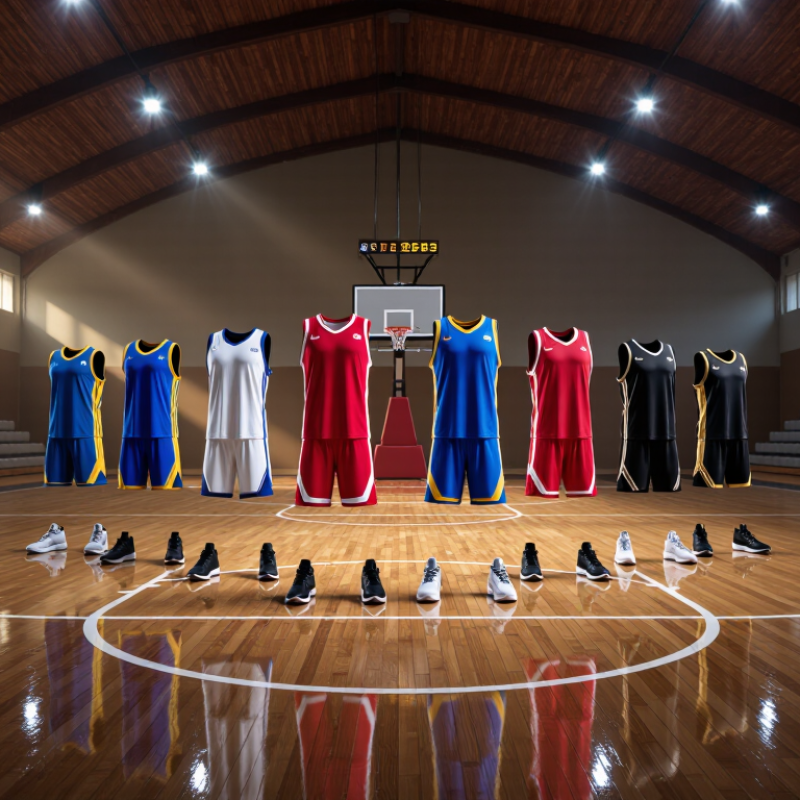
China’s custom basketball jersey industry has grown into a large, highly segmented manufacturing market. Production ranges from small workshops to export-oriented factories with automated cutting and digital printing. This scale supports team orders, school programs, amateur leagues, and event merchandise. Many suppliers can handle low minimum quantities, while larger facilities manage several thousand jerseys per order.
Export demand is moving toward shorter lead times and more flexible customization. Buyers increasingly request names, numbers, breathable mesh, reinforced seams, and size samples before production. North America, Europe, Australia, and parts of Southeast Asia remain important destinations. Shipping schedules vary by season, fabric availability, customs procedures, and order complexity. A practical supplier should provide a clear tech pack, pre-production sample, fabric details, and inspection records.
Experience shows that price alone is a weak purchasing guide. A cheaper quotation may exclude color matching, packaging, or replacement handling. Quality control should check print alignment, stitching density, measurement tolerance, and color consistency under natural light. The system is not perfect. Forecasts can miss sudden tournament demand or transport delays. Smaller factories may offer stronger communication but less backup capacity. Larger factories often provide steadier output, yet personal attention can decline. Export growth is real, but dependable performance still depends on transparent communication and documented production control.
China Top Custom Basketball Jersey Manufacturer?
Choosing fabric for a custom basketball jersey starts with movement, not appearance. In production trials, 140–180 GSM polyester balances airflow, durability, and print stability. A 140 GSM knit feels lighter during repeated sprints. A 180 GSM structure offers more body and abrasion resistance. Neither weight guarantees comfort. Yarn shape and mesh geometry matter too. Textile Exchange’s Materials Market Report 2024 reports that polyester represented about 57% of global fiber production in 2023, confirming its major role in technical sportswear.
Moisture-wicking performance depends on capillary action. Hydrophilic finishes help sweat spread across the fabric surface, where airflow can accelerate evaporation. AATCC TM195 measures wettability, absorption rate, spreading speed, and drying behavior through liquid moisture management testing. These measurements are more useful than simply calling a jersey “breathable.” Our practical mistake was treating quick-dry claims as universal. The same 160 GSM fabric can perform differently after dyeing, finishing, and repeated washing.
For most basketball uniforms, a balanced construction works best: lightweight body panels, targeted mesh zones, and reinforced seams. Heat, humidity, and playing intensity should guide the final specification. A lower GSM fabric may improve ventilation but feel less substantial. A heavier one may improve resilience but retain more warmth. Small test swatches are essential. They reveal problems that specifications alone cannot predict.
| Fabric Parameter | 140 GSM Option | 160 GSM Option | 180 GSM Option | Practical Jersey Implication |
|---|---|---|---|---|
| Fabric Weight | Approximately 140 g/m² | Approximately 160 g/m² | Approximately 180 g/m² | Higher GSM generally adds body, opacity, and abrasion resistance while increasing fabric weight. |
| Typical Knit Structure | Lightweight single jersey or mesh | Balanced single jersey or engineered mesh | Dense single jersey, interlock, or structured mesh | Mesh constructions can improve air exchange; denser constructions typically provide greater coverage. |
| Fiber Composition | Usually 100% polyester | Usually 100% polyester | Usually 100% polyester | Polyester offers low moisture regain, dimensional stability, and quick-drying potential. |
| Moisture Regain | About 0.4–0.8% for standard polyester fiber | About 0.4–0.8% for standard polyester fiber | About 0.4–0.8% for standard polyester fiber | Low fiber moisture absorption helps the fabric dry faster than many hydrophilic natural fibers, although finishing and construction also matter. |
| Moisture-Wicking Mechanism | Capillary movement through yarns and mesh openings | Capillary movement supported by balanced knit density | Capillary movement depends strongly on yarn profile and surface finish | Wicking is a fabric-system property; fiber type alone does not guarantee high performance. |
| Breathability Tendency | Very high when made with open mesh | High with engineered mesh or moderate knit openness | Moderate to high, depending on knit structure | Open structures generally allow more air passage but may reduce opacity and snag resistance. |
| Opacity and Coverage | Lowest of the three weights | Balanced coverage for most sportswear applications | Highest coverage and more substantial hand feel | Color shade, knit openness, and lining can affect opacity as much as GSM. |
| Abrasion and Wear Resistance | Adequate for lightweight training and recreational use | Good balance for regular training and competition | Generally better fabric robustness when construction is comparable | Actual durability depends on yarn strength, knit quality, seams, and care conditions. |
| Stretch and Recovery | Natural knit stretch; recovery varies by construction | Balanced mobility and shape retention | More structured feel; stretch depends on knit and elastane content | A polyester jersey without elastane should not be assumed to have four-way stretch. |
| Estimated Garment Weight | Approximately 120–180 g for a typical adult jersey | Approximately 140–210 g for a typical adult jersey | Approximately 160–240 g for a typical adult jersey | Actual garment weight varies with size, panels, trims, labels, and printing. |
| Best-Fit Use Case | Hot-weather play, high-intensity training, and maximum airflow | General basketball uniforms and multi-season use | Frequent use, stronger coverage, and a more substantial jersey feel | Selection should match climate, activity level, desired drape, and required coverage. |
China Top Custom Basketball Jersey Manufacturer?
Custom Manufacturing Workflow: Sublimation Printing, Sampling, and Lead Times
A dependable basketball jersey manufacturer should explain every production step clearly. The workflow usually begins with artwork review, fabric selection, and size confirmation. For sublimation printing, the design is transferred into polyester fibers using heat and pressure. This method creates sharp graphics without heavy surface layers. It also helps maintain comfort during active play. Color accuracy still depends on fabric, ink, and machine settings. Digital previews are useful, but they cannot replace physical samples.
Sampling reveals practical issues early. A professional team checks the collar shape, armhole finish, stitching tension, and printed details. We recommend testing one complete jersey before approving bulk production. The sample should be measured against the size chart and checked after washing. Small differences matter. A logo may shift slightly near a seam. A bright color may appear softer on fabric. These details deserve honest discussion, not rushed approval.
Typical lead times include artwork confirmation, sampling, revisions, and bulk manufacturing. Sampling may take several business days, while bulk production often requires multiple weeks. The exact schedule depends on order quantity, design complexity, and seasonal capacity. Clear communication reduces avoidable delays. However, no workflow is flawless. Size changes or late artwork updates can reset the timeline. A reliable manufacturer records approvals, shares progress photos, and explains delays before they become serious problems.
This planning benchmark shows typical business-day requirements for a custom sublimated basketball jersey order: artwork confirmation, digital sublimation sampling, sample approval, bulk production, and final quality control and packing. Actual lead times may vary according to order quantity, design complexity, approval speed, and shipping requirements.
China Top Custom Basketball Jersey Manufacturer?
Quality control separates a reliable jersey manufacturer from a cheap supplier. AQL 2.5 means inspectors sample finished units and accept only a limited defect level. The process should cover stitching, logos, fabric holes, loose threads, and incorrect labels. Sampling is not a substitute for careful production control. Details matter.
Colorfastness Grade 4 is another practical benchmark. It indicates strong resistance to fading during washing, rubbing, and perspiration testing. Inspectors should test dark panels against white mesh and printed numbers. A jersey may look perfect under factory lighting, yet release dye after one wash. That result requires investigation, not excuses. Test records should show the method, fabric lot, temperature, and final rating.
Size tolerances also need measurable limits. A chest width, body length, or sleeve opening should be checked against an approved measurement chart. For example, a two-centimeter error across several sizes can change the fit noticeably. Digital rulers and calibrated tapes improve consistency, but human handling still affects results. Earlier checks can miss stretched fabric, especially near armholes. That weakness deserves review. Reliable teams keep pre-production samples, in-line inspection notes, and final reports together. They also explain rejected pieces clearly, so corrections reach the sewing floor instead of remaining in office paperwork.
China Top Custom Basketball Jersey Manufacturer?
FIBA uniform standards should guide every custom basketball jersey order. The 2024 Official Basketball Rules permit numbers 0, 00, and 1–99. Each team must use contrasting numbers on the front and back. Front numbers require at least 10 centimetres in height. Back numbers require at least 20 centimetres. Their strokes should measure at least 2 centimetres wide. These details affect printing, stitching, and final inspection.
A reliable manufacturer checks player lists before production. One overlooked duplicate can affect an entire tournament set. Measure the artwork, not only the digital file. On a sample jersey, the back number should remain clear beneath shoulder movement. FIBA’s Equipment and Venue Centre also stresses colour contrast and consistent uniform appearance. Small details matter.
Market data reinforces this need for controlled production. Grand View Research estimated the global sports apparel market at about USD 249.9 billion in 2023, with continued growth projected through 2030. Larger demand can increase factory pressure, but speed should not replace inspection. Ask for a pre-production sample, measurement sheet, fabric specification, and washing test. I have found that a bright colour on screen may look dull on polyester. That mistake is easy to miss. It deserves another review. Manufacture selection should include compliance knowledge, size grading, seam strength, and traceable quality records, not only a low quotation.
They serve schools, amateur leagues, teams, events, and merchandise programs.
Buyers often request names, numbers, breathable mesh, reinforced seams, and specific colors.
Major destinations include North America, Europe, Australia, and parts of Southeast Asia.
Request a clear tech pack, fabric information, a pre-production sample, and inspection records.
Not always. A cheap quote may exclude color matching, packaging, or replacement handling.
AQL 2.5 uses sampling to limit the acceptable level of finished-product defects.
Grade 4 indicates strong resistance to fading during washing, rubbing, and perspiration testing.
Compare chest width, body length, and sleeve openings with an approved measurement chart.
Smaller factories may communicate better but have less backup capacity.
China’s custom basketball jersey industry has developed into a major manufacturing and export sector, supported by flexible production capacity and competitive customization services. Custom basketball jersey manufacturing typically uses lightweight 140–180 GSM polyester, selected for breathability, durability, and moisture-wicking performance during intensive play. The process generally includes digital design confirmation, sublimation printing, sample approval, bulk production, and shipment, with lead times depending on order quantity, artwork complexity, and sampling requirements.
Reliable manufacturers should follow clear quality benchmarks, including AQL 2.5 inspection standards, colorfastness of Grade 4 or above, and consistent size tolerances. They should also understand FIBA uniform requirements, such as readable number sizing, permitted numbers from 0 to 99, and proper placement of player identifiers. When selecting a supplier, buyers should evaluate fabric performance, printing accuracy, communication, production controls, compliance knowledge, and delivery reliability to ensure uniforms are both game-ready and professionally finished.