Talk to production646-681-4212 Talk to production646-681-4212
Choosing a supplier for infant apparel involves more than comparing prices or browsing attractive product photos. Fabric feel, seam finish, snap placement, and consistent sizing all matter when garments are made for delicate skin and everyday movement. This guide to China’s top 10 custom baby clothing manufacturers offers a practical starting point for brands exploring production options. It considers factors such as product range, customization, order quantities, sampling, communication, and quality-control processes. Details can vary by factory and should be confirmed directly.
Custom baby clothing manufacturing can include fabric selection, printed or embroidered designs, labels, packaging, and size adjustments. Ask for current samples before placing a bulk order. Check how the supplier handles fabric specifications, stitching inspections, defect reporting, and production updates. Request relevant test reports or certificates, then verify their scope and validity rather than relying on a logo alone. Clear answers are a good sign. Vague promises are not.
A manufacturer that suits a small startup may not fit an established retailer’s volume or timeline. Compare written quotes carefully, including sample fees, minimum quantities, shipping terms, and expected lead times. Rankings are only a guide; capabilities and business details can change. I would treat any shortlist as a prompt for further checks, not a final verdict. The right partner is usually the one whose samples, communication, and documented processes match your product needs—not simply the one with the lowest price.
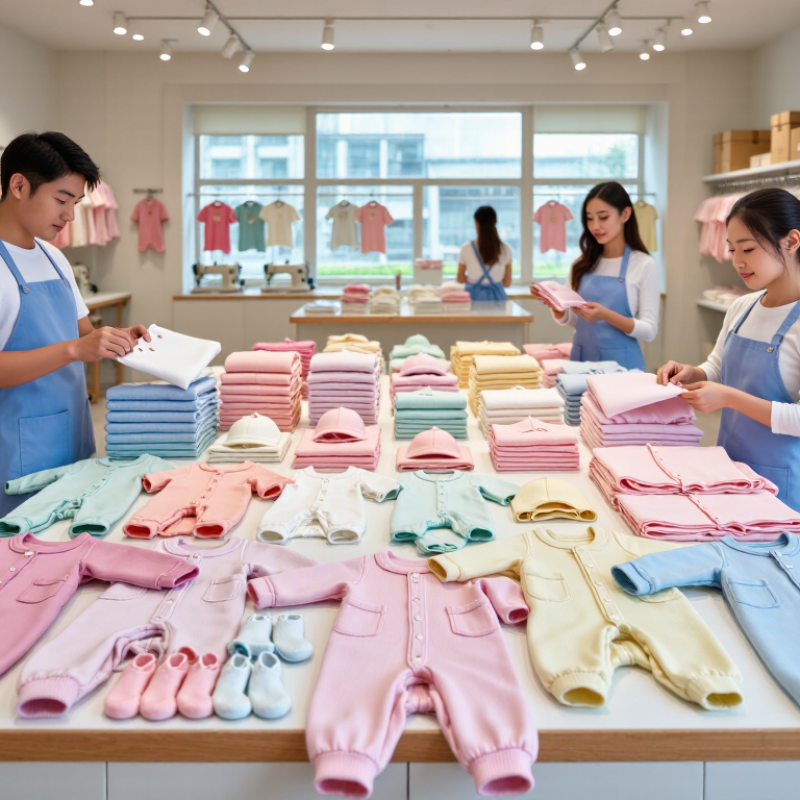
China’s custom baby clothing industry serves brands and retailers seeking control over fabric, fit, colors, and production quantities. Many manufacturers can develop garments from sketches or reference samples, then adjust patterns after fit checks. The process often includes fabric selection, sample approval, grading across sizes, and bulk production. For infant wear, details deserve close attention: soft seams, secure fastenings, smooth labels, and fabric that feels comfortable against delicate skin. Small details matter. Buyers should provide a clear specification sheet, including measurements, stitching requirements, trims, packaging, and expected order volume. Vague instructions can lead to mismatched samples or costly revisions.
A sample is useful, but it does not guarantee that every production item will match. Ask how the factory checks fabric lots, measurements, stitching, and finished garments, and request inspection records where available. Confirm lead times in writing, allowing room for sample changes and material delays. Communication quality is another practical indicator: precise answers about construction are more useful than broad promises. I have seen simple measurement differences create avoidable rework; even so, a checklist cannot catch everything. Buyers should review samples under ordinary wear and washing conditions, and agree on acceptable tolerances before production begins. Supplier choice is only part of the work. Reliable outcomes also depend on clear specifications, careful approvals, and ongoing quality checks.
| Industry Dimension | What It Involves | Practical Buyer Consideration |
|---|---|---|
| 1. Product Development | Custom projects commonly begin with a design brief, size specifications, construction details, and artwork or reference samples. | Provide a complete tech pack where possible, including measurements, tolerances, stitch details, labels, and packaging requirements. |
| 2. Fabric Selection | Options may include cotton, cotton blends, knitted fabrics, and other materials selected for the garment’s intended use. | Request fabric composition, weight, shrinkage information, and relevant test reports. “Organic” claims should be supported by applicable certification and supply-chain documentation. |
| 3. Customization | Customization can cover garment shapes, colors, prints, embroidery, trims, labels, and packaging. | Confirm artwork placement, color references, trim specifications, and whether each customization affects cost or production timing. |
| 4. Sampling | A development sample can help assess fit, fabric, workmanship, and design execution before bulk production. | Approve a final pre-production sample and record any agreed changes. Sample requirements, fees, and timing vary by project. |
| 5. Minimum Order Quantity | There is no single industry-wide minimum order quantity. Requirements can differ by factory, fabric, color, print method, and style. | Ask for separate minimums by style, color, and fabric, and clarify whether a smaller trial order is available. |
| 6. Production Planning | Production typically involves material sourcing, cutting, sewing, finishing, inspection, and packing. | Request a written schedule with milestones. Lead time depends on material availability, order size, customization, and factory capacity. |
| 7. Quality Control | Checks may cover measurements, seams, attachments, appearance, labeling, and packing against agreed specifications. | Set acceptance criteria before production and agree on inspection timing, sampling method, and how defects will be handled. |
| 8. U.S. Safety and Labeling | Children’s products sold in the United States may be subject to applicable CPSIA requirements. Limits include 100 ppm lead in accessible components and 90 ppm lead in paint or similar surface coatings. | Requirements depend on the product and market. Confirm applicable testing, certification, tracking-label, textile-labeling, and flammability obligations with qualified compliance professionals. |
| 9. European Union Requirements | Textile products marketed in the EU are subject to fiber-composition labeling rules. Chemical restrictions under REACH may also be relevant to products and materials. | Check the rules applicable to the destination market and product, and request supporting material and compliance documentation. |
| 10. Shipping and Import Planning | Finished goods can be prepared for different transport methods, with timing and cost affected by shipment size, route, and delivery terms. | Confirm Incoterms, carton details, shipping documents, import responsibilities, and delivery deadlines before placing an order. |
Note: This is an industry overview, not a ranked list of manufacturers. Capabilities, order terms, lead times, and regulatory obligations vary by supplier, product, and destination market; verify details directly before ordering.
Ask where each fabric comes from and whether material lots can be traced. Check how incoming cloth is inspected. Details matter.
It lets you inspect the exact fabric, color, and trims planned for production. Check seams, snaps, labels, stitching, and wash performance. Samples can mislead.
No. A neat sample does not guarantee every production batch will match. Ask how defects are recorded and whether inspection results are shared before shipment.
Ask for documented tests relevant to the product and sales market. Verify the reports instead of relying on broad quality claims.
Ask about monthly output, minimum order quantities, and lead times. Compare these with fabric sourcing, sample approval, and inspection schedules.
Find out who handles pattern changes and how quickly the manufacturer responds. Request a clear sample and production schedule. Keep the details in writing.
Estimates may use different fabric weights or finishing. Compare written specifications for fabric, trims, sizing, and packaging. Small differences add up.
It can reveal how changes are handled, but it may not reflect peak-season performance. I might still read too much into one trial.
This article explores China’s custom baby clothing manufacturing industry and the factors that shape a successful production partnership. It outlines how to evaluate manufacturers by considering product quality, fabric options, customization capabilities, communication, production capacity, lead times, and quality-control processes. It also introduces a comparative look at ten manufacturers, focusing on the types of products and services they offer rather than relying on brand names.
By comparing production capabilities and support services, readers can better understand how different suppliers may suit different business needs. The article concludes with practical guidance for choosing a manufacturer, including defining product requirements, checking sample quality, confirming minimum order quantities, and discussing timelines clearly. These considerations can help a babywear brand make an informed decision and build a dependable relationship through Custom baby clothing manufacturing.