Talk to production646-681-4212 Talk to production646-681-4212
China’s swimwear supply chain spans fabric mills, pattern studios, sample rooms, and large-scale production lines. For brands, finding a suitable partner means looking beyond a polished product photo. Custom swimwear manufacturing depends on fit development, stretch recovery, color consistency, and reliable quality checks. Small details matter: a twisted strap or uneven seam can change how a swimsuit performs in water.
Grand View Research estimated the global swimwear market at USD 20.7 billion in 2023 and projected a 9.1% compound annual growth rate from 2024 to 2030. This market estimate signals commercial opportunity, not guaranteed demand for every brand. Still, numbers do not tell the whole story. A factory’s minimum order quantity, sampling speed, fabric sourcing, and communication can matter more to a growing label than headline capacity.
This guide to China’s top 10 custom swimwear manufacturers offers a practical starting point for supplier research. It considers product range, customization, production capability, and quality processes, while recognizing that public information can be incomplete or change over time. No list can replace direct checks. Request recent samples, confirm specifications in writing, and ask how the manufacturer handles fit revisions and defects. The “best” factory may not be the biggest; it may be the one that can reproduce your approved sample consistently. That distinction is easy to overlook.
How China’s Custom Swimwear Manufacturing Industry Works
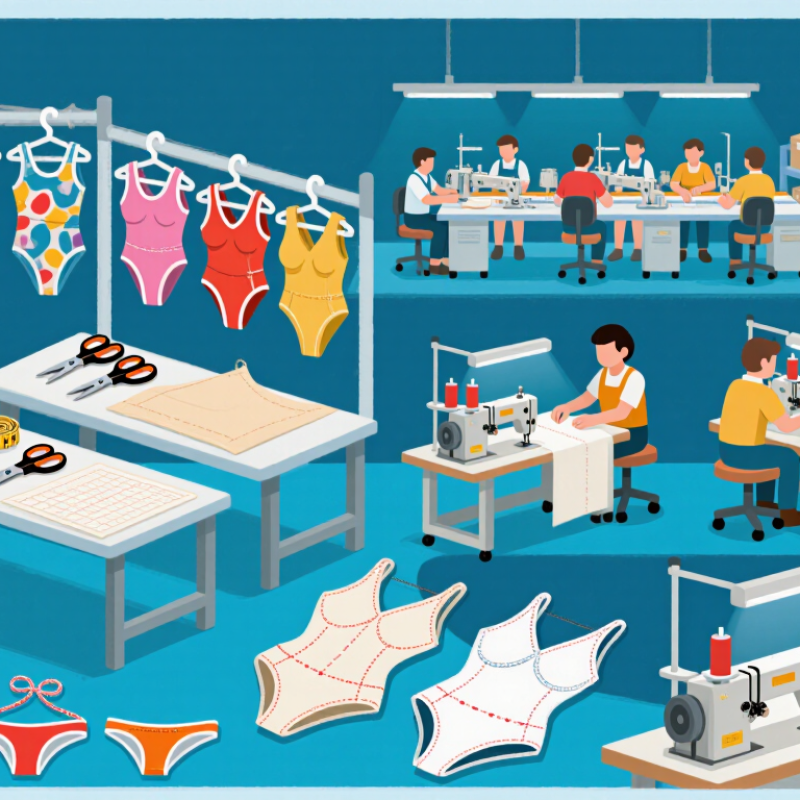
Custom swimwear production in China starts with a tech pack. It defines the size range, fabric composition, lining, trims, artwork, and target cost. A factory sources materials, makes a fit sample, and revises the pattern after measuring stretch and coverage. Then come color approval, bulk cutting, sewing, and inspection. Small details matter: a twisted strap or uneven lining can change how a suit feels in water.
Grand View Research estimated the global swimwear market at US$20.7 billion in 2023 and projected a 7.5% compound annual growth rate from 2024 to 2030. China’s textile and apparel exports reached US$293.6 billion in 2023, according to the China National Textile and Apparel Council. That figure covers many product categories, not swimwear alone. It indicates manufacturing scale, but not every supplier’s capability. Buyers should check sample consistency, fabric test records, and the factory’s actual production line. A polished sample is not proof of reliable bulk quality.
Tips: Ask for a pre-production sample in the final fabric and color. Confirm measurement tolerances and inspect seams after stretching. I would also ask how defects are recorded; this step is easy to overlook, and factory answers can be vague.
An overview of common production capabilities and sourcing considerations. Manufacturing options, minimum order quantities, and lead times vary by factory, fabric, design, and order size.
| No. | Manufacturing Dimension | How It Works | What Buyers Should Check |
|---|---|---|---|
| 1 | Product development | A manufacturer develops a garment from a design brief, sketches, reference samples, or a technical pack. Pattern making and fit sampling translate the design into a sewable product. | Confirm which development services are available and who owns the approved patterns and sample specifications. |
| 2 | Fabric selection | Swimwear commonly uses stretch fabrics made from nylon or polyester blended with elastane. Fabric choice affects stretch, recovery, hand feel, opacity, and suitability for printing. | Request composition, weight, stretch and recovery information, color references, and test details for the specific fabric. |
| 3 | Print and color customization | Options may include sublimation, screen printing, and other fabric-compatible methods. Sublimation is generally used with polyester-rich fabrics; the process and result depend on the fabric and artwork. | Approve a print or color sample on the intended production fabric, rather than relying only on a screen image. |
| 4 | Pattern and fit | Patterns are adjusted for the chosen style, size range, fabric stretch, and intended fit. A fit sample helps identify issues such as gaping, tightness, or strap placement before bulk production. | Review a size chart and sample fit on the intended body or fit model; confirm grading across the full size range. |
| 5 | Construction and lining | Construction can include lining, elastic application, binding, removable cups, and adjustable straps. The suitable details depend on the design and the support or coverage required. | Specify lining coverage, elastic type, hardware, cup details, seam finish, and any requirements for metal-free components. |
| 6 | Sampling and approval | Samples are used to check design, materials, construction, color, and fit. Revisions may be needed before a final pre-production sample is approved. | Record approved measurements, materials, colors, artwork placement, and construction details in a written specification. |
| 7 | Minimum order and costing | Order minimums and unit costs are not fixed industry-wide. They can change with fabric availability, color count, print method, size assortment, trims, and the amount of custom development. | Ask for the minimum per style, color, and size assortment, and request a quotation that identifies sampling, labeling, packaging, and shipping charges. |
| 8 | Bulk production | After approvals, production typically involves fabric inspection, cutting, sewing, finishing, and packing. The production schedule depends on material sourcing, order complexity, and factory capacity. | Confirm the production timeline, order-change rules, material allocation, and how delays or defects will be handled. |
| 9 | Quality control and testing | Quality checks may cover measurements, stitching, seams, color consistency, print placement, and packing. Performance claims such as chlorine resistance or UV protection should be supported by appropriate testing for the specific product. | Agree on inspection criteria and tolerances in advance; request relevant test reports before making performance claims. |
| 10 | Packaging and export | Finished swimwear can be packed with custom labels, hangtags, and packaging, then shipped using an agreed transport method. Import requirements and delivery responsibilities depend on the destination and sales terms. | Confirm labeling and packaging specifications, shipping terms, export documents, and who is responsible for duties and import compliance. |
Review swimwear experience, monthly capacity, minimum order quantity, sample process, and quality records. Ask for recent evidence, not just a polished presentation.
Request samples with the planned lining, print, and elastic. Check stretch recovery, seam strength, colorfastness, and chlorine resistance. Feel the fabric too.
Ask for fiber-content records, approval swatches, and the production lot number. This can help identify fabric changes between sampling and bulk orders. It is not a guarantee.
Request monthly output by style and color, plus peak-season plans. Printing, cutting, or sewing may become bottlenecks. Headline capacity can mislead.
Include measurements, stitching details, lining, cup construction, print placement, and label positions. Confirm tolerances in writing before production. Details get missed.
Look for incoming-fabric checks, in-line inspection, and final sampling against written tolerances. Ask for dated lab reports showing test conditions and fabric lot. A certificate alone is thin evidence.
Compare it with testing, revision time, defect handling, and written lead times. A low price may reflect limited testing or inconsistent dye lots. Sometimes the reason is ordinary; still, ask.
No. Run a pilot and inspect the bulk lot, since small fit issues may appear after repeated wear. Audits help, but they can miss things. Review problems periodically.
This article explores how China’s custom swimwear manufacturing industry operates, from design development and material selection to sampling, production, and quality checks. It explains the criteria used to assess leading manufacturers, including product expertise, communication, customization options, production capacity, consistency, and the ability to meet agreed specifications. Rather than focusing on company names, the discussion outlines the different strengths buyers may encounter among ten types of established suppliers.
Readers will learn how to compare manufacturers by reviewing their sample process, minimum order requirements, lead times, quality standards, and support throughout production. The article also highlights practical questions to ask before choosing a partner, helping businesses match their needs and budget with a supplier’s capabilities. With a clear evaluation process, buyers can make more informed decisions and build a productive manufacturing relationship.