
Have any questions? (646) 681-4212  |  [email protected]
0%

Choosing the right Custom gym clothing manufacturing partner can shape your brand’s reputation before the first shipment arrives. A soft training shirt may look simple, yet its fabric weight, stretch recovery, stitching, labeling, and wash performance require careful decisions. One weak seam can split during a squat. Poor colorfastness can disappoint customers after one laundry cycle.

Apparel sourcing expert Robert Antoshak offers a useful reminder: “The product is the brand.” That principle matters when comparing factories. A reliable manufacturer should explain fabric composition, sample revisions, minimum order quantities, production timelines, and quality inspections without hiding behind vague promises. Ask for physical samples. Touch the fabric. Stretch the waistband. Check whether the printed logo cracks after repeated movement.

Experience matters here.

You also need evidence, not confident language. Review the factory’s previous gymwear projects, testing procedures, communication habits, and ability to manage small corrections. Certifications can support credibility, but they should not replace direct verification. A polished website proves very little.

The cheapest quotation may become expensive later. Rejected stock, delayed launches, inconsistent sizing, and replacement orders can quietly damage cash flow. Still, no manufacturer is perfect. A factory may have excellent sewing skills but limited color development. Another may offer fast production but weaker communication. That trade-off deserves honest reflection.

This guide explains how to compare suppliers, assess technical capability, and protect your investment. It also examines questions many buyers forget to ask before signing a production agreement. The right partner should not merely make clothing. They should help turn your performance-wear concept into dependable products customers can wear, wash, and trust.
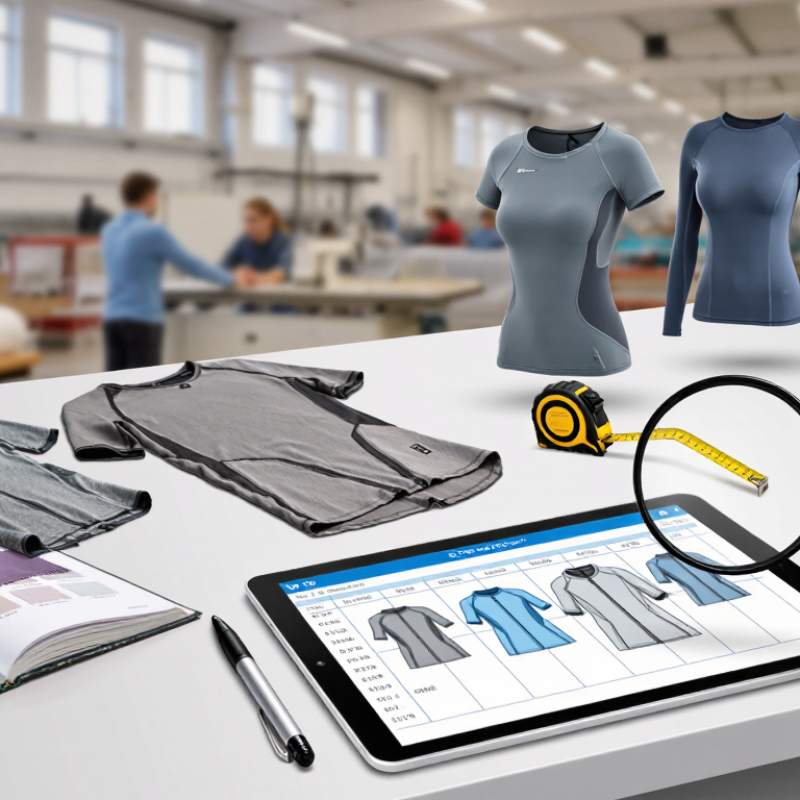
How to Choose a Custom Gym Clothing Manufacturer?

Define Your Custom Gym Clothing Requirements

How to Choose a Custom Gym Clothing Manufacturer?

Define Your Custom Gym Clothing Requirements

A reliable manufacturing project starts with a clear product brief. Define each garment’s purpose before contacting factories. Training leggings may need squat-proof stretch, while running shirts require lightweight, breathable fabric. Be specific.

Record fabric composition, weight, stretch direction, color references, stitching preferences, and logo placement. Mention the expected size range, from smaller to extended sizes. Include measurements in a simple tech pack. Photos and sketches can prevent expensive misunderstandings.

Function matters most.

In my experience, sample testing reveals details that drawings cannot show. Wear the sample during squats, lifting, running, and repeated washing. Check seam comfort, waistband recovery, opacity, drying speed, and color stability. Ask for fabric test information when available. A professional manufacturer should explain limitations clearly, not promise impossible performance.

Set realistic order quantities, target costs, delivery dates, and packaging requirements. Confirm whether custom labels, recycled materials, or special finishing are available. Ask about quality inspections at fabric, sewing, and final packing stages. Written records improve accountability.

A perfect first brief is rare. I have seen attractive samples fail because the waistband rolled during movement. That mistake changed the measurement process. Leave room for revisions, but control them through approved samples and signed specifications. Clear requirements help you compare manufacturers fairly and protect the consistency of future production.

How to Choose a Custom Gym Clothing Manufacturer? — Define Your Custom Gym Clothing Requirements

Fabric weight is an important requirement to define before contacting a manufacturer. The typical GSM targets below help balance breathability, coverage, durability, and support across different gym clothing categories.

Lightweight fabrics are commonly preferred for breathable training tops and shorts, while higher-GSM materials are typically selected for leggings and sports bras that require greater coverage, compression, and support. Confirm the final GSM, fabric composition, stretch percentage, and performance testing requirements with your manufacturer.

Evaluate Manufacturer Expertise and Production Capabilities

A custom gym clothing manufacturer should prove expertise through repeatable results, not attractive samples alone. Textile Exchange’s Materials Market Report 2024 states that global fiber production reached 124 million tonnes in 2023. It may reach 160 million tonnes by 2030. I would treat this forecast cautiously. Still, it shows why material knowledge matters.

Ask how the factory handles recycled fibers, stretch fabrics, color control, and fabric recovery. Request recent test reports for shrinkage, pilling, colorfastness, and seam strength. A capable team should explain its testing methods clearly. It should also identify fabric mills and provide batch-level traceability. Perfect documentation is rare. Missing details deserve questions.

Production capacity requires physical verification. Review knitting machines, cutting tables, heat-transfer equipment, sewing lines, and final inspection areas. Confirm monthly output using records, not promises. Check whether the factory can manage small trial orders before large production. The Ellen MacArthur Foundation’s A New Textiles Economy estimated that one truckload of textiles is landfilled or burned every second. This makes waste control a practical manufacturing issue. Ask for cutting-loss data, defective-rate records, and repair procedures. A factory may pass an audit yet still miss a shade or measurement. Independent pre-shipment inspection can expose that gap. Real expertise appears when problems are measured, explained, and corrected.

How to Choose a Custom Gym Clothing Manufacturer? — Evaluate Manufacturer Expertise and Production Capabilities
Evaluation Dimension Practical Reference Benchmark Evidence to Request Risks if the Capability Is Weak Suggested Weight
Sportswear Product Expertise Demonstrated experience with performance garments such as leggings, sports bras, compression tops, training shorts, and moisture-management shirts. Technical portfolios, development samples, garment construction diagrams, and examples of previous activewear projects with sensitive areas anonymized. Poor mobility, uncomfortable seams, weak support, incorrect fit, and designs that fail during repeated stretching or high-intensity use. 15%
Pattern Making and Size Grading Ability to create production-ready patterns, grade across the required size range, and adjust patterns after fit-test feedback. Digital pattern files, graded size charts, fitting samples, measurement tolerances, and a documented sample revision process. Inconsistent sizing between colors or batches, excessive fabric tension, gaping waistbands, and high return rates. 12%
Fabric and Trim Knowledge Familiarity with stretch fabrics, recycled or synthetic fibers, fabric weight, recovery, opacity, pilling resistance, colorfastness, and elastic performance. Fabric specification sheets stating fiber composition, fabric weight, stretch and recovery data, test reports, and approved swatches. Fabric transparency, color variation, loss of elasticity, excessive shrinkage, odor retention, or poor performance after washing. 12%
Construction and Sewing Capability Access to suitable equipment, including overlock, coverstitch, flatlock, bartack, elastic insertion, reinforcement, and clean finishing operations. Factory equipment list, production-line photographs or video, sample seam sections, and a description of how high-stress areas are reinforced. Seam popping, skipped stitches, chafing, loose threads, waistband failure, and inconsistent workmanship. 12%
Decoration and Branding Methods Capability to handle the selected decoration method, such as sublimation, screen printing, heat transfer, embroidery, silicone logos, or woven labels. Decoration samples, artwork requirements, color-matching process, wash-test results, and confirmation of placement tolerances. Cracking prints, peeling transfers, distorted graphics on stretch fabric, inaccurate colors, or misplaced logos. 8%
Sampling and Product Development A structured process for prototype, fit sample, size-set sample, pre-production sample, approval, and change control. A sample cycle of approximately 7–21 business days is common, depending on complexity. Sample calendar, development fees, revision limits, approval forms, sample measurement reports, and communication response times. Repeated delays, uncontrolled revisions, unclear specifications, and bulk production based on an unapproved sample. 10%
Minimum Order Quantity For custom apparel, an indicative MOQ of approximately 100–500 pieces per style or color is common, although fabric choice, printing method, and factory scale can change the requirement. Written MOQ by style, color, size ratio, fabric, and decoration method, plus any small-order surcharge. Excess inventory, higher unit costs, unused fabric, or unexpected charges after development has started. 8%
Production Capacity and Scalability The manufacturer should be able to document capacity that comfortably exceeds the planned order volume. A practical target is production capacity of at least 2–3 times the expected monthly demand. Production-line capacity, monthly output records, staffing information, machine allocation, subcontracting policy, and capacity during peak seasons. Missed launch dates, rushed production, overtime quality problems, and inability to repeat successful styles. 10%
Quality Management System Written inspection procedures covering incoming materials, cutting, sewing, decoration, measurement, final inspection, and shipment release. AQL 2.5 is a commonly specified reference for general final inspections, but the buyer should define the actual quality agreement. Quality manual, inspection checklist, defect classification, measurement tolerance chart, inspection records, and corrective-action reports. Hidden defects, inconsistent measurements, high defect rates, disputes over acceptable quality, and costly rework. 13%
Testing and Compliance Support Ability to arrange or provide relevant testing for colorfastness, dimensional stability, pilling, seam strength, fabric composition, and restricted substances when required by the destination market. Recent laboratory reports, test scope, material declarations, compliance documents, and a clear explanation of who pays for failed testing. Customs or marketplace issues, customer complaints, unsafe materials, failed wash performance, and product recalls. 10%
Lead-Time Control A clearly defined bulk-production schedule. For many custom activewear orders, approximately 30–60 days after final approval is a useful planning reference, excluding fabric development and shipping time. Production timeline, fabric reservation process, milestone dates, delay-notification procedure, and written consequences for missed deadlines. Stockouts, missed seasonal launches, expedited freight costs, and unreliable replenishment planning. 10%
Traceability and Communication A designated account contact, documented purchase-order changes, batch or lot tracking, and regular production updates from material approval through shipment. Communication workflow, order status template, batch records, labeling system, escalation process, and response-time commitment. Misunderstood specifications, unapproved substitutions, delayed decisions, and difficulty identifying the source of defects. 5%
Packaging and Shipment Readiness Ability to follow folding, size assortment, labeling, carton marking, barcode, moisture protection, and packing-list requirements. Packaging samples, carton specifications, packing list, shipment photos, export documentation process, and carton-drop or packing checks where relevant. Receiving delays, incorrect size assortments, damaged garments, relabeling costs, and warehouse handling problems. 5%
Total Suggested Evaluation Weight 120%
Scoring method: Score each dimension from 1 to 5, multiply the score by the selected weight, and compare manufacturers using the same evidence requirements. Treat the benchmarks as screening references rather than universal rules, because MOQ, lead time, testing requirements, and capacity vary by product complexity and order volume.

Check Fabric Quality, Customization Options, and Design Support

Choosing a custom gym clothing manufacturer starts with fabric quality, not a polished digital catalog. Request a physical sample and check its weight, stretch recovery, softness, and opacity under bright light. For training shorts, four-way stretch fabric should return to shape after repeated pulls. For tops, moisture management matters, but “quick-dry” claims need evidence. Ask for fiber composition, GSM, colorfastness results, and shrinkage data. Rub a printed area, wash the sample, and inspect the seams afterward. Small flaws become expensive at scale.

Customization should match the workout and the wearer. Discuss panel placement, pocket depth, waistband height, reflective details, size grading, and logo application methods. A reliable manufacturer explains how embroidery, screen printing, or heat transfer will behave on elastic fabric. Request a pre-production sample with your actual artwork. Check edge sharpness, color accuracy, and movement comfort. No sample is perfect. However, repeated issues should not be ignored. Design support is more than sending a template. Skilled technicians can adjust a neckline, reduce seam friction, or suggest stronger stitching for high-stress areas.

Ask how revisions, inspections, lead times, and rejected pieces are handled. Written specifications prevent misunderstandings. I would not approve bulk production from one attractive sample alone, because fit can change between sizes and fabric lots. That is easy to overlook. Test it twice. Review measurements on a size set, confirm the final fabric, and keep approval records. A manufacturer earns trust through clear answers, repeatable testing, and honest limits, not confident promises.

Compare Minimum Orders, Pricing, Lead Times, and Sampling

How to Choose a Custom Gym Clothing Manufacturer?

Compare Minimum Orders, Pricing, Lead Times, and Sampling

Custom gymwear sourcing fails when buyers compare only the unit price. MOQ, pricing, lead time, and sampling form one production equation. Grand View Research valued the global activewear market at approximately $412.3 billion in 2023. That scale attracts many factories, but capacity does not guarantee consistency. Request the MOQ for each style, color, and size range. A 300-piece minimum may sound attractive, yet multiple colors can multiply the real commitment. Ask for fabric composition, weight, testing records, and packaging costs before accepting a quote.

Price needs context. Compare the full landed cost, including sampling, grading, labels, freight, and possible remake fees. Sampling should include a measurement chart and a written revision limit. One physical sample is rarely enough for compression leggings or high-stretch tops. Allow time for fit corrections. A realistic production schedule may include 7–14 days for development, 30–60 days for manufacturing, and additional shipping time, depending on fabric availability. Confirm whether the clock starts after deposit, artwork approval, or sample approval. Factories often describe this differently.

Reliability also requires evidence. The Fashion Transparency Index 2023 reported an average score of only 26% across 250 assessed fashion companies, showing how limited supply-chain disclosure remains. Ask for supplier details, inspection procedures, and recent production photos with dates. Grand promises are easy. Written checkpoints are better. A low MOQ is not automatically economical, and a short lead time can hide rushed quality control.

My practical rule is imperfect: choose the manufacturer that explains trade-offs clearly, not the one offering every advantage at once.

Verify Certifications, Communication, and After-Sales Service

How to Choose a Custom Gym Clothing Manufacturer?

Certifications should be checked, not simply displayed on a website. ISO’s 2023 Survey recorded more than 1.2 million ISO 9001 certificates worldwide, but certification scope still matters. Ask for the certificate number, issuing body, expiry date, and covered factory location. For gym clothing, OEKO-TEX STANDARD 100 can help verify tested materials and harmful-substance controls. A certificate alone is not proof of consistent quality. Request recent audit records, production samples, and fabric test reports. Inspect stitching, stretch recovery, colorfastness, and print durability after washing.

Communication reveals operational discipline. During sampling, send technical packs with measurements, fabric weight, seam details, and logo placement. A reliable manufacturer confirms unclear points before cutting fabric. Their replies should identify timelines, responsible staff, and possible risks. The 2024 McKinsey State of Fashion report highlights continuing supply-chain volatility, so vague delivery promises deserve caution. I have found that fast replies can still hide weak planning. Ask for a written approval process and realistic production milestones.

Tips: Test communication before signing. Send three practical questions and compare response quality. Ask how defects are recorded, replaced, and prevented. After-sales service should include inspection support, replacement terms, and a documented complaint timeline. The International Trade Centre’s apparel sourcing guidance stresses clear specifications and quality agreements. Keep those records. One missing detail can become hundreds of incorrect garments. Also, verify whether the named factory actually produces your order; subcontracting may change quality, timing, and audit coverage.

FAQS

What should a product brief include for custom gym clothing?

State the garment’s purpose, fabric composition, weight, stretch direction, colors, stitching, logo placement, and size range. Include measurements. Add photos or sketches.

How can I choose suitable fabrics for different workouts?

Training leggings may need opaque, squat-proof stretch. Running shirts often need lightweight, breathable fabric. Function matters most.

Why should samples be tested before mass production?

Samples reveal problems that drawings cannot show. Wear them during squats, lifting, running, and repeated washing. Check every movement.

Which details should I inspect during sample testing?

Check seam comfort, waistband recovery, opacity, drying speed, color stability, and print durability after washing. Small defects matter.

What production information should be confirmed before ordering?

Confirm quantities, target costs, delivery dates, packaging, custom labels, recycled materials, and special finishing options. Write everything down.

How can I verify a manufacturer’s certifications?

Request the certificate number, issuing organization, expiry date, and covered factory location. Do not trust website images alone. Recent audit records and fabric tests provide stronger evidence.

How can communication reveal manufacturing quality?

Send three practical questions before signing. Evaluate whether replies explain timelines, responsible staff, risks, and approval steps. Fast replies can still hide weak planning.

What should after-sales service include?

Ask about defect records, replacement terms, inspection support, and complaint deadlines. Clear records protect both sides. I once underestimated this detail. That was a mistake.

How can I control quality during future production?

Approve samples and signed specifications before cutting fabric. Check fabric, sewing, and final packing stages. Keep revisions controlled.

Conclusion

Choosing the right custom gym clothing manufacturer starts with clearly defining your product requirements, including garment types, target users, materials, sizing, colors, logo placement, and expected performance. A reliable partner should have proven experience in custom gym clothing manufacturing, suitable production equipment, skilled technicians, and the capacity to handle your order volume consistently. Review fabric quality, durability, breathability, stretch, and colorfastness, while also confirming the available customization methods and the level of design support provided.

Before making a decision, compare minimum order quantities, pricing structures, production lead times, and sample policies. Requesting samples can help you evaluate fit, workmanship, fabric feel, and print or embroidery accuracy before placing a larger order. It is also important to verify relevant certifications, quality-control procedures, communication standards, and after-sales service. A manufacturer that responds clearly, provides realistic timelines, solves issues responsibly, and maintains consistent quality will be better positioned to support a successful long-term clothing project.
Amelia

Amelia

Amelia is a dedicated professional marketer with a strong understanding of the company’s products, customers, and evolving market needs. Through clear communication, thoughtful research, and a practical approach to marketing, she helps present the company’s solutions in a way that is informative,......