
Have any questions? (646) 681-4212  |  [email protected]
0%

Custom denim jeans manufacturing is no longer only about selecting a fashionable wash. It involves fabric engineering, fit testing, production control, and measurable environmental decisions. Textile Exchange’s Materials Market Report 2024 states that cotton represented approximately 22% of global fiber production in 2023. That figure shows cotton’s continuing importance, but it also raises difficult questions about farming, traceability, and resource use.

Levi Strauss & Co.’s lifecycle assessment estimated that one pair of jeans can consume about 3,781 liters of water across its life cycle. The number is not a universal industry average. Still, it reveals where better design can matter. Wash recipes, recycled fibers, laser finishing, and reduced laundering can change the factory’s footprint. Denim authority Adriano Goldschmied has said, “Denim is a way of life.” The statement sounds simple. Manufacturing it responsibly is not.

This guide presents ten practical tips for Custom denim jeans manufacturing, from choosing the right fabric weight to checking shrinkage after repeated washing. It considers sampling accuracy, seam strength, grading, hardware quality, and supplier communication. Small errors become expensive when production reaches thousands of pairs. A pocket placed two centimeters too low can change the entire silhouette. A poorly tested enzyme wash can weaken the fabric before retail delivery.

No factory plan is perfect. A “sustainable” claim can still hide incomplete data. Buyers should request test reports, fiber certificates, wash records, and corrective-action evidence. These steps support the E-E-A-T principles through practical experience, technical knowledge, credible sources, and transparent limitations. The goal is not merely attractive jeans. It is dependable denim with fewer avoidable surprises.
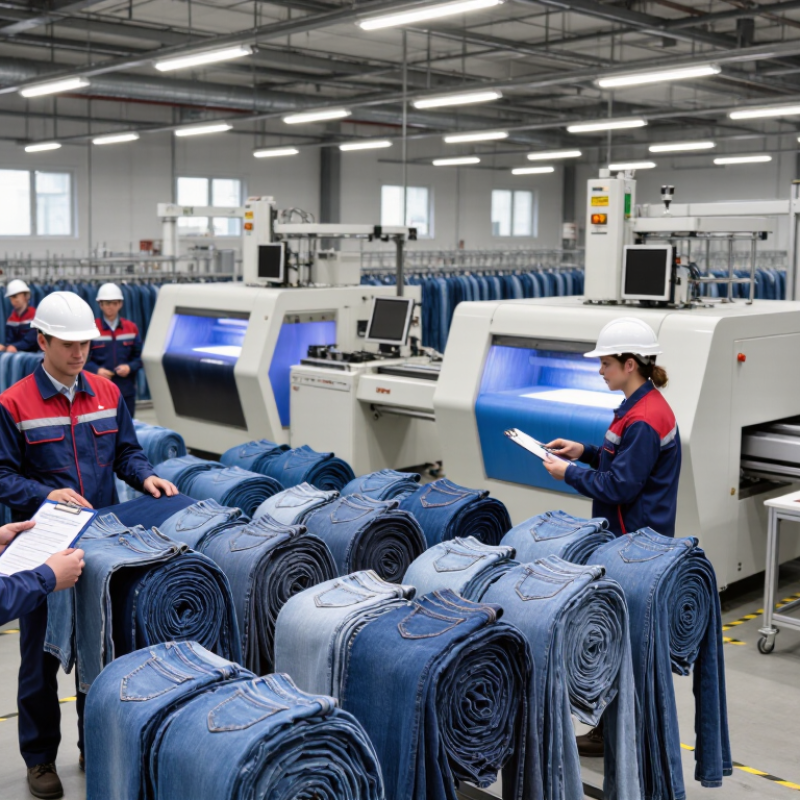
10 Tips for Custom Denim Jeans Manufacturing

Defining Custom Denim Jeans Requirements and Design Goals

Custom denim jeans manufacturing starts with a clear product brief. Define the wearer, intended use, target price, and expected retail position.

Fit comes first. Record waist, hip, rise, thigh, knee, and inseam measurements in a practical size chart. Include tolerances, because production measurements rarely remain perfectly identical. A two-centimeter error at the hip can change the entire silhouette.

Describe the design through visible details. Specify the denim weight, fiber blend, stretch percentage, weave, and preferred hand feel. State whether the jeans should feel rigid, soft, dry, or broken-in.

Select the leg shape, pocket depth, waistband height, fly construction, thread color, and hardware finish. Add wash references using clear photographs and fabric swatches. Words like “vintage” or “clean” can mean very different things to different teams.

A technical pack should show flat sketches, measurement points, seam allowances, label placement, and construction notes. It should also identify testing needs, including colorfastness, shrinkage, seam strength, and dimensional stability. Experienced manufacturers still need a physical sample. The first sample may reveal an uncomfortable rise or uneven whiskering.

That is useful evidence, not failure.

Review each correction with dated comments and updated measurements. I have learned that rushed approvals create expensive problems later. Leave room for one more fitting. Human bodies are not perfectly standardized. A thoughtful design goal respects that reality while keeping production consistent.

Selecting Denim Fabrics, Trims, and Sustainable Materials

10 Tips for Custom Denim Jeans Manufacturing

Selecting denim fabric is a technical decision, not only a visual one.

Tip 1: Compare fabric weight, weave density, and hand feel before sampling.

Tip 2: Test shrinkage after washing. A two percent change can affect fit.

Tip 3: Check colorfastness, especially on dark indigo denim.

Tip 4: Match stretch levels with the intended silhouette. Too much elastane may weaken recovery.

Trims also shape the garment’s performance.

Tip 5: Choose buttons, rivets, and zippers that resist corrosion and repeated washing.

Tip 6: Confirm every trim matches the fabric’s thickness. Heavy hardware can distort lightweight denim.

Tip 7: Request lab samples before bulk production. Small differences matter.

Tip 8: Keep a complete specification sheet, including thread size, seam allowance, and wash temperature. This prevents avoidable production errors.

Sustainable materials need practical verification.

Tip 9 Consider recycled cotton, hemp blends, or lower-impact fibers, but test their durability first. A greener option is not automatically stronger.

Tip 10 Ask suppliers for traceability documents and relevant material certifications. This improves reliability without relying on vague claims.

Production teams sometimes overlook pocketing fabric, thread, or labels. That is a mistake. They can change comfort and waste levels.

One imperfect sample can reveal more than a polished presentation. Review it carefully before approving the final pattern.

Developing Patterns, Sizes, and Technical Specifications

10 Tips for Custom Denim Jeans Manufacturing

Developing Patterns, Sizes, and Technical Specifications

A reliable denim fit starts with accurate measurements, not a fashionable sketch. Record waist, hip, thigh, knee, inseam, front rise, and back rise. Use a fit model who represents the target customer. One body cannot represent every size. Build a base pattern, then grade it carefully across the size range. Do not enlarge every measurement evenly. Hips and thighs often need different grading rules. Test the pattern in a stable sample fabric before approving production.

Denim changes during cutting, sewing, washing, and drying. Specify the fabric weight, stretch percentage, weave direction, and expected shrinkage. Include finished measurements for every size. Add tolerances, such as plus or minus one centimeter, to prevent unnecessary disputes. The technical specification should show pocket placement, waistband height, belt-loop width, seam allowance, stitch density, and thread type. Small details matter. A pocket placed two centimeters too low can change the entire appearance.

I once approved a sample before checking movement in a seated position. The waist looked correct, but the back rise felt restrictive. That mistake required a pattern correction and another fitting round. It also showed why flat measurements are not enough. Ask testers to walk, sit, bend, and use pockets. Record their comments beside each measurement. Wash-test the approved fabric and update the pattern if shrinkage exceeds expectations. Some specifications remain imperfect after testing. That is why clear revision dates and sample records are essential.

10 Tips for Custom Denim Jeans Manufacturing - Developing Patterns, Sizes, and Technical Specifications

No. Manufacturing Tip Pattern or Specification Focus Recommended Technical Details Typical Measurement Range Suggested Tolerance Quality Check
1 Define the target fit before drafting Silhouette, rise, leg shape, and intended wearer profile Select a clear fit block: skinny, slim, straight, relaxed, or wide leg. Record front rise, back rise, thigh, knee, and leg opening. Waist: 66–102 cm
Inseam: 68–86 cm
Fit approval required before grading Fit sample review on a standard dress form or fit model
2 Choose denim according to the fit Fiber content, fabric weight, stretch, and recovery Rigid denim commonly uses 100% cotton. Stretch denim often contains approximately 1–3% elastane with the balance cotton or cotton-rich fibers. Fabric weight: 9–14 oz
Stretch: 0–25%
Fabric weight: ±5%
Width: ±2%
Check weight, width, stretch percentage, and recovery after extension
3 Build a complete measurement chart Points of measure and measurement method Define how to measure the waistband, hip, front rise, back rise, inseam, outseam, thigh, knee, and leg opening. Use the same flat or curved method throughout. Waist: 66–102 cm
Hip: 88–122 cm
Leg opening: 28–42 cm
Body measurements: ±0.5 cm
Length measurements: ±1.0 cm
Measure finished garments on a flat surface using a calibrated tape
4 Develop sizes with consistent grading Grade rules between adjacent sizes A common starting point is a 5 cm total waist increment between adjacent sizes, distributed around the pattern according to the chosen block and fit balance. Typical size range: 24–40 waist
or approximately 61–102 cm
Grade rule accuracy: ±0.2 cm Compare graded pattern measurements with the approved size chart
5 Control shrinkage before finalizing patterns Pre-shrinkage, washing, and dimensional stability Confirm whether the denim is sanforized or unsanforized. Record shrinkage separately for length and width after the planned laundering process. Common residual shrinkage: 0–3% for sanforized denim; higher levels may occur in unsanforized denim Final shrinkage target stated in the technical file Wash-test fabric panels and remeasure after conditioning
6 Specify seam construction and stitch density Seam type, SPI, thread, and seam allowance Use stronger constructions for stress areas, such as felled or lapped seams. State stitch-per-inch requirements and seam allowance by operation. Typical denim construction: 8–12 SPI
Seam allowance: 1–1.5 cm
SPI: ±1 stitch
Seam allowance: ±0.2 cm
Inspect skipped stitches, seam slippage, puckering, and open seams
7 Engineer pockets for function and appearance Pocket placement, opening, depth, and reinforcement Set pocket dimensions relative to the graded pattern. Add bartacks or other reinforcement at pocket openings and high-stress points where required. Back pocket width: 14–17 cm
Back pocket height: 15–19 cm
Pocket placement: ±0.5 cm Check symmetry, placement, opening strength, and pocket bag exposure
8 Detail waistband and closure specifications Waistband height, belt loops, fly, and hardware Specify finished waistband height, loop width, loop spacing, fly construction, button or tack dimensions, and zipper length. Waistband height: 3.5–4.5 cm
Loop width: 1.2–1.5 cm
Zipper: 10–15 cm
Waistband height: ±0.2 cm
Hardware position: ±0.3 cm
Test closure operation, hardware attachment, and waistband recovery
9 Document wash and finishing effects Color, abrasion, whiskers, hand feel, and pressing Define wash type, shade target, contrast level, abrasion location, crease placement, softener use, and acceptable variation between garments. Shade variation: controlled by approved standard
Colorfastness target: commonly grade 3–4 or higher, depending on requirement
Visual variation must remain within approved sample limits Compare against a sealed wash standard under consistent lighting
10 Create a production-ready technical package Tech pack, bill of materials, labeling, and inspection plan Include graded patterns, construction sketches, point-of-measure chart, fabric and trim details, color standards, packing instructions, and sample approval history. Required documents: pattern set, measurement chart, BOM, wash recipe, QC checklist All documents must match the approved sample and revision level Pre-production meeting, pilot inspection, and final random inspection
Note: Measurement ranges and tolerances are practical starting points for custom denim development. Final values should be confirmed through the approved fit sample, fabric test results, laundering method, and production requirements.

Managing Sampling, Fitting, and Manufacturing Quality

10 Tips for Custom Denim Jeans Manufacturing

Managing sampling and fitting well prevents costly production errors. Start with a clear tech pack showing measurements, stitching, hardware, and wash effects. Use the same denim lot for sampling whenever possible. Fabric changes can distort fit. Test shrinkage before approving the first sample. Do not guess. Record every measurement after washing, not only before washing. Fit the jeans on at least two body types and review movement around the hips, knees, and seat.

Approve a graded measurement chart before cutting bulk fabric. Check waistband balance, pocket placement, inseam alignment, and leg twisting during each fitting. Keep comments specific, such as “reduce back rise by 0.5 cm.” Vague feedback slows development. Fit is evidence. Test repeated sitting and walking, not just standing. A sample may look correct on a mannequin but fail during wear. This is where many teams underestimate comfort.

Manufacturing quality depends on controlled checks. Inspect seam strength, bartacks, zipper function, belt loops, and surface defects during inline production. Compare wash results with the approved sample under consistent lighting. Keep sealed reference samples and signed measurement records. Final inspection should include random size checks and carton quantities. Small errors multiply. I have seen acceptable samples become inconsistent bulk orders because factory teams changed thread tension without documentation. That weakness deserves review. Good systems reduce dependence on memory, rushed approvals, and optimistic assumptions.

Planning Production, Finishing, Inspection, and Delivery

10 Tips for Custom Denim Jeans Manufacturing

Planning production starts with a precise tech pack. Confirm measurements, fabric weight, stretch, color, and shrinkage before cutting. Order extra fabric for testing and possible defects. Approve a fit sample on the intended body size. Check pocket placement carefully. Small errors become expensive after bulk cutting. Match the production calendar with sewing capacity, washing space, and trim availability. I have seen schedules fail because buttons arrived two days late. Build a small buffer.

Finishing controls the product’s character. Test washing recipes on fabric from the actual shipment. Record temperature, time, chemicals, and drying conditions. Review whiskers, fading, hand feel, and color consistency under neutral light. Keep one approved reference sample near the washing line. It helps, but it is not perfect. Inspect seam strength, bartacks, zippers, waistband tension, and loose threads. Measure random pieces after washing. Denim can shift more than expected.

Inspection should happen during sewing, not only at the end. Use an agreed defect standard with clear photographs. Separate repairable faults from rejected pieces. Final checks should cover measurements, labels, packing, carton counts, and moisture. Delivery needs accurate documents and protected packaging. Confirm loading space, carton marks, and destination requirements early. Leave time for reinspection. Rushing the last carton often creates avoidable mistakes. A reliable process still needs honest review.

10 Tips for Custom Denim Jeans Manufacturing: Production, Finishing, Inspection, and Delivery

This chart shows a practical production-time allocation for a custom denim jeans order. Fabric preparation, cutting and sewing, finishing, quality inspection, and delivery are managed as separate stages. Accurate specifications, approved samples, process control, and final inspection help reduce delays and rework.

FAQS

How should denim fabric be evaluated before sampling?

Compare fabric weight, weave density, stretch, and hand feel. A heavier fabric may feel durable but restrict movement. Test samples before deciding.

Why is shrinkage testing important for custom jeans?

Wash the denim and measure it afterward. A two percent change can alter waist, leg length, and pocket placement. Fit problems can appear later.

How can stretch denim maintain its shape?

Match stretch levels with the planned silhouette. Excessive elastane may reduce recovery after repeated wear. The softest fabric is not always the best choice.

What should be checked when selecting buttons, rivets, and zippers?

Choose trims that resist corrosion and repeated washing. Match their weight with the denim thickness. Heavy hardware can distort lightweight fabric.

What information should a complete denim specification sheet include?

Record measurements, fabric weight, thread size, seam allowance, wash temperature, and trim details. Include pocket placement and shrinkage results. Small omissions create expensive errors.

How can sustainable denim materials be verified practically?

Consider recycled cotton, hemp blends, or lower-impact fibers. Test durability before approval. A greener option is not automatically stronger. Request traceability documents and relevant certifications.

What should production teams confirm before bulk cutting?

Approve the tech pack, fit sample, fabric test, and trim availability. Order extra fabric for defects and testing. Build a small schedule buffer. Delays happen.

How should washing and final inspection be controlled?

Test the recipe using fabric from the actual shipment. Record temperature, time, chemicals, and drying conditions. Inspect measurements, seams, zippers, labels, packing, and moisture. One polished sample can still hide problems. Review it again.

Conclusion

Custom denim jeans manufacturing begins with clearly defining the product’s purpose, target customer, fit preferences, design details, and performance goals. Careful selection of denim fabrics, trims, threads, labels, and sustainable materials helps balance appearance, comfort, durability, cost, and environmental responsibility. At the development stage, accurate patterns, size specifications, measurements, seam allowances, and construction instructions are essential for achieving consistent results across different sizes.

Successful production also depends on organized sampling and fitting procedures. Each sample should be reviewed for proportion, comfort, movement, stitching, wash appearance, and overall construction before approval. Once the fit and technical details are confirmed, manufacturers can plan cutting, sewing, washing, finishing, inspection, packaging, and delivery in a practical sequence. Clear quality standards, documented inspections, and effective communication throughout the process help reduce defects, control timelines, and ensure that the finished jeans match the approved design.

Clara

Clara

Clara is a dedicated marketing professional with a strong understanding of the company’s products, customers, and evolving market needs. With a background in strategic communication, content development, and customer-focused marketing, she transforms complex product information into clear, useful,......