Finding a custom cycling apparel manufacturer in 2026 takes more than comparing prices. The right partner should understand fit, fabric performance, decoration, and production planning. Custom cycling apparel manufacturing works best when your design goals meet the factory’s actual capabilities. A polished website is not proof. Ask for samples, clear specifications, and realistic timelines.
Rapha founder Simon Mottram has described the ambition as making “the best cycling clothes in the world.” That standard is useful, even for a small team ordering its first kit. Look closely at the details: gripper width, pocket placement, seam finish, and how a jersey feels in a riding position. Small details matter. Request a sample in your intended fabric, then check its fit after movement and washing. Ask for proof.
This guide explains how to assess manufacturers, compare quotes, and avoid common sourcing mistakes. Check minimum order quantities, size grading, artwork requirements, and who handles quality checks. A low unit price may hide costly setup fees or limited revisions. Even experienced buyers can miss a production detail; I would not treat one good sample as a guarantee. Confirm the approved specifications and inspection process before placing an order. The goal is not simply a striking kit. It is a reliable manufacturing relationship that can deliver consistent apparel as your needs grow.
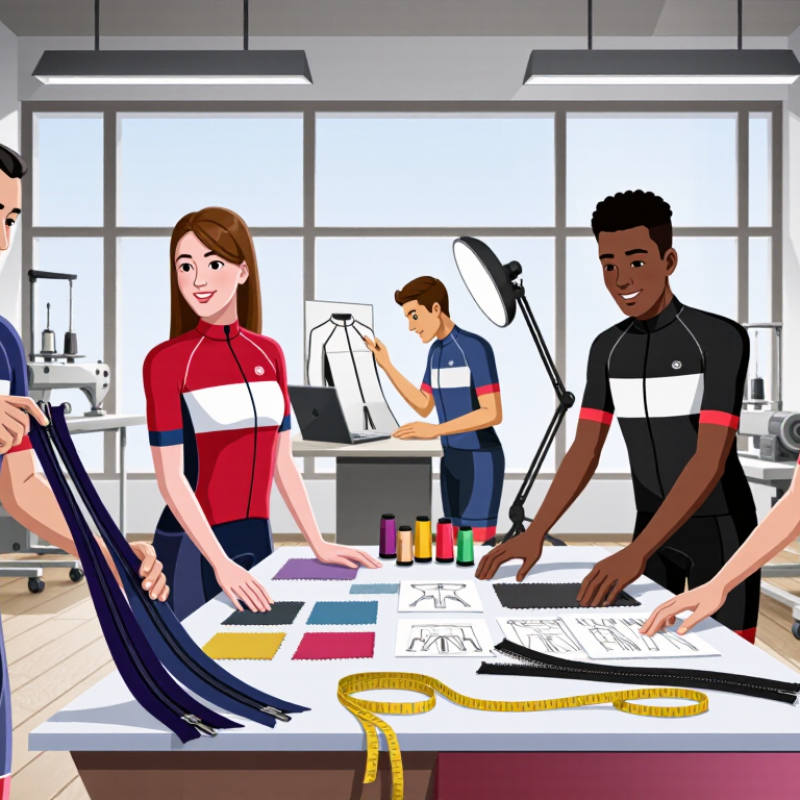
Before contacting a custom cycling apparel manufacturer, write down what each garment must do on the road. Decide whether you need jerseys, bib shorts, jackets, or a coordinated kit. Describe the riding conditions: summer heat, steady rain, long climbs, or frequent washing. A jersey for a short commute may need different pocket access and ventilation than one worn on a six-hour ride. Be specific. Include fit preferences, size range, target quantity, and delivery window. These details make early quotes more useful.
Tips: Bring a sample garment or clear photos, then note what you would change. Specify fabric weight or performance needs only when you can explain why; “breathable” alone is vague. List panel colors, zipper length, pocket layout, reflective details, and seam concerns. Ask how sizing is measured and whether a pre-production sample is available. Small details matter.
Set priorities before discussing price. Mark each feature as essential, flexible, or still undecided. Confirm fabric options, decoration methods, minimum order, sample fees, and production timing in writing. If you do not know your preferred fabric yet, say so; guessing can create a poor fit between cost and use. Revisit the list after testing a sample. Your first draft may miss something.
Finding a custom cycling apparel manufacturer in 2026 starts with a clear product brief. Specify the riding conditions, fit, fabric weight, and expected order size. A supplier focused on aerodynamic race jerseys may not have the right experience for durable commuter wear or cold-weather layers. Specialties matter.
Compare manufacturers against the garments you actually plan to make. Ask for examples of similar products, fabric options, minimum order quantities, sample timelines, and quality checks. For a jersey, inspect seam alignment, zipper protection, and pocket placement. For bib shorts, check the chamois construction and leg-grip comfort. Then test samples on a real ride. A desk review misses things. Note what shifts, rubs, or feels too warm.
A polished catalog is not proof of production strength. Request a sample made with the proposed fabric, and ask how sizing is graded between sizes. Confirm who handles pattern adjustments and how defects are recorded. Compare answers in a simple spreadsheet, but leave room for judgment: the cheapest quote may omit useful details, while a long specialty list can be vague. I might weigh sample quality too heavily; production consistency deserves equal attention. Look for specific, verifiable answers rather than broad promises.
| Manufacturer profile | Typical specialty | Relevant capabilities to look for | Customization options | Order quantity and scale | Potential trade-offs | Best suited for | What to verify before ordering |
|---|---|---|---|---|---|---|---|
| Cycling-specialist apparel manufacturer | Road, gravel, mountain-bike, and other cycling garments designed around riding position and use. | Experience with cycling-specific patterning, stretch panels, flat or low-profile seams, grippers, pockets, and compatible chamois options. | Usually supports custom colors, graphics, panel layouts, trims, and garment details; available options depend on the factory and fabric program. | Minimums vary by style, fabric, color, and production setup. Confirm whether sampling and bulk orders have separate minimums. | A narrower product range may mean fewer options for non-cycling categories or highly specialized materials. | Brands prioritizing cycling fit, garment construction, and sport-specific details. | Request comparable samples, size specifications, fabric details, chamois information, and confirmation of which processes are performed in-house. |
| General sportswear OEM with a cycling line | Multiple activewear categories, potentially including jerseys, bib shorts, jackets, or base layers. | Broader garment-production experience, sourcing options, and established workflows for cut-and-sew sportswear. | May offer custom labels, colors, prints, trims, and packaging; the depth of cycling-specific development should be checked. | Capacity and minimums depend on the product, production line, and materials selected; ask for a style-by-style quotation. | Cycling expertise may be less established than its experience in other sportswear categories. | Buyers developing cycling apparel alongside other activewear products. | Ask for cycling-specific samples and details on fit testing, chamois sourcing, pocket construction, and garment performance requirements. |
| Sublimation-focused custom apparel factory | Full-color graphics on suitable synthetic fabrics, commonly used for custom team and event apparel. | Digital artwork preparation, printed panels, color matching processes, and assembly of printed garment pieces. | Can support complex all-over artwork on compatible fabrics. Sublimation is generally most suitable for polyester-rich, light-colored material. | Minimums depend on print setup, fabric availability, and whether the order is made to order or uses stocked materials. | Sublimation does not suit every fabric or decoration requirement; print quality and color appearance should be checked on the actual material. | Teams, clubs, and labels that need detailed, repeatable graphics across a garment. | Review a printed sample, artwork and color approval process, fabric composition, and whether printing and garment sewing are handled by the same supplier. |
| Small-batch cut-and-sew workshop | Smaller production runs, product development, and flexible construction or design adjustments. | Direct communication, prototype iteration, and potential flexibility in construction details and short-run planning. | May accommodate distinctive patterns, trims, and specifications, subject to available equipment and material sourcing. | Often a practical option to discuss for limited runs, but no minimum should be assumed without a written quotation. | Unit costs can be higher at low volumes, and production capacity or sourcing options may be more limited than at larger factories. | Start-ups, capsule collections, and brands validating a product before scaling. | Confirm production capacity, material lead times, quality-control steps, repeat-order consistency, and ownership of patterns and graded specifications. |
These are general manufacturer profiles, not named supplier listings. Capabilities, minimum order quantities, pricing, and lead times vary by factory and project; verify them directly and compare written quotations using the same product specifications.
When choosing a custom cycling apparel manufacturer, check more than sample appearance. Ask for production capacity, minimum order quantities, lead times, and records showing how each batch is inspected. Request a sample jersey and test its seams, zipper, fabric stretch, and color after washing. A polished prototype can still hide weak batch control. Textile Exchange’s Materials Market Report 2024 estimates global fiber production reached 124 million tonnes in 2023, up from 116 million in 2022. As production scales, clear material traceability matters. Looks can deceive.
Quality checks should match how riders use the garment. Ask whether the factory tests seam strength, colorfastness, and stretch recovery, and whether results apply to your exact fabric and color. Review its quality management procedures, such as those aligned with ISO 9001, but do not treat a certificate as proof that every order will be consistent. For chemical and product-safety documentation, request current test reports and confirm which finished items they cover. Check labeling and material claims against requirements in your sales markets. Even thorough paperwork can have blind spots.
Tips: Ask to inspect a production run, not just a showroom sample. Confirm who handles failed tests, rework, and replacement costs before approving bulk production. Request a written compliance document list, then verify dates, product scope, and issuing laboratory. Ask for evidence.
Assess production capabilities, quality standards, and compliance with a practical supplier checklist.
The bars count checklist items, not supplier performance: production capacity (monthly output, minimum order quantity, and lead time); quality (sampling, inspections, defect handling, and traceability); compliance (market-specific chemical requirements, material test reports, factory social-compliance evidence, and certification claims); and product development (pattern making, sample capability, and fit revisions). Confirm applicable requirements for your destination market and verify documents directly.
When evaluating a custom cycling apparel manufacturer, request a sample made from the same fabric and construction planned for production. A polished photo cannot reveal how a jersey feels after two hours in a riding position. Check seam placement, zipper movement, pocket stretch, and how the fabric handles sweat. Ask whether the sample reflects your artwork and sizing specifications. If it does not, note what is missing before comparing suppliers. Small differences matter.
Request a written quote that separates garment costs, setup charges, sample fees, packaging, and shipping. Confirm the minimum order quantity and whether revisions change the price. Give every supplier the same design files, size range, and fabric requirements; otherwise, the quotes are difficult to compare. Keep records. A low unit price may leave important costs unclear, and I have seen that create avoidable confusion.
Ask for a production timeline with dated stages: sample completion, approval, bulk cutting, sewing, quality checks, and dispatch. Confirm when the clock starts, especially if artwork approval or fabric sourcing is still pending. Build in time for one sample revision and ask how delays will be communicated. Timelines are estimates, not guarantees. A clear answer should name dependencies, not just promise a fast delivery. If a supplier gives only a broad date, request milestones you can verify.
In 2026, a custom cycling apparel contract should turn the sample on your desk into measurable production requirements. Textile Exchange’s Materials Market Report 2024 estimates that global fiber production reached 124 million tonnes in 2023. That scale makes vague fabric descriptions risky. Specify fiber content, fabric weight, stretch and recovery, color tolerance, and approved suppliers. Be precise.
Put the details in writing. Attach the final tech pack and signed fit sample; define inspection points, acceptable defect limits, delivery dates, payment milestones, and remedies for missed specifications. Clarify who pays for replacement garments or rework. A contract that says “premium quality” is not much help when a sleeve seam twists after a hard ride.
Check the partner behind the paperwork. Ask to visit the production floor, confirm which work stays in-house, and require approval before subcontracting. McKinsey and Business of Fashion’s State of Fashion 2025 projected 2–4% growth for the fashion industry that year, a reminder that cost and capacity can shift. Even a careful contract cannot prevent every shade mismatch. Keep a retained sample, record approvals by date, and agree on how changes affect price and lead time. I would still ask for one more clarification: vague wording tends to become expensive later.
Specify riding conditions, fit, fabric weight, and expected order size. A race jersey may need different construction from commuter layers.
Request examples of similar products, fabric options, minimum quantities, sample timelines, and quality checks. Inspect jersey seams, zipper protection, and pocket placement. For bib shorts, check chamois construction and leg-grip comfort. Then test the sample on a ride. A desk review misses things.
Ask for production capacity, lead times, and batch inspection records. Wash the sample and check its color, seams, zipper, and stretch recovery. Looks can deceive.
Request current test reports covering the exact finished items, fabrics, and colors. Verify dates, product scope, and issuing laboratory. Review quality procedures, but remember that a certificate cannot guarantee every batch.
Send each supplier identical design files, size ranges, and fabric requirements. Ask for garment, setup, sample, packaging, and shipping costs. Keep records. Confirm whether revisions change the price.
Ask for the planned fabric and construction. Check fit in a riding position, seam placement, pocket stretch, and sweat handling. Record any differences in artwork or sizing before comparing suppliers. Small differences matter.
Request dated milestones for sample completion, approval, bulk cutting, sewing, quality checks, and dispatch. Ask when the schedule starts and how delays will be reported. Timelines are estimates, not guarantees.
Ask to inspect a production run, not only a showroom sample. Confirm who handles failed tests, rework, and replacement costs before approving production. Request written answers.
Test samples carefully, but also ask how defects are recorded across batches. I might weigh sample quality too heavily; consistency deserves equal attention. Verify specific claims.
Finding the right custom cycling apparel manufacturer in 2026 starts with a clear plan. Define the garments you need, the fabrics and fit you prefer, your design requirements, expected order volume, and budget. Then compare manufacturers based on their experience with cycling apparel, product range, order flexibility, and communication. A focused shortlist makes it easier to identify partners whose capabilities match your project.
Before making a decision, review production capacity, quality-control procedures, material standards, and relevant compliance practices. Request samples to assess comfort, fit, construction, and finish, and compare written quotes and realistic production timelines. Finally, check contract terms, including specifications, payment schedules, revisions, and delivery expectations. Careful evaluation at each stage can help you choose a dependable partner for custom cycling apparel manufacturing and support a smoother production process.