Choosing the right custom T-shirt manufacturer can shape your product quality, delivery schedule, and customer trust. A low quote may look attractive, but it can hide weak fabric, inconsistent sizing, or limited production control. Custom T-shirt manufacturing requires more than uploading artwork and approving a price. It involves material selection, pattern accuracy, printing methods, stitching, packaging, and reliable communication.
Start by examining the manufacturer’s real production experience. Ask for recent samples, not only polished catalog images. Feel the fabric, inspect the collar seam, and compare the printed colors under natural light. A trustworthy supplier should explain fabric weight, shrinkage, colorfastness, minimum order quantities, and production timelines clearly. Certifications and documented quality procedures can provide useful evidence, although paperwork alone cannot guarantee excellent results. Factory photographs, video inspections, and references may reveal more.
A practical manufacturer should also handle revisions professionally. Request a pre-production sample before approving bulk manufacturing. This small step can expose problems with artwork placement, sleeve length, or fabric behavior after washing. Mistakes happen. The important question is how quickly and honestly the supplier addresses them. I have seen buyers focus too heavily on unit price and regret ignoring communication delays. That choice often creates higher costs later.
Compare several suppliers using the same specifications. Review their equipment, workforce capacity, ethical standards, and ability to meet your market’s requirements. A dependable partner will not promise everything immediately. They will ask detailed questions. The best decision balances quality, transparency, capacity, and long-term reliability rather than chasing the cheapest offer.
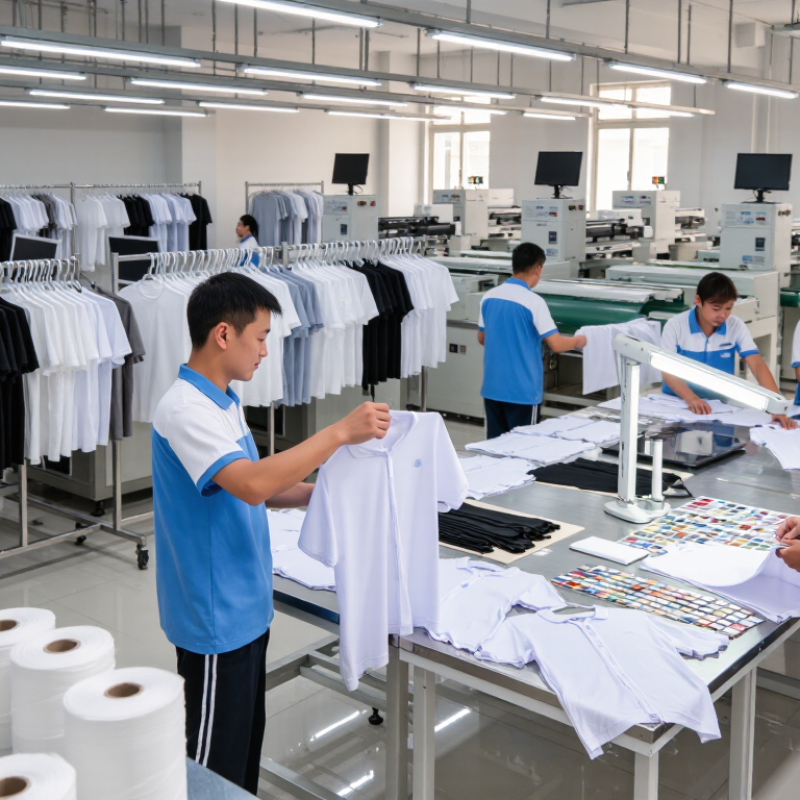
Before choosing a custom T-shirt manufacturer, define exactly what you need. Start with the shirt’s purpose, target wearer, and expected selling environment. A staff uniform needs different fabric than a soft promotional shirt. Small details matter.
Record the fabric type, weight, color, fit, size range, and decoration method. Cotton feels familiar, while cotton blends may dry faster and resist shrinking. State whether you need screen printing, embroidery, heat transfer, or direct-to-garment printing. Add artwork files, placement measurements, thread colors, and packaging instructions. Measure twice.
Your specification should also include the order quantity, delivery location, deadline, and acceptable quality limits. Mention stitching expectations, label placement, wash durability, and color tolerance. A practical manufacturer can review these details and identify production risks before sampling. Ask for a physical sample, then test its fit, shrinkage, print adhesion, and seam strength after washing.
My early mistake was focusing on artwork before checking the fabric’s surface. The design looked sharp digitally but felt less suitable on textured material. That lesson changed my process. I now separate must-have requirements from flexible preferences. Keep samples and approval records. Clear documentation reduces misunderstandings, but it cannot replace careful inspection.
Compare each manufacturer’s capabilities before comparing prices. Ask whether they offer cut-and-sew production, private-label finishing, screen printing, direct-to-garment printing, embroidery, and heat-transfer options. Each method suits different artwork, fabric weights, order sizes, and durability expectations.
Screen printing works well for larger runs with simple graphics. Direct-to-garment printing offers detailed designs but may require compatible fabric preparation.
Fabric selection also deserves careful testing. Textile Exchange’s Materials Market Report 2024 states that global fiber production reached 124 million tonnes in 2023 and may reach 160 million tonnes by 2030. This growth makes material traceability more important.
Request fiber content, GSM, shrinkage results, colorfastness records, and relevant certifications. Compare minimum order quantities, sample charges, production capacity, lead times, and quality-control checkpoints. A factory that explains its limitations is often more reliable than one promising everything.
Tips:
Request one physical sample before placing a bulk order. Wash it three times. Check collar recovery, seam strength, print cracking, and size accuracy. Ask for a written production schedule and inspection process. Confirm whether the manufacturer can scale from 100 pieces to 10,000 without changing fabric or workmanship.
A low MOQ sounds attractive, but its unit cost may be difficult. I would not treat a polished sample as final proof; real production can still vary. Evaluate communication, documentation, and corrective-action experience, not only the lowest quotation.
Choosing a custom T-shirt manufacturer starts with fabric, not a glossy product photo. The 2024 Textile Exchange Materials Market Report recorded about 124 million tonnes of global fiber production in 2023. Polyester represented roughly 57%, while cotton accounted for about 22%. These figures show why fiber selection deserves careful questioning. Ask for the exact composition, fabric weight, shrinkage rate, and colorfastness results. A 180 GSM combed cotton shirt should feel stable, not papery. Check the collar recovery after stretching. This simple test is useful, but imperfect.
Printing methods must match the artwork and order size. Grand View Research estimated the custom T-shirt printing market at approximately 5.1 billion dollars in 2023. It also projected strong growth through 2030. For small batches, direct-to-garment printing can reproduce detailed gradients with little setup. Screen printing usually delivers stronger coverage and lower unit costs for larger runs. Heat-transfer printing may suit names, numbers, and short production cycles. Request wash-test samples. A vivid first print can still crack after several washes.
Craftsmanship appears in places customers often miss. Inspect shoulder seams, thread trimming, hem width, and print alignment under bright light. Ask whether the factory records needle changes, inspection results, and rework rates. Reliable suppliers should provide measurable tolerances, not vague promises. I would request three samples from different production days. One perfect sample proves very little. Even experienced buyers can overlook uneven side seams when deadlines become uncomfortable. A written pre-production approval protects both sides, though it cannot replace physical inspection.
| Evaluation Dimension | Recommended Benchmark | Why It Matters | What to Verify |
|---|---|---|---|
| Fabric Composition | 100% cotton for natural softness; cotton-polyester blends for improved shape retention and moisture management. | Fiber content affects comfort, breathability, durability, shrinkage, and print compatibility. | Request a fabric specification sheet and confirm the fiber composition through testing or documentation. |
| Fabric Weight | Approximately 140–180 GSM for lightweight everyday shirts; 180–240 GSM for heavier, structured styles. | GSM influences opacity, drape, perceived quality, warmth, and shipping weight. | Compare physical swatches and verify GSM using a calibrated fabric scale or test report. |
| Pre-Shrinking and Dimensional Stability | A controlled shrinkage target, commonly around 3% or less after the specified wash process. | Uncontrolled shrinkage can change garment fit and cause customer complaints. | Ask for wash-test results covering length, width, and measurements after laundering. |
| Colorfastness | Color should resist noticeable fading, rubbing, perspiration, and washing under the agreed care instructions. | Poor colorfastness leads to fading, staining, and inconsistent production batches. | Request test results based on recognized textile testing procedures and review the care label. |
| Screen Printing | Best suited to medium or large runs with simple artwork and strong color coverage. | It can provide saturated color and good durability when ink curing and mesh selection are properly controlled. | Inspect edge sharpness, registration, ink coverage, hand feel, and wash-test performance. |
| Direct-to-Garment Printing | Suitable for detailed, multicolor artwork and smaller quantities, especially on cotton-rich fabrics. | It supports photographic detail without requiring traditional screen setups. | Check pretreatment consistency, color accuracy, print softness, and cracking or fading after washing. |
| Heat Transfer and Film Printing | Useful for short runs, personalized orders, names, numbers, and designs requiring quick setup. | It offers flexible production but may create a more noticeable surface layer than direct printing. | Evaluate adhesion, stretch recovery, peeling resistance, surface feel, and heat-press consistency. |
| Embroidery | Recommended for small logos, text, and premium workwear details rather than large full-front graphics. | It provides a raised, durable finish but can add weight and stiffness to lightweight fabric. | Check stitch density, thread tension, backing, alignment, loose threads, and puckering. |
| Seam Construction | Even stitching, secure seam ends, consistent seam allowance, and reinforced stress points. | Construction quality affects comfort, appearance, and resistance to seam failure. | Inspect shoulder seams, armholes, side seams, hems, neck binding, and skipped stitches. |
| Neck Rib and Collar Recovery | The collar should lie flat, match the approved sample, and recover its shape after stretching and washing. | Weak rib construction can cause waviness, stretching, or premature deformation. | Test stretch recovery and inspect the collar join for smooth, balanced stitching. |
| Size and Measurement Tolerance | Agree on a measurement chart and practical tolerances, commonly about ±1–2 cm depending on the measurement point. | Consistent sizing reduces returns and keeps repeated production aligned with the approved sample. | Require a pre-production sample, measurement report, and final random inspection. |
| Sampling and Quality Control | A documented approval process covering fabric, color, artwork placement, measurements, labels, packaging, and final inspection. | Clear checkpoints reduce variation between the approved sample and bulk shipment. | Confirm sample charges, revision rules, inspection criteria, defect classification, and corrective-action procedures. |
Note: The benchmarks above are general apparel-production guidelines. Final specifications should be agreed in writing and confirmed through approved samples and wash or print tests.
Choosing a custom T-shirt manufacturer requires more than comparing the lowest unit price. Ask for a detailed quotation covering fabric, printing, labels, packaging, setup fees, shipping, and possible revision charges. A low price may hide expensive extras. Request payment terms in writing, and check whether taxes or delivery costs are excluded.
Minimum order quantities can affect your budget quickly. A manufacturer may offer a lower price for 500 shirts, but ordering 100 may suit a small campaign better. Ask whether sizes, colors, and designs share one minimum order. Some factories combine quantities, while others calculate each variation separately. This detail is easy to miss.
Always approve a physical sample before full production. Check the fabric weight, stitching, print position, color accuracy, and measurements after washing. Digital previews are useful, but they cannot show how ink feels on cotton. I once treated a sample as final without testing shrinkage. That was a mistake. Ask for a revised sample when needed, even if it delays approval. Confirm the sample fee and whether it is credited toward the production order.
Lead times should include sampling, material sourcing, production, inspection, and shipping. Request specific dates instead of vague promises such as “fast delivery.” Build extra time for public holidays, artwork changes, and quality problems. A written production schedule makes delays easier to identify and discuss. Ask how the manufacturer handles defective items, late shipments, and approved changes. Clear answers show practical experience and make the partnership more dependable.
Choosing a custom T-shirt manufacturer requires more than comparing prices. Reviews reveal how a factory behaves after receiving payment. The 2024 BrightLocal Local Consumer Review Survey reported that 91% of consumers read online reviews. Apply that habit to supplier research. Look for repeated comments about fabric accuracy, sample timing, print durability, and damaged cartons. Ask for recent buyer references, not only screenshots. One polished testimonial proves little.
Certifications provide another reliability check. ISO’s 2022 Survey recorded more than 1.2 million valid ISO 9001 certificates worldwide, showing how widely quality systems are used. However, a certificate alone cannot guarantee consistent shirts. Verify the certificate number, scope, issuing body, and expiration date. For organic or recycled materials, request transaction records and fiber-content test reports. Check whether the certificate covers the actual production site. This detail is often missed.
Communication should be tested before ordering. Send a clear specification sheet with measurements, fabric weight, color references, label placement, and packaging requirements. A dependable manufacturer should confirm unclear points instead of guessing. Measure response time, too. Can the team explain a failed sample with photographs and corrective actions? A 2023 industry survey by McKinsey found that supply-chain disruptions remained a major concern for many fashion companies, so contingency questions matter. Ask about backup fabric sources and production capacity. I would not trust perfect promises. A factory that admits one weak process, then proposes a measurable fix, may be more credible than one claiming flawless performance.
Compare cut-and-sew, private-label finishing, screen printing, direct-to-garment printing, embroidery, and heat transfer. Screen printing suits larger runs and simple artwork. Detailed designs may need direct-to-garment printing. Each method affects fabric preparation, durability, cost, and order size.
Request fiber content, GSM, shrinkage results, colorfastness records, and relevant certifications. Ask how materials are traced. A heavier fabric may feel better, but it can change shipping costs and sizing.
Order one physical sample before approving bulk production. Wash it three times. Check collar recovery, seam strength, print cracking, color accuracy, and measurements. Digital previews cannot show the ink’s actual texture. I once trusted appearance too much.
The quotation should list fabric, printing, labels, packaging, setup fees, shipping, taxes, and revision charges. Confirm payment terms in writing. A low price can hide costly extras.
Ask whether the minimum applies to total pieces or each size, color, and design. Some manufacturers combine quantities, while others calculate every variation separately. Ordering 100 shirts may fit your campaign better than ordering 500. The unit price may still hurt.
Request dates for sampling, material sourcing, production, inspection, and shipping. Avoid vague promises like “fast delivery.” Allow extra time for holidays, artwork changes, and quality problems. Delays happen.
Ask whether fabric, measurements, printing, and workmanship will remain consistent at larger volumes. Request a written production schedule and quality-control checkpoints. A polished sample is not final proof. Bulk production can still vary.
Ask how the manufacturer handles defects, delays, approved changes, and corrective action. Confirm inspection procedures before production begins. Clear documentation matters. The lowest quotation is not always the safest choice.
Choosing the right custom T-shirt manufacturer begins with clearly defining your product requirements, including shirt style, fabric preferences, sizes, colors, artwork, quantities, and intended use. You should then compare each supplier’s production capabilities, equipment, customization options, and capacity to ensure they can handle your project consistently. Pay close attention to fabric quality, printing or embroidery methods, stitching, color accuracy, and overall craftsmanship, since these factors directly affect the final product.
During the selection process, review pricing, minimum order quantities, sample policies, payment terms, and estimated lead times. Requesting samples can help you assess quality before placing a larger order. Reliable manufacturers should also demonstrate strong communication, transparent processes, positive customer feedback, and relevant quality certifications where applicable. By carefully evaluating these areas, you can choose a partner that supports efficient Custom T-shirt manufacturing, delivers consistent results, and meets your expectations for quality, budget, and schedule.