Choosing a reliable sportswear supplier requires more than comparing factory photos and low quotations. This guide explores China’s top 10 custom sportswear manufacturers through practical sourcing criteria, including product quality, production capacity, fabric options, communication, and delivery performance. The focus is Custom sportswear manufacturing for brands, clubs, schools, gyms, and professional teams.
Details matter. A strong manufacturer should explain fabric weight, stretch recovery, colorfastness, stitching density, and printing durability. Samples should be tested before bulk production. For example, a cycling jersey may need breathable mesh panels, a stable zipper, and flat seams that reduce skin irritation. A basketball uniform requires different measurements and fabric behavior.
Real experience helps.
The selection process should also consider factory audits, quality-control procedures, export experience, and recognized compliance documentation. However, supplier information can change quickly. A manufacturer with excellent reviews last year may face delays, staff changes, or material shortages today. That is why this article avoids treating any ranking as permanent truth. It encourages readers to request current samples, confirm lead times, review payment terms, and communicate detailed specifications in writing.
Some factories excel at small custom orders. Others perform better with large, repeat programs. Neither model is automatically superior. The best choice depends on your design complexity, target market, budget, and expected growth. These manufacturers are presented as potential partners, not guaranteed solutions. Careful verification remains necessary before signing a production agreement.
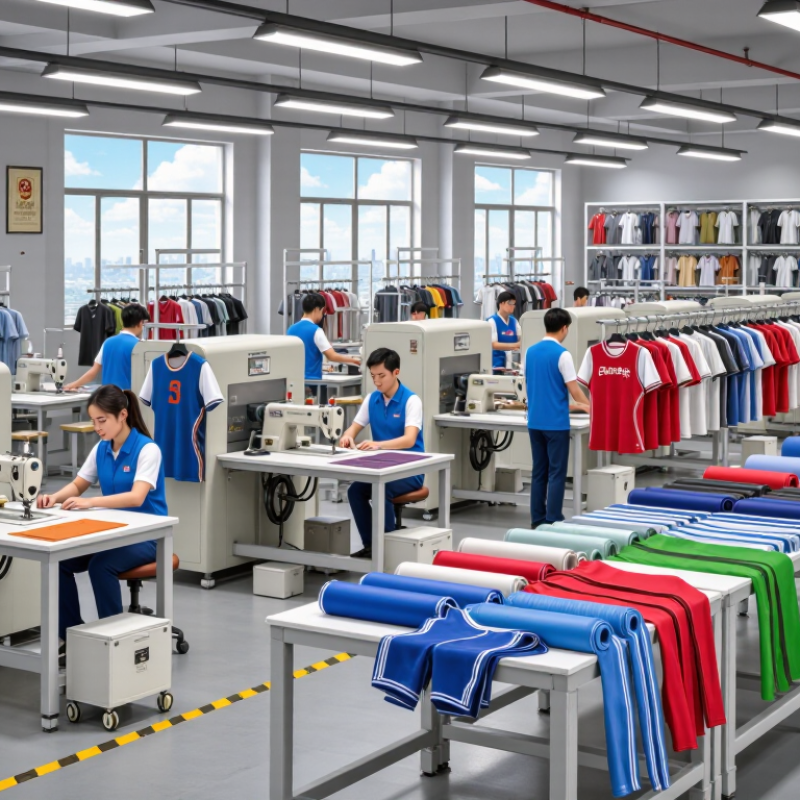
Custom sportswear manufacturers in China are factories and production partners that create athletic clothing based on a buyer’s specifications. They may develop jerseys, training tops, leggings, shorts, and team uniforms. Their work can include fabric sourcing, pattern making, printing, embroidery, sewing, quality inspection, and packaging. Some manufacturers produce small trial orders, while others focus on large-volume production.
A reliable manufacturer should explain fabric weight, stretch recovery, colorfastness, sizing, and production timing clearly. In practical projects, sample approval matters greatly. A shirt may look correct on a screen but feel too tight during movement. Experienced manufacturers usually provide measurement charts and test samples before bulk production. Still, communication can fail. A detailed technical file reduces avoidable mistakes.
Tips: Ask for factory photos, sample details, material certificates, and a written production schedule. Confirm minimum order quantities and inspection procedures before payment. Check stitching around seams and waistbands. Do not judge quality from photographs alone. One limitation remains: a low quotation may exclude packaging, revisions, or shipping costs. Manufacturers are not identical, even within the same industrial region. A careful comparison is necessary.
A reliable evaluation starts with factory evidence, not polished catalog photos. Request recent production samples, fabric specifications, test reports, and a live video inspection of cutting, sewing, printing, and packing areas. Check fabric weight, stretch recovery, colorfastness, pilling resistance, and seam strength. These details matter during repeated washing and intense training. Use ISO 2859-1 sampling procedures when inspecting bulk orders, and define acceptable quality limits before production begins. A cheap sample can hide expensive inconsistency.
Capacity must match your order, but larger is not automatically better. Ask for documented monthly output, typical lead times, minimum order quantities, and subcontracting controls. The OECD Due Diligence Guidance for Responsible Supply Chains in the Garment and Footwear Sector recommends tracing risks beyond the direct supplier. That means checking labor practices, chemical management, and material records. Textile Exchange’s Materials Market Report 2024 reported global fiber production at 124 million metric tonnes in 2023. Such scale makes recycled-content claims easy to repeat and difficult to verify. Request transaction certificates or equivalent evidence, not promises. I have found that communication speed predicts fewer mistakes, although it cannot replace inspection. One overlooked measurement can ruin an entire size run. Evaluate three samples, compare measurements, and record every correction before signing production terms.
China’s Top 10 Custom Sportswear Manufacturers are often compared by quality, capacity, and communication. This guide focuses on practical sourcing evidence, not polished factory photos. Experienced buyers should request fabric swatches, size charts, and pre-production samples before placing large orders.
Reliable manufacturers usually explain their process clearly. They should identify fabric composition, weight, stretch recovery, and colorfastness results. Details matter. A running shirt may need breathable mesh, flat seams, and stable printing after repeated washing. A cycling kit requires precise panels, secure zippers, and consistent sizing. Production areas should appear organized, with documented inspections and traceable packaging.
Cost is important, but the lowest quote may hide weak stitching or changing materials. Ask about sample approval, defect handling, lead times, and shipment checks. Independent testing can improve confidence, especially for fabric safety and performance claims. However, no shortlist is perfect. Factory conditions can change, and online information may become outdated. I would reassess each manufacturer after receiving samples, because one uneven hem can reveal more than a sales presentation. Clear records, honest limitations, and repeatable quality remain stronger indicators than impressive promises.
China Top 10 Custom Sportswear Manufacturers?
Comparing products, services, quality, and production capacity requires more than counting factory rankings. A practical shortlist should cover jerseys, training sets, leggings, jackets, and accessories. Request fabric swatches with GSM, stretch recovery, breathability, and colorfastness data. A polished sample can still hide production weaknesses.
Service quality appears during development. Strong manufacturers review tech packs, confirm measurements, and provide size-set samples before bulk cutting. Ask about pattern correction, artwork approval, packaging, and response times. Communication matters. One missed measurement can affect thousands of garments. I would also examine minimum order quantities and reordering procedures, because small teams often need flexibility.
Quality control should include fabric inspection, stitching checks, print alignment, measurement audits, and final random inspection. Ask for documented procedures, not broad promises. Production capacity needs careful comparison. Monthly output, sewing-line numbers, lead times, and peak-season planning are useful indicators. However, capacity figures may be optimistic. Verify them through factory records, recent sample schedules, and a live video or on-site review. Some factories produce quickly but struggle with complicated panels or repeated color matching. That weakness deserves attention. A supplier with fewer lines may deliver steadier quality than a larger facility. My own evaluation would leave room for doubt, since one successful sample never proves consistent bulk performance.
Comparative index based on four practical dimensions: product breadth, service capability, quality-system maturity, and production capacity. Scores are normalized to a 100-point scale for category-level comparison without displaying company or brand data.
Product breadth covers apparel categories and customization options; service capability includes sampling, private labeling, and order support; quality reflects testing and process-control practices; production capacity represents scalability for bulk orders.
Choosing a Chinese sportswear manufacturer requires more than comparing factory prices. The 2024 Textile Exchange Materials Market Report estimated global fiber production at about 124 million tonnes in 2023. Polyester represented roughly 57% of that volume, making material traceability increasingly important. Ask each supplier for fiber composition records, recycled-content evidence, and recent laboratory reports. A polished website proves little.
Start with a factory audit or a verified third-party inspection. Check cutting tables, sewing lines, quality-control stations, and finished-goods storage. Request production samples using your actual fabric, logo method, seams, and size chart. Test stretch recovery, colorfastness, pilling, and wash shrinkage. The International Organization for Standardization states that ISO 9001 supports consistent quality-management processes, but certification does not guarantee perfect garments. I would verify the certificate directly.
Review minimum order quantities, sampling fees, production capacity, payment terms, and corrective-action procedures. Ask how the factory handles defective panels. Ask for documented lead times, not casual promises. The 2024 McKinsey Sporting Goods report highlights continued pressure on value, innovation, and supply-chain resilience. This means the cheapest quotation may become expensive after rework or delays. That lesson is easy to ignore. A smaller, responsive factory can sometimes outperform a larger one, although capacity claims need proof. Keep approved samples, inspection criteria, and delivery milestones in writing before production begins.
It makes jerseys, training tops, leggings, shorts, jackets, and team uniforms. Some factories also handle packaging.
Services may include fabric sourcing, pattern making, printing, embroidery, sewing, inspection, and packaging. Not every factory offers everything.
A digital design can look accurate but feel tight during movement. Review fabric stretch, measurements, seams, and comfort. Test it physically.
Ask for GSM, stretch recovery, breathability, and colorfastness data. Fabric swatches are more useful than attractive photographs.
Provide a detailed technical file with measurements, artwork, colors, labels, and packaging instructions. One missing measurement can affect thousands of garments.
Confirm minimum order quantities, sample costs, revisions, inspection procedures, timing, and shipping terms. Get the production schedule in writing.
Check fabric, stitching, print alignment, measurements, waistbands, and seams. Final random inspection helps, but it cannot repair poor patterns.
Ask about sewing lines, monthly output, lead times, and peak-season planning. Request recent records or a live factory review. Capacity claims may be optimistic.
Not always. A low price may exclude packaging, revisions, or shipping. Compare the complete cost, not just the first figure.
No. Bulk production may show color differences, uneven stitching, or measurement changes. I would keep some doubt and inspect repeatedly.
China has become an important sourcing destination for custom sportswear manufacturers, offering flexible design development, competitive production costs, and a wide range of apparel capabilities. This article explains what custom sportswear manufacturing involves, including fabric selection, pattern development, logo application, sample approval, bulk production, quality inspection, and packaging. It also introduces practical ways to evaluate suppliers by reviewing their experience, communication, certifications, production equipment, minimum order quantities, lead times, and ability to support customized requirements.
The comparison focuses on product variety, service quality, manufacturing capacity, material performance, workmanship, pricing, and quality-control systems. It also considers how well a supplier can handle different order volumes and maintain consistent standards. To choose the right Chinese sportswear manufacturer, buyers should clearly define their product specifications, budget, timeline, target market, and customization needs, then compare several qualified options through samples and detailed discussions. A reliable long-term partner should provide transparent communication, stable quality, reasonable production schedules, and dependable after-sales support.