Choosing a streetwear manufacturer is not just a search for a low unit price. Global buyers need partners who can turn a design into consistent garments, from the first sample to repeat orders. Custom streetwear production often involves heavyweight fleece, accurate screen prints, embroidery placement, custom labels, and size grading that holds up across a full run. Small details matter.
This guide compares ten manufacturers through practical questions: What products do they specialize in? Can they support sampling and private labeling? How do they explain minimum order quantities, lead times, quality checks, and communication? Fashion designer and sustainability advocate Orsola de Castro has said, “The most sustainable garment is the one already in your wardrobe.” Her point is a useful reminder: durable construction and clear specifications can matter as much as a striking graphic.
A polished website, however, cannot prove factory capacity or guarantee delivery dates. Buyers should request current samples, confirm specifications in writing, and check how defects or delays are handled before committing. Real trade-offs remain. A factory may offer flexibility but require longer lead times; another may move quickly but limit fabric choices. This top-ten overview is a starting point, not a substitute for due diligence. Compare each supplier against your product, budget, order size, and timeline, then verify important claims directly with the manufacturer.
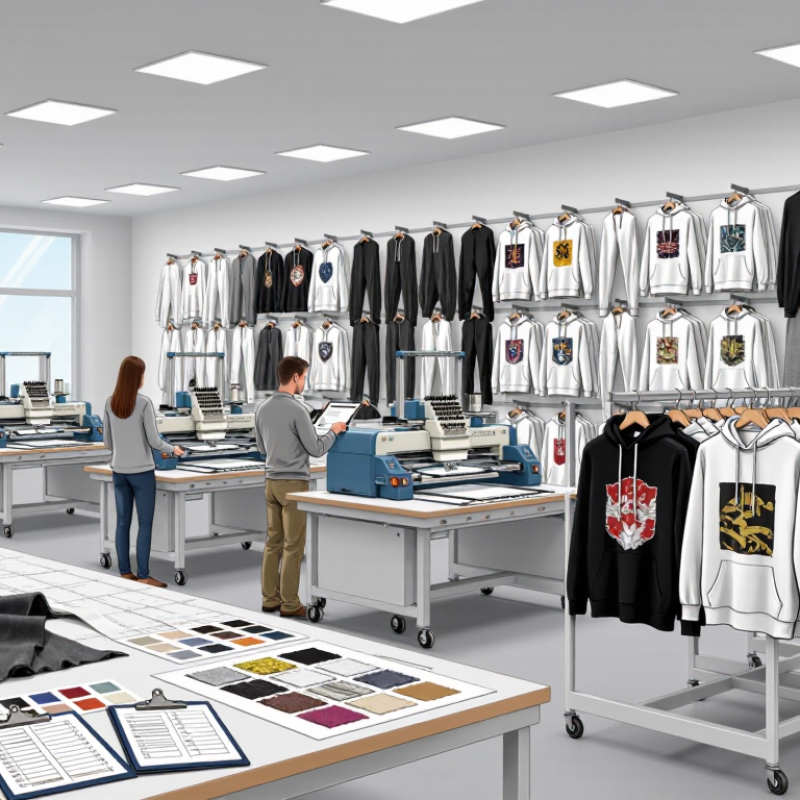
Custom streetwear manufacturing in China covers more than sewing garments. Suppliers may handle fabric sourcing, pattern development, printing, embroidery, washing, and packing, but capabilities differ by workshop. Buyers should confirm which steps happen in-house and which are subcontracted. Details matter. A clear tech pack helps: include measurements, fabric weight, stitch references, trim placement, and color standards. Photos alone can leave room for interpretation.
Sampling turns those specifications into a garment that can be checked by hand. Review fit, seam strength, print position, shrinkage, and how the fabric feels after washing. Ask for revisions before approving bulk production. That takes time. Minimum order quantities, sample fees, lead times, and payment terms should be confirmed in writing, since they vary by supplier and product complexity. A low quoted price may exclude finishing or inspection costs, so compare itemized quotations.
Quality control should have defined checkpoints, not just a final glance at packed cartons. Buyers can request measurement records and photos from production, then arrange an independent inspection when appropriate. Communication matters too: agree on response times and how changes are documented. Even a detailed process can miss something. Recheck the approved sample against bulk garments, especially when fabrics or dye lots change.
Choosing a Chinese streetwear manufacturer is not just a price comparison. Review its experience with heavyweight jersey, fleece, denim, and the finishing your designs require. Ask for a sample made from the intended fabric, then check measurements, seam strength, print placement, and shrinkage after washing. A polished sample can still mislead. Bulk production is the real test.
Check capacity and communication with specific questions: What is the minimum order quantity per color? Which steps are done in-house? Can the factory share a production schedule and explain how defects are handled? Request recent quality-control records and clarify whether work is subcontracted. Details matter. Vague answers are a warning, even when the quote looks attractive.
Material traceability deserves equal attention. Textile Exchange’s Materials Market Report 2024 estimates that global fiber production reached 124 million tonnes in 2023, with polyester making up about 57 percent. Ask suppliers to document fiber composition and support any recycled-content claims with traceable records. Compare test results for colorfastness and fabric performance, not just swatches. It is tempting to trust the first sample; that can be a mistake. Agree on measurable tolerances before bulk production, and keep a signed reference sample for comparison.
Suggested evaluation weighting for comparing manufacturers. These percentages are a practical framework, not measured scores for specific companies. Adjust them to match your product, order size, and compliance requirements.
China’s Top 10 Custom Streetwear Manufacturers for Global Buyers should be judged by more than price. Strong partners can turn a sketch into a wearable sample, then repeat its measurements across larger orders. Look for clear experience with heavyweight jersey, fleece, ribbing, garment dyeing, and custom labels. Ask how they check shrinkage, stitching, and color consistency. A neat sample matters. So does a reliable production process.
The right factory should explain its minimum order quantity, sample fees, lead times, and fabric options in writing. Request close-up photos of seams, cuffs, and prints, not only polished product shots. Compare the approved sample with the final production checklist. Even careful suppliers can miss small details; a sleeve may feel tighter, or a washed color may shift. That deserves a direct conversation before bulk production begins.
Tips: Send a simple tech pack with measurements, fabric weight, artwork placement, and finishing notes. Ask for a pre-production sample and confirm who pays for revisions. Keep communication in one written channel. Be realistic: a low quote may exclude packaging, shipping, or testing, and I would still double-check every line.
Custom streetwear customization works best when design choices are clear before bulk production. Buyers can specify fabric weight, garment measurements, print placement, embroidery size, labels, and packaging. A detailed tech pack helps reduce guesswork. For example, mark a chest print’s width and distance from the collar, rather than sending only a reference image. Request a physical sample in the intended fabric, since colors and drape can change after washing. One sample is not always enough.
A dependable production process moves from material approval to pattern making, sampling, bulk cutting, sewing, decoration, and final inspection. Ask how the factory checks measurements and handles defects. A tolerance chart can clarify acceptable differences, while inline checks may catch uneven stitching before an entire batch is finished. For quality control, inspect seam strength, print alignment, color consistency, and garment measurements. Wash-test samples when shrinkage matters. Small oversights happen; unclear artwork files can still cause delays, so review every placement carefully.
Tips: Approve a sealed sample before bulk production. Keep written records of fabric, measurements, and approved colors. If a result feels slightly off, pause and investigate rather than assuming every unit will match.
Anonymous comparison of common China-based supplier profiles; this is not a verified ranking or a company-specific directory. MOQ, lead time, and available services are indicative industry ranges and vary by fabric, design complexity, order size, and season. Confirm current capabilities, samples, and inspection terms directly with each supplier.
| Profile | Typical Product Focus | Customization Options | Common Production Process | Indicative MOQ | Indicative Bulk Lead Time | Quality Control Checks | Suitable For |
|---|---|---|---|---|---|---|---|
| Profile 1 | Graphic T-shirts and long-sleeve tops | Fabric weight and composition, garment dyeing, screen printing, DTG printing, embroidery, neck labels, hangtags, and packaging | Fabric inspection → pattern and sample approval → cutting → printing or embroidery → sewing → finishing → final inspection | About 50–300 pieces per style, depending on fabric and decoration | About 20–35 days after sample and materials approval | Fabric shade and weight checks; print placement and adhesion checks; measurement sampling; seam and appearance inspection | Small-to-mid-sized labels launching graphic basics |
| Profile 2 | Hoodies, sweatshirts, and fleece sets | Fleece weight, brushed or unbrushed interior, rib details, paneling, embroidery, appliqué, puff print, and custom trims | Material sourcing → shrinkage and color checks → cutting → decoration → sewing → washing or finishing → inspection | About 100–500 pieces per style | About 25–40 days after materials are ready | Fabric weight and shrinkage tests; rib recovery checks; stitch and seam inspection; size measurements; decoration review | Brands developing seasonal fleece collections |
| Profile 3 | Cut-and-sew oversized streetwear | Custom patterns, dropped shoulders, boxy fits, contrast panels, garment dyeing, distressing, and woven labels | Tech-pack review → pattern development → fit sample → size-set approval → bulk cutting and sewing → finishing inspection | About 100–500 pieces per style; custom fabrics may require higher commitments | About 30–45 days after pre-production approval | Pattern and grading review; fit and measurement checks; seam strength and construction inspection; shade consistency checks | Buyers prioritizing distinctive silhouettes and fit |
| Profile 4 | Denim jackets, jeans, and workwear-inspired pieces | Denim weight, washes, abrasion, whiskering, patch details, hardware, embroidery, and custom pocket construction | Denim sourcing → wash and trim approval → pattern and sample development → cutting and sewing → wash treatment → final inspection | About 200–800 pieces per style; wash programs can affect minimums | About 35–55 days, especially when garment washing is involved | Wash shade and hand-feel approval; hardware function checks; seam and bartack inspection; measurements after washing | Collections requiring denim treatments or durable construction |
| Profile 5 | Tracksuits, jerseys, and performance streetwear | Polyester or blended fabrics, mesh panels, sublimation printing, reflective details, elastic trims, and custom color blocking | Fabric testing → pattern and sample approval → cutting → printing or panel decoration → assembly → performance and visual checks | About 100–500 pieces per style | About 25–40 days after material and artwork approval | Colorfastness and print checks; stretch and recovery review; seam inspection; measurement and panel alignment checks | Sports-inspired streetwear and coordinated sets |
| Profile 6 | Outerwear, varsity jackets, and padded pieces | Shell and lining fabrics, insulation options, embroidery, chenille patches, snaps, zippers, rib trims, and custom linings | Material and trim confirmation → prototype sampling → fit and function approval → cutting → sewing and assembly → final inspection | About 200–1,000 pieces per style, depending on components and construction | About 35–60 days after sample approval | Zipper and snap function; insulation distribution; seam and lining inspection; measurements; check of decoration placement | Premium, layered, or more construction-intensive collections |
| Profile 7 | Caps, beanies, and soft accessories | Embroidery, woven patches, knit patterns, custom labels, fabric colors, closures, and packaging | Material approval → artwork digitizing or knit programming → sample review → production → shape, decoration, and finishing checks | About 100–500 pieces per design | About 20–35 days after artwork and materials approval | Logo position and stitch review; color matching; shape and size checks; closure or knit construction inspection | Brands adding coordinated accessories to apparel drops |
| Profile 8 | Small-batch cut-and-sew apparel | Flexible style mix, stock fabrics, basic printing or embroidery, private labels, and simple packaging options | Design review → sample development → material confirmation → small-batch cutting and sewing → finishing and inspection | About 30–150 pieces per style when stock materials are available | About 20–35 days after sample approval | First-piece approval; in-line workmanship checks; size and label verification; final visual inspection | Independent labels testing new designs or limited drops |
| Profile 9 | Premium jersey, heavyweight tees, and elevated basics | Higher-weight cotton or blends, enzyme or softening washes, custom neck construction, embroidery, and refined trims | Yarn or fabric sourcing → fabric inspection → shrinkage testing → sample and fit approval → sewing → washing and finishing | About 150–600 pieces per style; special fabric orders may require more | About 30–45 days after fabric and sample approval | Fabric composition and weight review; shrinkage and shade checks; collar recovery; measurement and seam inspection | Buyers seeking upgraded materials and consistent core styles |
| Profile 10 | Multi-category streetwear programs | Coordinated tops, bottoms, and outerwear; custom labels; varied print and embroidery methods; packaging and assortment planning | Tech-pack consolidation → sample round → bill-of-materials approval → production scheduling by category → in-line and final inspections | About 200–1,000 pieces per style; minimums are usually assessed by style and color | About 30–60 days, depending on the number of styles and materials | Approved sample reference; in-line checks; size-set and color checks; packing-list and carton-label verification; final random inspection | Global buyers coordinating larger, multi-style collections |
Choosing a streetwear manufacturer requires more than comparing unit prices. Ask how the team handles fabric sourcing, pattern adjustments, size grading, and quality checks. A heavyweight hoodie sample may feel right, yet shrink after washing or twist at the seams. Request a pre-production sample made with the intended fabric and trims. Check measurements, stitching, print placement, and wash results before approving bulk production. Small details matter.
Tips: Share a clear tech pack, reference measurements, and color standards. Ask for written minimum order quantities, sample fees, lead times, and payment terms. Confirm who inspects finished garments and how defects are recorded. Vague answers are a warning sign.
Communication is part of production quality. Notice whether the manufacturer flags unclear artwork or unrealistic timelines, rather than simply agreeing. Ask for progress updates at agreed milestones, such as fabric approval and pre-shipment inspection. A factory’s stated capacity may not reflect its current workload, so request a realistic schedule. Even careful planning cannot remove every delay. Buyers should leave room for revisions and shipping changes. Looking back, it is easy to focus too much on price and too little on how problems are handled.
Compare fabric options, sample fees, minimum order quantities, lead times, and payment terms. A low quote may exclude packaging or shipping.
Include garment measurements, fabric weight, artwork placement, labels, and finishing notes. Mark print width and distance from the collar, not just a reference image.
It shows how the intended fabric and trims perform before bulk cutting. Check fit, seams, color, print alignment, and wash results.
Ask about measurement checks, seam strength, defect records, and inline inspections. Inspect cuffs and stitching closely. Details can drift. Small misses happen.
A wash test can expose shrinkage, color shifts, or twisted seams. A hoodie may feel right before washing, then fit differently.
Keep written records of fabric, measurements, colors, and revisions. Approve a sealed sample before production begins. Use one written channel for updates.
Look for clear answers and early warnings about unclear artwork or unrealistic timelines. Agree on updates at fabric approval and pre-shipment inspection.
Leave time for revisions and shipping changes, since stated capacity may not reflect current workload. I still catch myself comparing price first. That deserves reconsideration.
This guide explains how custom streetwear manufacturing in China works, from turning design concepts into production-ready garments to coordinating materials, sizing, sampling, and manufacturing schedules. It outlines practical ways for global buyers to assess potential suppliers, including reviewing relevant experience, communication, production capacity, quality procedures, and transparency about costs and lead times.
A comparison of ten manufacturer options helps readers understand the kinds of capabilities available without assuming that one supplier suits every project. The guide also covers customization choices, production stages, and quality checks that can help maintain consistency from sample approval through final inspection. By considering product requirements, order volume, budget, timelines, and supplier communication together, buyers can make a more informed choice of manufacturing partner for their custom streetwear production needs.