
Have any questions? (646) 681-4212  |  [email protected]
0%

Private label hoodie production is no longer a simple cut-and-sew exercise. Buyers now compare fabric weight, fleece structure, dye performance, decoration methods, minimum order quantities, and replenishment speed. The 2024 Textile Exchange Materials Market Report recorded 124 million tonnes of global fiber production in 2023, with output projected to reach 160 million tonnes by 2030. That scale makes material selection impossible to ignore. A 350-gram organic cotton hoodie feels different from a 280-gram cotton-polyester blend, especially after repeated washing.

Market structure matters too. The McKinsey State of Fashion 2025 report describes a cautious fashion market shaped by weak consumer confidence, higher costs, and demanding inventory decisions. Sheng Lu, Associate Professor of Fashion and Apparel Studies at the University of Delaware, has stated, “The U.S. apparel industry is highly dependent on imports.” His observation is directly relevant to buyers choosing factories, regions, and backup suppliers for private-label programs. Production location affects landed cost, lead time, compliance documentation, and communication quality.

This guide examines ten private label hoodie production types, from basic fleece styles to heavyweight oversized and sustainable constructions. Each type carries trade-offs. Lower cost may mean less durability. Faster sampling may reduce fabric options. No sourcing matrix is perfect. That is the uncomfortable part. Buyers should test shrinkage, pilling, colorfastness, seam strength, and actual fit before approving bulk production. The best choice is rarely the cheapest hoodie. It is the style that matches customer expectations, sales volume, target margin, and realistic supply-chain capacity. Examine the details closely. Small decisions become expensive at scale.
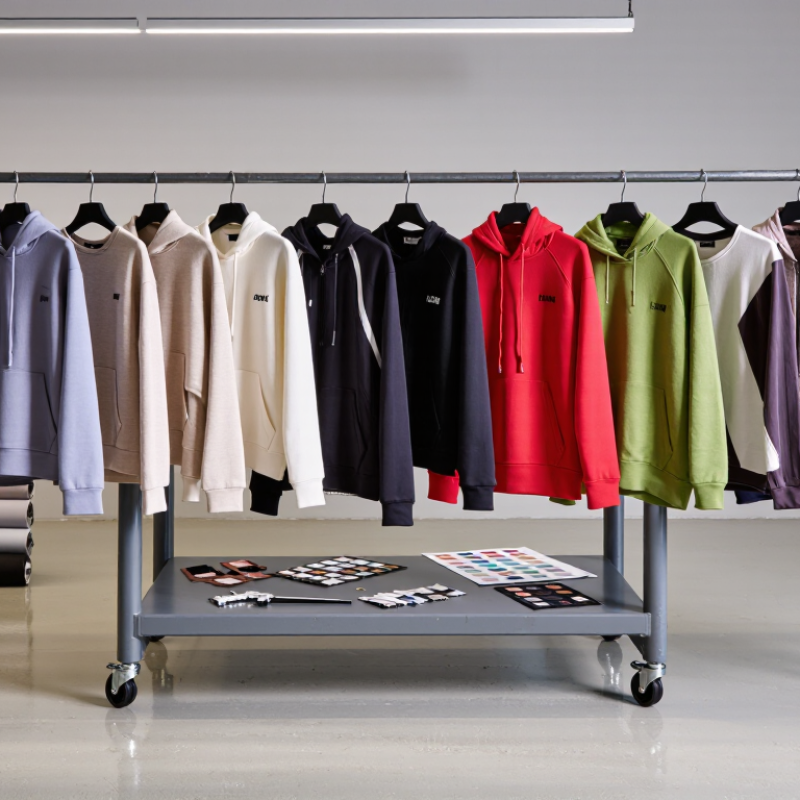
Top 10 Private Label Hoodie Production Types for Buyers

Private-Label Hoodie Taxonomy: 10 Types Classified by GSM, Fabric, and Fit

Private-label hoodie buyers need more than a weight chart. GSM, fabric, and fit change the product’s cost, comfort, and retail appeal. This taxonomy defines ten practical production types for clearer sampling decisions.

The first type is the 180–220 GSM cotton jersey hoodie, light and suitable for mild weather.

The second is the 240–280 GSM cotton fleece hoodie, with a soft brushed interior.

The third is the 300–350 GSM heavyweight fleece hoodie, offering structure and warmth.

The fourth is the 400 GSM oversized hoodie, designed for a bold, dropped-shoulder silhouette.

The fifth is the cotton-polyester blend hoodie, which can reduce shrinkage and improve shape retention.

The sixth is the French terry hoodie, with visible loopback texture and lighter breathability.

The seventh type is the recycled-fiber blend hoodie, requiring careful checks for softness and fiber consistency.

The eighth is the garment-dyed hoodie, valued for a worn, uneven color effect.

The ninth is the slim-fit hoodie, which needs precise chest and sleeve measurements.

The tenth is the relaxed-fit hoodie, often using wider hems and longer sleeves.

In my sampling experience, a 350 GSM hoodie can feel different after washing. The fabric may tighten. The hood may lose balance.

Buyers should test shrinkage, pilling, seam strength, and colorfastness before approval.

Size charts alone are not enough. A flawed sample can reveal a better production decision.

Pullover and Zip-Up Hoodies: 280–450 GSM Fleece Construction Benchmarks

For private label hoodie buyers, fabric weight is a practical starting point. Pullover and zip-up hoodies usually perform well between 280 and 450 GSM. At 280–320 GSM, fleece feels lighter and suits transitional weather. It also reduces shipping weight and production cost. However, thin fleece may show pocket sag or faster surface wear.

Midweight styles often sit around 330–380 GSM. They provide a balanced hand feel, stable shape, and comfortable warmth. A 400–450 GSM hoodie feels substantial, especially with a brushed inner surface. It works for colder markets and premium collections. The trade-off is real: heavier fabric can restrict movement, increase drying time, and raise freight costs. More weight is not automatically better.

Construction details matter as much as GSM. Check whether the fleece is brushed, loopback, cotton-rich, or polyester-blended. Ask for wash samples before approving bulk production. Measure shrinkage across the body, sleeve length, and rib openings. A two-way zipper needs smooth teeth, firm tape, and even topstitching. Pullover hoodies need a balanced hood, reinforced drawcord exits, and ribbing that recovers after stretching. Small faults appear quickly.

Production testing can still miss real customer behavior. A sample may survive ten washes but feel different after months of wear. Request colorfastness, pilling, seam-strength, and dimensional-stability records from the factory. Compare the same pattern in 320 GSM and 420 GSM fleece. The heavier version may look impressive, yet the lighter one might sell better in warmer regions. Forecasting this is partly technical and partly uncertain.

French Terry, Lightweight, and Performance Hoodies: 200–350 GSM Use Cases

Top 10 Private Label Hoodie Production Types for Buyers

French terry hoodies usually sit between 240 and 300 GSM. Their looped inner surface feels breathable and handles mild layering well. I have found them useful for travel, studio work, and spring retail collections. They also absorb printing ink cleanly, although very soft finishes can reduce sharpness. Lightweight hoodies, around 200–240 GSM, suit warmer climates, event uniforms, and compact shipping. A 220 GSM pullover can fold into a small parcel without feeling flimsy.

Performance hoodies often use 200–280 GSM blends with stretch, moisture control, or quick-drying yarns. They fit outdoor training, commuting, and active customer groups. Check seam recovery after washing. It matters more than a smooth first sample. Zip-up, oversized, cropped, fleece-lined, and heavyweight hoodies expand the private label range. However, their pattern costs, grading needs, and fabric consumption differ noticeably. A 320–350 GSM fleece style feels substantial for winter streets but may overwhelm warmer markets.

Buyers should request samples in several sizes, not only one medium. Measure chest width, sleeve length, hood depth, and shrinkage after three washes. I once approved a comfortable sample before testing the rib cuffs. They loosened too quickly. That mistake was avoidable. Ask for fabric composition, colorfastness results, needle specifications, and production tolerances. Small details protect consistency across repeat orders. A clear tech pack also helps factories control embroidery placement, pocket alignment, and label attachment.

Oversized, Cropped, and Cut-and-Sew Hoodies: Fit Ratios and Size Standards

Private label hoodie buyers often compare three production types: oversized, cropped, and cut-and-sew. Each requires a different fit ratio and measurement plan. An oversized hoodie may use a chest width 12–20% larger than a regular fit. The body length should not increase at the same rate. Otherwise, the garment can look heavy and unbalanced. Shoulder drop, sleeve width, and cuff opening also need separate control.

Cropped hoodies usually reduce body length by 8–15% while keeping enough chest ease for movement. A high armhole can make the garment feel restrictive. Buyers should test the shoulder-to-hem ratio on real samples.

Cut-and-sew styles offer more control over panels, seams, and shaping. They also create more measurement points, including side length, hood depth, sleeve pitch, and pocket placement. I recommend grading sizes from a measured base sample, not from a simple percentage increase. That method is convenient, but it often distorts larger sizes. It is a common mistake.

A practical size chart should show chest, length, shoulder, sleeve, and tolerance ranges. For fleece, a tolerance of about 1–2 cm may be realistic after washing. Pre-production samples should be washed and measured again. Shrinkage can change the intended silhouette. My fitting checks use a model, a flat measurement sheet, and a movement test. One sample is never enough.

Organic, Recycled, and Garment-Dyed Hoodies: Fiber Certification and AQL 2.5 Quality Metrics

Private-label hoodie buyers increasingly compare fiber origin with factory execution. Textile Exchange’s Materials Market Report 2024 reports global fiber production reached 124 million tonnes in 2023. That scale makes traceability important. Organic cotton hoodies should carry valid GOTS or OCS documentation, depending on the claimed scope. GOTS also evaluates processing and social criteria. OCS mainly verifies organic fiber content.

Recycled polyester and recycled cotton need different evidence. The Global Recycled Standard verifies recycled input and chain of custody. Ask for transaction certificates, not only factory certificates. A recycled fleece may look premium, yet contain inconsistent fibers. Check fabric weight, pilling, shrinkage, and colorfastness after washing. Small details matter. Garment-dyed hoodies require extra shade controls. Record approved lab dips, wash recipes, and tolerance ranges before bulk production. A two-centimeter shade difference can change an entire carton’s appearance.

For workmanship, AQL 2.5 under ISO 2859-1 is a practical inspection benchmark. It does not mean zero defects. Inspectors sample cartons according to lot size and inspection level. Measure chest width, sleeve length, hood symmetry, seam strength, and zipper function. Classify holes and open seams as major defects. Loose threads may be minor, but repeated loose threads suggest weak process control. Textile Exchange data supports better material choices, but certification alone cannot guarantee a reliable hoodie.

That is the uncomfortable part. Require pre-production approval, inline checks, and final AQL inspection.屬?

FAQS

How does GSM affect a hoodie’s comfort and cost?

280–320 GSM fleece feels lighter and may reduce shipping costs. 330–380 GSM offers balanced warmth and shape. 400–450 GSM feels substantial but dries slowly. Heavier is not always better.

Which fabrics should buyers compare during sampling?

Cotton jersey suits mild weather. Brushed fleece adds softness and warmth. French terry has visible loops and better breathability. Cotton-polyester blends may reduce shrinkage. Recycled blends need softness and fiber-consistency checks.

What should buyers inspect in a heavyweight hoodie?

Check body structure, seam strength, pilling, and colorfastness. Measure the hood after washing. A 350 GSM hoodie may tighten noticeably. The hood might lose balance. Small faults appear quickly.

How should buyers choose between pullover and zip-up styles?

Pullovers need balanced hoods and reinforced drawcord exits. Their ribbing should recover after stretching. Zip-up styles need smooth teeth and firm zipper tape. Check even topstitching around the zipper. Weak details become obvious.

What fit differences matter for oversized and cropped hoodies?

Oversized styles may use 12–20% more chest width. Body length should not increase equally. Cropped styles may reduce body length by 8–15%. The armhole still needs movement space. Ratios can look wrong.

What measurements belong on a practical hoodie size chart?

Include chest, body length, shoulder, sleeve, and tolerance ranges. Also measure hood depth, sleeve pitch, and pocket placement. Fleece may need a 1–2 centimeter tolerance after washing. Size charts alone are insufficient.

How should buyers test shrinkage and long-term wear?

Wash pre-production samples before approval. Measure body width, sleeve length, and rib openings afterward. Request dimensional-stability, pilling, seam-strength, and colorfastness records. A ten-wash test can still miss months of wear. That uncertainty matters.

How do garment-dyed, slim-fit, and relaxed-fit hoodies differ?

Garment-dyed hoodies create a worn, uneven color effect. Slim-fit styles require precise chest and sleeve measurements. Relaxed-fit styles often use wider hems and longer sleeves. Real movement testing helps. One sample is never enough.

Conclusion

Private label hoodie production begins with selecting the right combination of fabric weight, fiber content, construction, and fit for the intended market. This guide presents ten practical hoodie categories, including pullover and zip-up styles made with 280–450 GSM fleece, as well as French terry, lightweight, and performance options ranging from 200–350 GSM. Each category is evaluated by comfort, durability, seasonal use, and manufacturing requirements, helping buyers match product specifications with customer expectations.

The guide also compares oversized, cropped, and cut-and-sew hoodies through fit ratios, grading practices, and consistent size standards. For buyers seeking more responsible sourcing, organic and recycled fibers are reviewed alongside certification considerations. Garment-dyed styles receive additional attention for color consistency, wash performance, and measurement control. Finally, AQL 2.5 quality metrics provide a practical framework for checking workmanship, fabric defects, sizing accuracy, and finishing quality before shipment.

Evelyn

Evelyn

Evelyn is a highly skilled marketing professional with a deep understanding of the company’s products, customers, and industry landscape. With a strong combination of strategic thinking, clear communication, and practical market insight, Evelyn regularly contributes expert articles to the company’s......