Why Choose Cut and Sew Clothing Manufacturing?
Cut and sew clothing manufacturing turns a design concept into a physical, testable garment. Each piece begins with fabric selection, pattern development, cutting, stitching, pressing, and inspection. The process allows brands to control details that ready-made blanks often cannot match. These details include seam placement, sleeve shape, pocket depth, lining, and label position.
Fashion expert Tim Gunn offers a practical principle: “Make it work.” That advice fits this production method. A skilled team can adjust a paper pattern after a fitting, change seam allowances, or strengthen a stress point. The result is more responsive than mass-produced clothing. It can also support small collections, distinctive silhouettes, and gradual product development. Real experience matters here. A sample may look attractive on a screen but feel restrictive across the shoulders.
Cut and sew production is not automatically cheaper or easier. Fabric waste, sampling costs, labor quality, and minimum order quantities require careful planning. One uneven hem can affect the whole appearance. One poorly chosen fabric can change the garment’s drape completely. Reliable manufacturers document measurements, inspect stitching, and test samples before bulk production. Still, perfection is not guaranteed. Mistakes can happen, and honest evaluation remains necessary. For brands seeking control, flexibility, and a clearer connection between design and craftsmanship, this manufacturing approach offers a strong, practical path.
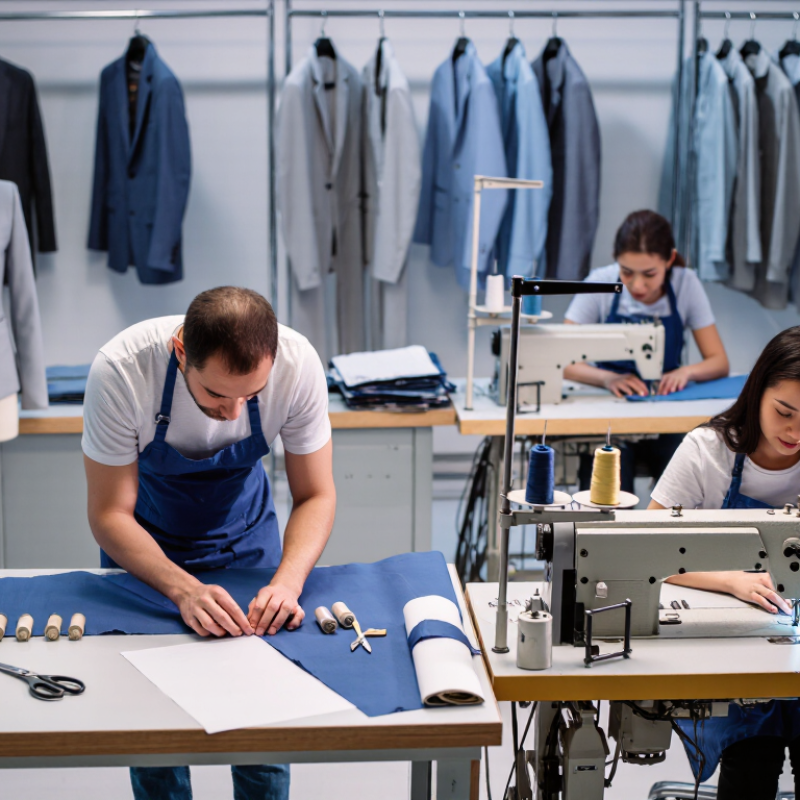
Cut and sew clothing manufacturing turns fabric rolls into garments through measured cutting, sewing, pressing, and inspection.
Instead of forming fabric directly, a production team creates each panel from a paper or digital pattern. Panels may include sleeves, collars, pockets, cuffs, and carefully placed seams. The fabric grain matters because it affects stretch, drape, and how the finished garment hangs.
Production usually begins with a sample garment and a technical specification sheet. Pattern makers adjust measurements, add seam allowances, and prepare graded sizes. Cutters then layer fabric and follow a marker layout to reduce waste.
Skilled operators join panels in a planned sequence. Some seams need reinforcement, while delicate fabrics require lower pressure and slower handling. Quality staff check measurements, stitch consistency, loose threads, and pressing marks. These checks sound simple. Errors change fit.
The method offers useful flexibility for custom details, limited runs, and varied fabric choices. Changes can be made at the pattern or sewing stage, rather than redesigning an entire machine system. It also supports closer human inspection, helping reveal uneven hems or uncomfortable seams.
Still, cut and sew is not automatically efficient. Poor planning can create excess scraps, repeated sampling, or inconsistent sizing. In practical production work, strong results depend on clear specifications and honest fitting feedback.
One fitting may not be enough. That is worth remembering.
Cut and sew manufacturing turns fabric into clothing through measured, hands-on steps. The process begins with a technical pattern and a sample garment. Technicians check measurements, seam allowance, fabric direction, and expected shrinkage. Small errors matter. A sleeve can twist if the grainline is wrong.
After approval, fabric rolls are relaxed before cutting. This step helps reduce later distortion. Workers layer the fabric and place paper or digital markers to limit waste. Cutting machines then follow each pattern piece carefully. Every bundle receives labels, size information, and sewing instructions. Clear tracking prevents panels from being mixed.
Sewing follows an operation sequence. One operator may join shoulder seams, while another attaches collars or hems. Machines vary by task, including lockstitch, overlock, and coverstitch equipment. In-line inspections check skipped stitches, uneven tension, loose threads, and mismatched panels. Pressing gives the garment its final shape, but it cannot repair poor construction.
The first sample may still feel wrong. Its armhole might pull, or the fabric may look different after washing. Skilled teams record these issues, adjust the pattern, and test another sample. This practical feedback makes cut and sew production useful for detailed designs, unusual fabrics, and controlled fit. Reliable results depend on careful records, trained workers, and honest quality checks.
Cut and sew manufacturing offers direct control over garment construction, fit, and material use. Experienced pattern makers can adjust shoulder width, sleeve angle, and hem length before production begins. This process suits garments that need precise shaping, layered details, or unusual fabric combinations.
A major benefit is flexible customization. A production team can develop a sample, test it on a fit model, and revise the pattern. Small changes can improve comfort significantly. A sleeve may twist less. A waistband may sit more naturally. These details affect how clothing performs after repeated washing and daily movement.
Cut and sew methods also support quality control at several stages. Workers can inspect fabric flaws before cutting and check seam strength during assembly. Careful cutting may reduce fabric waste, although perfect efficiency is unrealistic. Mistakes still happen. A misplaced notch or rushed measurement can force repairs, delays, or extra material use. Reliable manufacturers record these issues and refine their procedures instead of hiding them.
This method can serve both limited collections and larger orders. It allows practical choices about fabric weight, stitching density, trims, and finishing. Clear measurement charts and approval samples reduce misunderstandings between designers and factories. Production records also improve consistency between batches. The process requires more planning than basic ready-made sourcing, but it gives teams greater responsibility over the final garment.
Cut-and-sew manufacturing gives clothing makers direct control over materials and construction. Fabric choice affects comfort, durability, drape, and care requirements. Cotton can feel breathable, while recycled polyester often offers quick drying and shape retention. For structured garments, heavier woven fabrics may hold a cleaner silhouette. A small fabric change can alter the entire fit. I have seen soft materials stretch beyond the original pattern during sampling. Fit matters.
Design flexibility is another practical advantage. Pattern makers can adjust sleeve width, pocket placement, hems, and seam lines with precision. Designers may combine fabrics, add functional panels, or develop unusual proportions. These details support both visual identity and everyday movement. However, a beautiful sketch can fail when translated into fabric. A pocket may look balanced but sit awkwardly during wear. Sample testing exposes these problems early. Some corrections are costly, but ignoring them costs more later.
Quality control should continue from cutting through final packing. Teams can check fabric defects, panel alignment, stitch density, measurements, and color consistency. Inspectors often compare finished pieces with approved samples and measurement charts. Stress testing can reveal weak seams around shoulders, pockets, and fasteners. Production records also help trace repeated issues. A careful process still needs human judgment. Small inconsistencies may remain, especially with flexible fabrics or complex designs. Honest inspection makes those imperfections visible before customers receive the garment.
Choose cut-and-sew when a garment’s construction matters as much as its appearance.
It suits a shaped jacket, an asymmetric neckline, or pocket placement that standard blanks cannot provide. Pattern development and sample fittings let a team check shoulder slope, seam allowance, and how fabric drapes.
Start with a pilot. This approach can help when demand is uncertain or a collection needs distinct silhouettes, fabric weights, and trims.
But added control brings added decisions: pattern revisions, fabric minimums, grading, and quality checks all affect cost and lead time.
Cut-and-sew is less compelling for proven basics when a ready-made blank already meets fit and durability needs.
Textile Exchange’s 2024 Materials Market Report estimated global fiber production at 124 million tonnes in 2023, with production potentially reaching 160 million tonnes by 2030.
That scale makes material choices consequential, but it does not prove that one production method is automatically lower-impact.
Check the drape. Ask the factory for fabric composition, yield estimates, defect rates, and a sample checked against a written measurement specification.
Small runs can still waste cloth. The first sample may disappoint, so leave time to revise the pattern before approving bulk cutting.
Technicians review the pattern and sample, checking measurements, seam allowance, fabric direction, and expected shrinkage. Small pattern errors can twist a sleeve.
Relaxing fabric helps reduce distortion later. Workers then layer it and use markers to arrange pattern pieces with less waste.
Each bundle receives labels, size details, and sewing instructions. Clear tracking helps prevent panels from being mixed up.
Workers check for skipped stitches, uneven tension, loose threads, and mismatched panels. A loose thread may seem minor, but it still needs attention.
No. Pressing shapes the finished garment, but it cannot correct weak seams or inaccurate construction.
An armhole may pull, or fabric may change after washing. Teams record these issues, adjust the pattern, and test again.
Fabric influences comfort, durability, drape, and care. Cotton can feel breathable, while heavier woven fabric may hold a cleaner silhouette.
It can show that a pocket sits awkwardly or a soft fabric stretches beyond the pattern. Some fixes can be costly.
Inspectors compare garments with approved samples and measurement charts. They may check defects, alignment, stitch density, color, and weak seams.
Not always. Flexible fabrics and complex designs can leave small differences. Honest inspection helps make them visible before delivery.
Cut and sew clothing manufacturing is a flexible production method in which fabric is selected, cut into individual pattern pieces, sewn together, and finished to create complete garments. Unlike methods that rely on pre-formed fabrics, this approach gives designers greater control over shape, fit, construction, and overall appearance. The process usually includes design development, pattern making, fabric preparation, cutting, sewing, pressing, inspection, and final packaging.
A major advantage of this method is the wide range of materials, colors, textures, trims, and design details it can accommodate. It also supports careful quality control at each stage, helping manufacturers maintain accurate sizing, strong seams, and consistent finishing. Cut and sew production is especially suitable for custom designs, structured garments, limited collections, and products that require distinctive details or specialized construction. By choosing the right materials and working with clear specifications, businesses can achieve reliable quality while creating clothing that reflects their intended style and function.