
 Talk to production646-681-4212 Talk to production646-681-4212
 Direct factory wholesale collections featuring verified fabric formulations, high dimensional stability, and low MOQ production lines for international fashion brands.
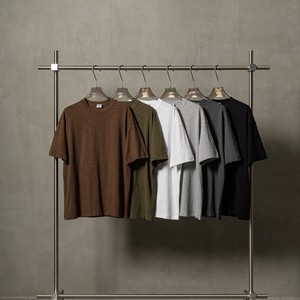
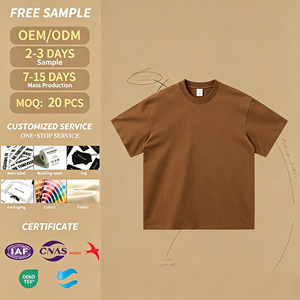
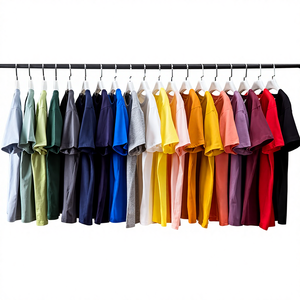
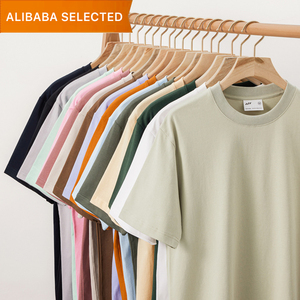
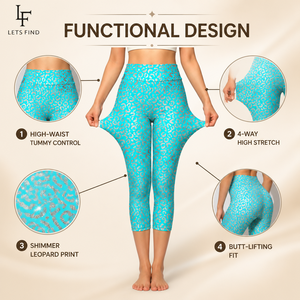
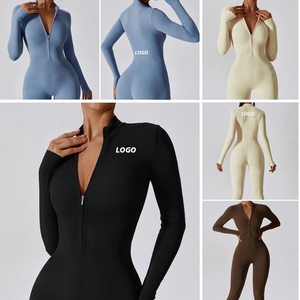

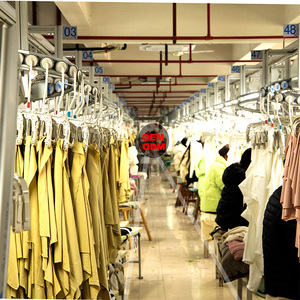
In the contemporary global textile ecosystem, securing a reliable manufacturing partner goes beyond basic OEM cut-and-sew operations. Global brands require precision engineering, rapid prototyping, agile MOQ structures, and transparent supply chain telemetry. As China consolidates its position as the world's primary hub for advanced apparel manufacturing, selecting the right partner determines your brand's market velocity, gross margin resilience, and quality consistency.
A data-driven evaluation of global garment manufacturing ecosystems highlights why Chinese apparel hubs remain unmatched in technical complexity, raw material depth, and execution velocity.
| Evaluation Vector | China Tier-1 Manufacturers | Southeast Asian Hubs | Nearshoring (LATAM/Eastern Europe) |
|---|---|---|---|
| Technical Capability & Stitch Complexity | Ultra-High (Flatlock, laser cutting, 500+ GSM fleece) | Moderate to Low (Basic basics, high volume) | Moderate (Standard knits & woven garments) |
| Raw Material & Trim Ecosystem | Fully Integrated (Instant access to yarn, dyes, custom trims) | Dependent on Imported Yarns/Fabrics | Limited Local Textile Mills |
| Sample Development Velocity | 7–12 Business Days (Complete with Tech Pack validation) | 21–35 Business Days | 14–21 Business Days |
| MOQ Agility & Scalability | High Flexibility (50 pcs/design to 100,000+ pcs) | Rigid (Typically > 1,000–3,000 pcs/color) | Moderate (300–500 pcs) |
| Quality Assurance & Defect Rate | < 0.8% Defect Rate (Four-Gate AQL Inspection) | 2.5% – 4.0% Average Defect Rate | 1.5% – 3.0% Average Defect Rate |
Eliminating handoff friction through vertically integrated cut-and-sew, tech pack creation, custom decoration, and retail-ready fulfillment.
Our operational infrastructure is optimized to support emerging DTC brands and scaling retail labels with a low 50-piece minimum order quantity per design. This enables rapid market validation without locking up enterprise capital in excess inventory risk.
Convert rough sketches, mood boards, or physical garments into factory-ready technical packages. Our pattern makers calculate precise measurement charts, seam construction details, trim callouts, and multi-size grading rules to prevent specification distortion.
Quality control is embedded into every operational milestone: incoming raw fabric and trim inspection, in-line stitching audits during production, dimensional spec sheet compliance checks, and final AQL 2.5 major / 4.0 minor packing validation.
Complete control over fit geometry, fabric weight (from 140GSM ultra-light knits to 500GSM heavyweight fleece), custom dyeing (garment dye, acid wash, reactive dye), and proprietary fabric finishing for unique hand-feel dynamics.
Industrial-grade embellishment technologies including high-density screen printing, DTF transfer, full sublimation, 3D puff embroidery, chenille patches, custom woven neck labels, care tags, and branded polybag packaging.
Delivering retail-ready products directly to your warehouse across North America, Europe, Australia, and the Middle East. Comprehensive support for DDP (Delivered Duty Paid) air freight, express parcel, and full container sea logistics.
The global custom garment manufacturing landscape is undergoing a structural paradigm shift driven by digital pattern engineering, sustainable compliance standards, and consumer demand for high-spec technical fabrics. B2B apparel buyers must align their procurement strategies with four key industry transformations:
Traditional multi-thousand-piece purchase orders are increasingly giving way to agile micro-batch production runs. Modern garment factories utilize computer-aided design (CAD) marker planning software to optimize fabric yield during short production runs. This empowers brands to test limited drops, assess real-time consumer demand, and execute rapid replenishment cycles within 15–20 days without incurring deadstock overhead.
Regulatory frameworks in the EU and North America now demand verifiable supply chain transparency. Procurement channels are heavily tilting toward certified sustainable textiles, including Organic Cotton (GOTS certified), Recycled Polyester (GRS compliant), Modal, Bamboo Viscose, and Eco-Friendly Bio-Washing processes. Forward-thinking manufacturers must provide material safety data sheets (MSDS) and OEKO-TEX Standard 100 certifications for all yarns, dyes, and metal trims.
The boundary between high-performance activewear and urban streetwear has permanently blurred. Sourcing demands are currently dominated by heavy-gsm streetwear fabrics (such as 250GSM–300GSM combed cotton tees and 450GSM–500GSM French Terry fleece) combined with functional features traditionally reserved for athletic wear: moisture-wicking finishes, 4-way stretch spandex blends, anti-pilling treatments, and flatlock stitch durability.
3D garment rendering tools enable technical designers to visualize draping, tension, and fit mapping prior to cutting physical fabric. Coupled with digital automated fabric inspection machines that detect thread defects, color shading variance, and skewness prior to lay-cutting, modern China apparel suppliers are reducing proto sample iteration times from several weeks down to under 7 working days.
Engineering high-performance apparel requires strict adherence to fabric weight, stitch construction, and finishing parameters across distinct product lines.
Key operational insights for commercial apparel buyers, fashion brand owners, and wholesale procurement managers.
Our baseline flexible minimum order quantity is 50 pieces per design, which can typically be split across multiple sizes (e.g., S through XXL) and up to two colorways depending on fabric availability. Specialized programs such as complex denim washes or specialized uniform suiting start at 100 pieces per design, while genuine leather items start at 30 pieces. This low MOQ framework allows emerging brands to validate market demand with minimal financial risk.
First proto samples are manufactured within 7 to 12 working days after tech pack approval and lab dip confirmation. Once pre-production (PP) samples are signed off by your team, full bulk production runs typically require 15 to 30 working days depending on total unit volume, fabric complexity, and decoration methods. Expedited production lanes are available for urgent retail launches.
Yes. Our in-house technical design team can convert basic sketches, mood boards, physical reference garments, or digital CAD drawings into complete, production-ready tech packs. We construct complete bill-of-materials (BOM), precise measurement spec sheets, seam callouts, label placements, and multi-size grading rules prior to pattern cutting.
We deliver 100% turnkey retail-ready apparel. Private label options include custom woven neck tags, satin care labels, heat-transfer inner neck labels, branded hangtags with safety pins or cord strings, custom barcode stickers, custom printed polybags, and branded unboxing mailer boxes.
We execute a rigorous Four-Gate Quality Inspection protocol based on international AQL 2.5 standards: 1) Fabric & trim inspection upon mill delivery (evaluating GSM, shrinkage, color fastness, and flaws); 2) In-line inspection during pattern cutting and stitching; 3) Spec sheet dimensional tolerance audits (+/- 0.5cm accuracy); 4) Final pre-packing AQL inspection checking seam strength, thread trimming, and cleanliness.
We ship globally to over 50 countries, with major trade routes into the US, Canada, UK, EU, Australia, and UAE. We offer EXW, FOB, CIF, and full DDP (Delivered Duty Paid) door-to-door options via air express (DHL/FedEx/UPS), air freight, and ocean freight—handling customs clearance and import duties on your behalf.
Send us your design specifications, tech packs, or sample requests. Our dedicated apparel engineering team will provide an itemized cost breakdown, fabric recommendations, and accurate production timelines within 24 hours.