
 Talk to production646-681-4212 Talk to production646-681-4212
 Direct OEM/ODM production runs with strict AQL 2.5 quality control, technical fabric integration, and private label customization.
The global sportswear and activewear industry is undergoing a structural paradigm shift. Sourcing executives, independent boutique owners, and fast-scaling Direct-to-Consumer (DTC) brands face unprecedented pressures regarding supply chain responsiveness, fabric performance parameters, and sustainability compliance. Navigating the modern sourcing ecosystem requires moving beyond low-cost transactional purchasing toward strategic alignment with verified China wholesale custom sportswear manufacturers and suppliers equipped with advanced research and development, cut-and-sew engineering, and low Minimum Order Quantities (MOQs).
China continues to dominate the global activewear supply chain due to its unmatched industrial clustering, deep textile innovation hubs in Zhejiang and Guangdong, and specialized manufacturing facilities capable of complex technical knitwear, bonded seamless constructions, and zero-defect private label execution. This comprehensive whitepaper explores the operational mechanics, material innovations, technical specifications, and strategic procurement trends shaping the custom sportswear manufacturing sector for 2025 and beyond.
Strategic Sourcing Insight: Modern sportswear brands no longer win solely on aesthetic design. Victory in today’s omnichannel market hinges on material engineering—such as moisture vapor permeability, elastane recovery matrix, and friction-reducing flatlock seaming—combined with agile inventory replenishment systems that mitigate overproduction risks.
B2B sportswear procurement is transitioning from traditional high-volume inventory accumulation to rapid-response, demand-driven manufacturing models. Sourcing managers evaluating custom activewear suppliers must adapt to four pivotal industry transformations:
Historically, premier garment factories demanded order volumes exceeding 1,000 to 3,000 units per colorway, locking up critical working capital for emerging labels. Today, elite China custom sportswear factories have re-engineered their cutting tables and sewing assembly lines to accommodate flexible MOQs starting as low as 50 pieces per design. This allows brands to conduct real-world market validation across full size curves (XS to 3XL) and diverse colorways prior to releasing bulk capital investments. Once product-market fit is established, inventory can be rapidly scaled to 10,000+ units using archived digital patterns and pre-approved lab dips without incurring setup latency.
Global regulatory frameworks—including the EU Sustainable and Circular Textiles strategy—alongside conscious consumer demand have elevated environmental accountability from a secondary preference to an absolute procurement imperative. Leading sportswear manufacturers now maintain certified stock of Global Recycled Standard (GRS) recycled polyester (rPET) derived from post-consumer ocean plastics, recycled nylon 6,6 (Econyl), and OEKO-TEX Standard 100 non-toxic certified organic cotton. Modern fabric mills have engineered these eco-friendly synthetics to match or exceed the tensile strength, moisture-wicking rates, and stretch memory of virgin petroleum-based fibers.
The traditional workflow of postal swatch exchanges and physical tech pack revisions frequently resulted in 30 to 45-day sampling delays. Contemporary supply chains leverage 3D Computer-Aided Design (CAD) software such as Clo3D and Optitex. Manufacturers convert simple designer sketches or mood boards into production-ready digital tech packs complete with precise Bill of Materials (BOM), stitch density callouts (stitches per inch - SPI), pattern grading logic, and stress-point reinforcement markers. This digital transformation reduces proto-sample revision cycles down to 7–12 working days.
Consumer preferences in yoga wear, gym apparel, and compression base layers have shifted decisively toward seamless knitting and ultrasonic bonded seams. By utilizing specialized circular knitting machinery (such as Santoni machines), sportswear manufacturers can integrate variable compression zones, breathable mesh panels, and targeted ribbing directly into a single continuous fabric tube. This eliminates chafing seams, reduces fabric cutting waste by up to 35%, and enhances overall garment durability under extreme mechanical stretch.
Integrated ventilation micro-zones knitted directly into compression structures for maximum thermoregulation during high-intensity training.
Four-stage quality control checking raw fabric defects, in-line stitching accuracy, spec chart tolerance, and final packaging integrity.
Digital pattern grading and dedicated proto-sample lines deliver retail-ready prototypes within 7 to 12 business days.
Understanding activewear fabric science is essential for procurement managers specifying technical requirements. Sportswear requires a tailored balance between elastic recovery, breathability, surface abrasion resistance, and thermal insulation.
High-impact performance activities—such as marathon running, cross-fit, and active cycling—rely heavily on synthetic polymers like Nylon 6,6 and Polyester blended with high-grade Elastane (Spandex/Lycra). Nylon offers superior hand-feel softness and higher abrasion resistance compared to polyester, making it the preferred choice for high-end yoga leggings and bodysuits. Conversely, polyester features hydrophobic properties that make it exceptionally fast-drying and ideally suited for moisture-wicking athletic tees and sublimation-printed jerseys.
For lifestyle sportswear, streetwear drops, and warm-up tracksuits, heavyweight natural knits remain dominant. Heavyweight 250 GSM to 500 GSM 100% combed cotton, French Terry, and brushed fleece deliver structural structure, drop-shoulder silhouettes, and premium thermal comfort while maintaining high breathability.
| Apparel Category | Optimal Fabric Weight (GSM) | Material Composition | Key Performance Attributes | Target Lead Time |
|---|---|---|---|---|
| Heavyweight Athletic Tees | 220 – 260 GSM | 100% Combed Cotton / Bio-Washed | Controlled Shrinkage (<3%), High Rib Recovery, Pre-shrunk | 15 – 20 Days |
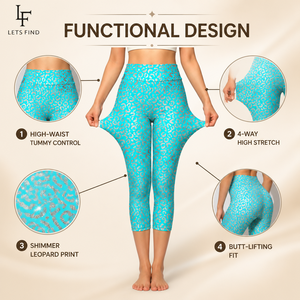
| Yoga Leggings & Studio Tops | 220 – 320 GSM | 80% Nylon / 20% Spandex (Double Brushed) | 4-Way Stretch, Non-See-Through (Squat Proof), Moisture Wicking | 20 – 25 Days |
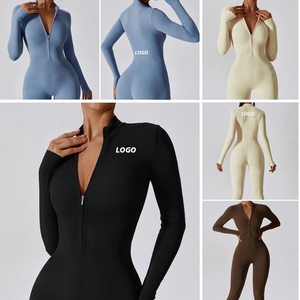
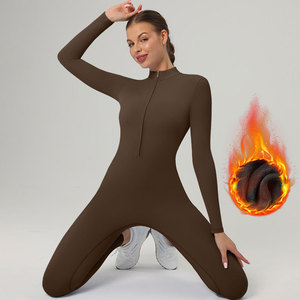
| Performance Bodysuits & Jumpsuits | 240 – 300 GSM | 75% Polyester / 25% Elastane Interlock | Body Sculpting, Front Zip Closure, Flatlock Anti-Chafe Seams | 20 – 28 Days |
| Technical Tracksuits & Warmups | 280 – 420 GSM | Cotton-Poly Blend / French Terry | Wrinkle-Resistant, Durable Ribbing, Custom Cut & Sew Panelling | 22 – 30 Days |
| Sublimated Teamwear & Jerseys | 140 – 180 GSM | 100% Micro-Mesh Recycled Polyester | High Air Permeability, Anti-Bacterial Treatment, Zero Color Fade | 15 – 22 Days |
Transforming blank activewear into market-ready private label collections requires precision branding methods. Matching the decoration method to the fabric composition is critical to prevent peeling, cracking, or color bleeding over extended wash cycles:
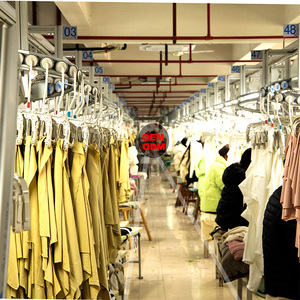
Professional custom clothing manufacturers safeguard brand integrity through rigorous, standardized quality inspection pipelines. Partnering with a supplier operating under documented quality control minimizes defective return rates and guarantees size curve consistency.
Building a defensible activewear brand demands a manufacturing partner that operates as an extension of your internal team. Our facility combines state-of-the-art cut-and-sew technology with end-to-end merchandising support designed for growing labels and enterprise retail programs alike.
From initial design conversion to final DDP (Delivered Duty Paid) air or sea logistics, our operational blueprint eliminates common sourcing bottlenecks. We maintain a digital pattern archive for every client, ensuring that repeat orders placed six months or two years later replicate the exact fit, hand-feel, and trim placement of the original approved pre-production sample.
Our standard flexible minimum order quantity is 50 pieces per design, allowing split sizing (e.g., S through XXL) across up to two colorways. Specialized custom-dyed fabrics or technical denim lines start at 100 pieces depending on yarn mill minimums.
Proto-samples are produced and dispatched within 7 to 12 business days following digital tech pack approval and fabric selection. Express sampling options are available for urgent fashion drops and trade show deadlines.
Yes. Our in-house technical design team can convert simple hand sketches, mood boards, or physical sample garments into comprehensive, factory-ready tech packs featuring full measurement grading tables, BOM specifications, seam callouts, and trim placements.
We provide full private label customization, including woven neck labels, heat-transfer neck prints, customized care/content labels, branded hang tags, custom barcode stickers, tissue paper wrapping, and custom-printed frosted polybags.
We utilize Pantone TCX/TPX color matching alongside digital spectrophotometer analysis for all lab dips. Formula receipts and physical lap dip archives are retained per client account to guarantee exact color match across re-order cycles.
We support EXW, FOB, CIF, and complete DDP (Delivered Duty Paid) air express, air freight, and ocean shipping. With DDP shipping, our logistics team handles all customs clearance, import duties, and taxes directly to your doorstep or fulfillment center.
Connect directly with our senior apparel production specialists. Receive transparent cost breakdowns, fabric swatch options, and step-by-step production timelines tailored to your brand.