
 Talk to production646-681-4212 Talk to production646-681-4212
 Explore our export-grade custom apparel catalog. Engineered for private label brands, corporate uniform contracts, and high-growth DTC apparel lines.
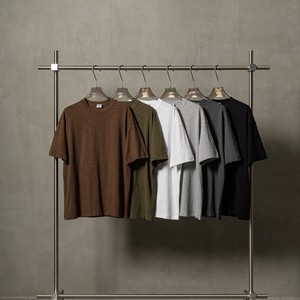
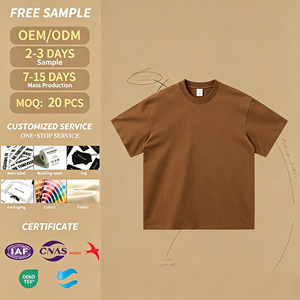
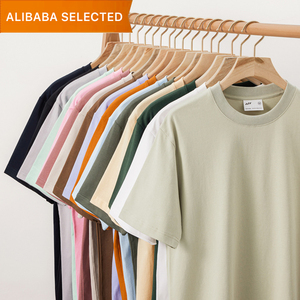
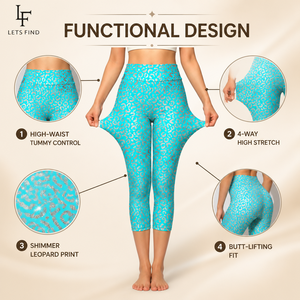
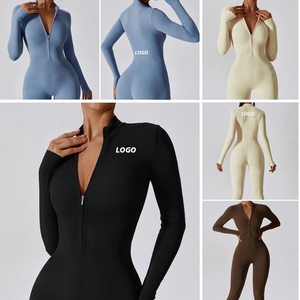
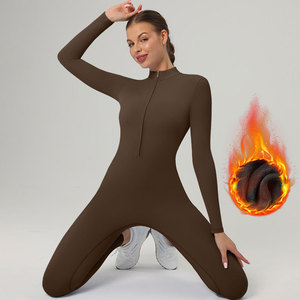
A rigorous examination of industrial clustering, fabric technical engineering, end-to-end quality assurance, and agile procurement for modern enterprise apparel brands.
In today's hyper-competitive fashion and corporate apparel ecosystem, establishing a resilient, scalable, and cost-efficient supply chain is paramount. As a premier China Wholesale Custom Uniforms Manufacturer & Exporter, our manufacturing architecture integrates full-scale OEM (Original Equipment Manufacturing) and ODM (Original Design Manufacturing) workflows. We bridge the gap between creative design concepts and high-throughput garment production, solving the key bottleneck challenges that international apparel buyers face: long lead times, excessive Minimum Order Quantities (MOQs), inconsistent sizing, and poor fabric durability.
Traditional apparel manufacturing forced enterprise brands into massive inventory commitments (1,000+ pieces per style), tying up capital and exposing procurement to high demand volatility. Modern agile manufacturing leverages digital pattern drafting and modular sewing lines to offer 50-piece minimums with volume-scale unit economics.
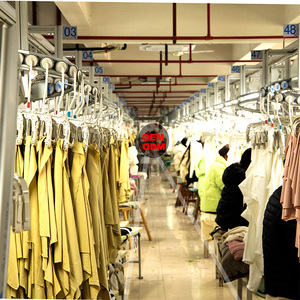
Our integrated production facilities span specialized cut-and-sew units, high-speed automated fabric cutters, computerized multi-head embroidery stations, and environmentally certified dye labs. By controlling every phase of manufacturing under one operational umbrella, we maintain complete traceability from raw yarn sourcing to final packaged cartons.
Our pattern masters convert rough sketches, physical samples, or mood boards into precise CAD tech packs detailing bill of materials (BOM), seam callouts, grading charts, and construction specs.
Every order undergoes four rigorous inspection checkpoints: raw fabric GSM & shrink testing, cut-piece measurement audit, in-line stitching stress tests, and final AQL 2.5 pre-shipment sampling.
From reactive garment dyeing and 3D puff embroidery to water-based screen printing, dye-sublimation, custom woven neck tapes, and custom polybags—your brand identity is seamlessly built-in.
Quality control in enterprise garment export is not an afterthought; it is an engineered workflow built into the manufacturing line. Our factory adheres strictly to ISO 9001:2015 standards and executes the following four-stage QC framework:
| Inspection Gate | Testing Parameters & Methodology | Acceptable Quality Level (AQL) | Action on Non-Compliance |
|---|---|---|---|
| Gate 1: Raw Material Inspection | Fabric weight (GSM check), color fastness (spectrophotometer), yarn defect count, and dimensional wash shrinkage. | Zero tolerance for color shade variation > Grade 4.0 | Full roll rejected back to raw material textile mill |
| Gate 2: Pattern & Pre-Production (PP) | First-proto fit comparison against digital CAD grading sheets, seam strength, stress point bar-tacking. | 100% compliance with Tech Pack specifications | Pattern adjustments executed before bulk cutting begins |
| Gate 3: In-Line Assembly Check | Real-time machine operator audits, stitch density (SPI count check), tension balance, line alignment. | AQL 1.5 Minor / 0 Major Defects | Immediate line stoppage and recalibration of sewing stations |
| Gate 4: Pre-Shipment Audit | Final garment measurements, hanging thread trims, care label accuracy, polybag barcode scan. | AQL 2.5 Standard Industry Inspection | 100% batch re-inspection if defect rate exceeds threshold |
Anticipating shifts in textile technology, global trade compliance, circular economy mandates, and automated supply chains.
Global uniform procurement is undergoing a fundamental transformation. Procurement managers for hospitality chains, industrial workwear contracts, corporate outfits, and DTC apparel lines must adapt to four pivotal trends reshaping the manufacturing landscape over the next decade:
Workplace uniforms are shifting from basic cotton-poly blends to functional smart textiles. Demand is surging for moisture-wicking capillary yarns, anti-microbial Silver-ion treatments, UPF 50+ UV barrier coatings, and permanent anti-static carbon fiber grids embedded into heavy-duty industrial workwear.
Global buyers face increasing regulatory pressure to verify environmental and ethical compliance. The future belongs to manufacturers providing GOTS-certified organic cotton, Recycled Poly (rPET from ocean plastic), waterless garment dyeing technologies, and full OEKO-TEX Standard 100 chemical safety certifications.
Inventory overstock is the leading cause of margin erosion in retail and enterprise uniform supply. Modern buyers are shifting to a "Test-and-Repeat" strategy—placing initial 50–100 piece trial orders to evaluate wearability and employee feedback, followed by rapid 15-day automated replenishment runs.
To highlight the tangible efficiency gains of modern custom manufacturing, compare traditional bulk apparel sourcing against our optimized agile framework:
| Sourcing Metric | Traditional Legacy Supplier | Our Agile OEM/ODM Ecosystem | Procurement Value Advantage |
|---|---|---|---|
| Minimum Order Quantity (MOQ) | 1,000+ pcs per style/color | 50 pcs per design | 95% lower initial capital risk |
| Proto Sampling Time | 3 to 6 weeks | 7 to 12 working days | Accelerated time-to-market |
| Tech Pack Creation | Buyer must supply complete tech pack | In-house conversion from sketches | Saves thousands in design agency fees |
| Re-order Lead Time | 60 to 90 days | 15 to 25 days | Prevents stockouts & dead stock |
| Private Label Integration | High surcharge or third-party drop | Fully integrated in-line branding | Retail-ready cartons upon arrival |
Deep-dive into fabric weight selections, garment construction techniques, and customization crafts for maximum durability.
Uniform longevity is directly proportional to material selection and structural seam engineering. When manufacturing for corporate fleets, activewear brands, or healthcare workwear, fabric selection must align precise physical properties with end-user environmental conditions.
A custom uniform is the visual ambassador of a brand. We offer a comprehensive suite of customization crafts tailored to fabric composition and wash requirements:
Utilizes EVA foam underlay and Japanese Tajima computer embroidery heads for dimensional, raised logos that withstand high-temperature commercial washing without fraying or fading.
Employs eco-friendly water-based inks or soft-hand plastisol formulations for vibrant color matching (Pantone PMS system) with zero cracking across high-stretch knits.
Fuses disperse dyes directly into polyester fibers at high temperature. Produces breathable, zero-feel, non-fading graphics across technical sportswear and activewear sets.
Authoritative technical answers to common queries regarding ordering, quality control, international shipping, and tech pack development.
Partner with China's leading custom apparel manufacturer. Get instant access to our fabric swatches, technical spec sheets, and comprehensive product catalog.