
 Talk to production646-681-4212 Talk to production646-681-4212
 High-demand apparel configurations manufactured under strict quality gates. Fully customizable by fabric weight, cut silhouette, and finish options.
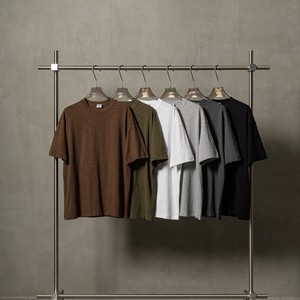
Combed ring-spun cotton engineered for shape retention, anti-pilling, and custom color lab-dip matching.
Get Catalog
Bespoke athletic tracksuits featuring reinforced flatlock stitching, zip pockets, and ergonomic panelling.
Get Catalog
3D puff and multi-thread high-density embroidery applied over pre-shrunk premium cotton blanks.
Get Catalog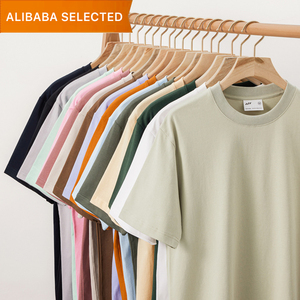
Heavyweight streetwear cut with dropped shoulder seams, thick neck ribbing, and relaxed block geometry.
Get Catalog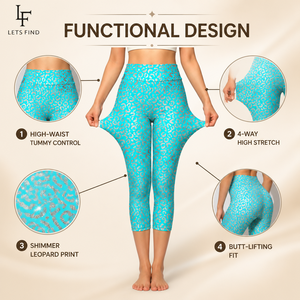
Squat-proof 4-way stretch fabric with moisture-wicking properties and custom private label waistband tags.
Get Catalog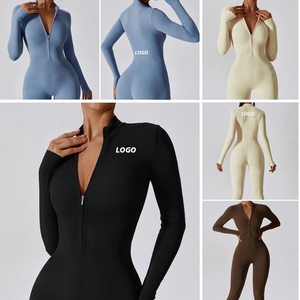
Ergonomic compression contouring with hidden autolock zippers and breathable microfiber fabrications.
Get Catalog
Thermal-retaining stretch knits designed with anatomical butt-lifting seams and wind-resistant structure.
Get Catalog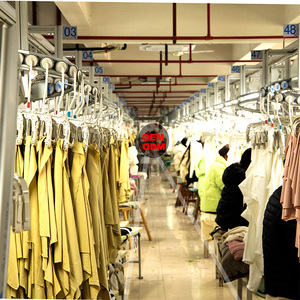
Complete OEM/ODM production runs from initial sketch patterns to custom retail-ready branded packaging.
Get CatalogAn authoritative breakdown of industrial apparel engineering, pattern grading mechanics, fabric yield calculations, and quality governance for professional procurement managers.
In modern textile supply chains, the operational distinction between OEM (Original Equipment Manufacturing) and ODM (Original Design Manufacturing) dictates how commercial risks, intellectual property, and production lead times are structured:
Both models require meticulous cut-and-sew engineering to ensure that geometric pattern blocks align perfectly across complex body contours while accommodating material elasticity and wash-shrinkage allowances (ISO 6330 dimensional stability testing standards).
End-to-end transparency engineered directly into every stage of the garment manufacturing lifecycle.
Digitized CAD marker planning optimizes fabric yield, reducing material waste below 8%. Precision grading ensures consistent seam-to-seam ratio adjustments across size runs from XS to 5XL without silhouette distortion.
Quality is enforced at four distinct gates: 1) Greige & trimmed raw material testing, 2) In-line sewing assembly audits, 3) Spec & measurement tolerance checks (±0.5 cm limit), and 4) Final pre-shipment AQL 2.5 standard audits.
Direct yarn-level partnerships allow custom knitting, reactive yarn dyeing, pigment washing, and technical activewear treatments (anti-microbial, DWR water resistance, and UPF 50+ UV protection).
Commercial benchmarking data across core apparel categories to support your merchandising strategy.
| Garment Category | Recommended Fabric Weight (GSM) | Key Seam & Stitch Engineering | Target Shrinkage Tolerance | Standard MOQ |
|---|---|---|---|---|
| Heavyweight Streetwear Tees | 220 GSM – 300 GSM (Combed Cotton) | Twin-needle neck rib, reinforced shoulder taping | < 3.0% (Post Pre-Shrunk Treatment) | 50 Pcs / Colorway |
| Fleece Hoodies & Sweatshirts | 350 GSM – 500 GSM (French Terry / Fleece) | Double-layered hood, 2x2 lycra ribbing, cover-stitched seams | < 3.5% (Enzyme Washed) | 50 Pcs / Style |
| Technical Activewear & Leggings | 220 GSM – 280 GSM (Nylon/Spandex Interlock) | 6-Thread 4-Needle Flatlock (ISO 607) for zero chafing | < 1.5% (Heat Set Elastane) | 50 Pcs / Style |
| Seamless & Compression Bodysuits | 200 GSM – 260 GSM (Double-Brushed Microfiber) | Bonded seamless edges & concealed lock-zip closures | < 2.0% | 50 Pcs / Style |
| Custom Denim & Outerwear | 12 oz – 16 oz (Rigid / Stretch Cotton Canvas) | Heavy-duty bar-tacking on stress points, riveted pocket joins | < 4.0% (Varies by Wash Process) | 100 Pcs / Wash |
Strategic foresight for supply chain directors navigating digital product passports, circular textiles, and micro-factory flexibility.
The traditional sampling cycle (which historically took 3 to 5 physical iterations per style) is being revolutionized by 3D CAD platforms such as CLO3D and Browzwear. By creating digital twins of physical fabrics, tension heatmaps, and drape simulations, proto approval cycles are compressed from weeks to under 48 hours. Physical proto sampling is reserved strictly for final hand-feel and fit validation, saving brands up to 70% in initial development budgets and drastically reducing textile waste during sample phase.
The legacy paradigm of requiring 3,000-piece minimums is rapidly failing in an era driven by DTC drop models and volatile social-commerce trends. Modern apparel manufacturing utilizes modular sewing lines, computerized auto-cutters, and rapid re-feed systems that allow agile batch runs starting at just 50 pieces per style. Brands can launch tightly curated collections, test market demand in real time, and trigger replenishment orders within 14 days without risking overstock liabilities.
Global regulatory mandates, including the EU Sustainable Textiles Strategy and Digital Product Passport (DPP) requirements, necessitate full supply chain traceability. Forward-thinking OEM/ODM factories integrate GRS-certified (Global Recycled Standard) recycled polyester, organic GOTS-certified cotton, and post-consumer textile blends. Full transparency is provided down to yarn spinning mills, ensuring compliance with global ESG standards.
Human error during manual cutting accounts for over 60% of sizing discrepancies in apparel production. Modern factories utilize automated fabric spreading tables paired with multi-ply vacuum laser cutting machines. This ensures that every panel cut matches the master vector template down to the fraction of a millimeter, establishing complete consistency across batch orders.
Built on over a decade of apparel engineering, global compliance, and client-first account management.
From custom woven neck labels, screen-printed care tags, and custom metal hardware (zippers, eyelets, aglets) to barcode-labelled polybags, your products arrive 100% retail-ready for immediate distribution.
No hidden surcharges. Our line-item quotations detail raw material costs, marker yield loss, sewing SAM rates, decoration fees, and freight options (DDP Air Express or Sea Freight) upfront.
Every brand account is assigned a single-point apparel engineer and account manager who provides weekly milestone video reports during cutting, sewing, embellishment, and final packaging.
Direct answers to crucial technical questions asked by global procurement officers and fashion entrepreneurs.
Our engineering team translates your sketches, tech packs, or physical reference garments into digitized vector pattern files. We build a comprehensive Bill of Materials (BOM) specifying fabric composition, GSM, trim construction, and stitch call-outs. Once the digital pattern is graded, we produce a physical proto sample within 7 to 12 working days. Upon your physical review, fit comments, and written approval of lab dips, we lock the master pre-production sample (PPS) and initiate bulk fabric knitting/cutting.
Sizing integrity relies on strict material preshrinking, computerized multi-ply laser cutting, and standardized sewing templates. Before cutting, all fabric rolls undergo automated relaxation and heat-setting treatments to stabilize shrinkage under 3%. During assembly, quality control inspectors conduct random dimensional audits every 2 hours using calibrated measuring tables against the approved spec sheet tolerance (strictly capping variation at ±0.5 cm).
We maintain an extensive in-stock raw fabric inventory spanning premium combed cotton knits, heavy fleece, and high-performance activewear blends in core shades. By leveraging pre-knitted stock greige fabrics for low-MOQ orders while utilizing automated cutting machines, we eliminate minimum dye-lot penalties. This enables emerging brands to test retail markets at competitive price points while maintaining full custom cut-and-sew customization.
We offer heavy-density screen printing, Direct-to-Film (DTF), digital sublimation, puff printing, chenille patching, and 3D embroidery. All embellishments undergo ISO-standard crocking and wash tests (50 continuous commercial laundering cycles) to verify zero cracking, peeling, or color bleeding before releasing bulk output.
We support standard EXW, FOB, and CIF terms, as well as full DDP (Delivered Duty Paid) door-to-door delivery. Under DDP terms, our logistics partners manage import customs clearance, tariff payments, and local ground transportation directly to your warehouse or third-party logistics (3PL) fulfillment center across the US, Canada, Europe, Australia, and the Middle East.
Our partner manufacturing lines adhere strictly to BSCI (Business Social Compliance Initiative) and WRAP (Worldwide Responsible Accredited Production) standards, ensuring fair wages, zero child labor, safe working conditions, and reasonable working hours. For eco-conscious lines, we supply OEKO-TEX Standard 100, GOTS organic cotton, and GRS recycled polyester certificates upon request.
Connect with our technical production team today to receive a complete product catalog, fabric swatches, and a transparent manufacturing cost estimate for your next collection.