
 Talk to production646-681-4212 Talk to production646-681-4212
 Direct from China's leading knitwear export facilities: High-density cotton t-shirts, fleece activewear, precision seamless yoga series, and custom cut-and-sew apparel engineered for global compliance.
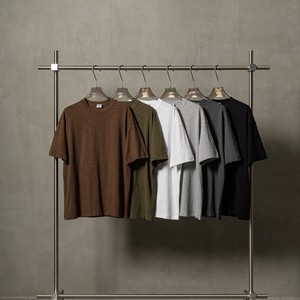
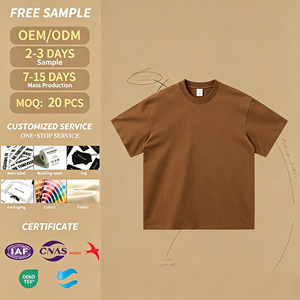
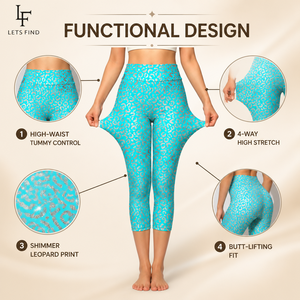
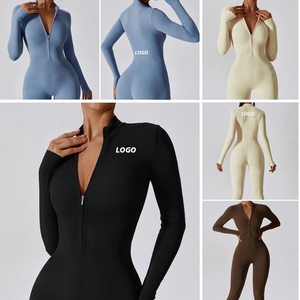
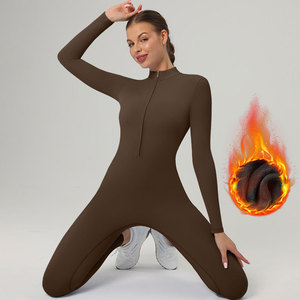
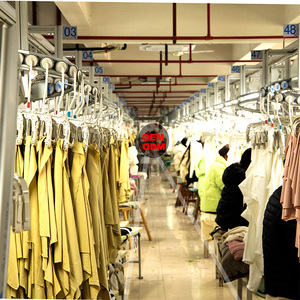
In an era of hyper-fragmented consumer demand and tight margin requirements, sourcing knitwear requires an integrated manufacturing partner that bridges creative design, precise textile engineering, and transparent supply chain execution.
Unlike legacy sweater mills demanding 1,000+ unit commits, our modern agile workflow accommodates starting batches from 50 pieces per design. This enables emerging labels and established retailers to test new silhouettes, colors, and fabric blends with zero inventory risk.
Quality is engineered at every stage: (1) Raw yarn and trim inspection upon mill arrival, (2) In-line stitching and gauge checks, (3) Spec sheet measurement audits against approved tech packs, and (4) Final AQL 2.5 pre-shipment inspection with photo reporting.
Don't have complete technical drawings? Our apparel engineers convert rough sketches, physical sample garments, or mood boards into production-ready tech packs with full Bill of Materials (BOM), stitch call-outs, trim maps, and graded size specs.
Deliver shelf-ready and fulfillment-compliant products. We custom produce woven main labels, printed care tags, FSC-certified hang tags, custom polybags, and branded cartons to ensure your brand identity remains pristine end-to-end.
From heavy 3D puff embroidery and high-density screen printing to DTF transfer and eco-friendly sublimation, we run rigorous rub-fastness and wash-cycle testing before bulk application to prevent peeling or fading.
Eliminate customs clearance headaches. We offer door-to-door DDP air express (5-7 days), air freight, and FCL/LCL ocean vessel shipments directly to fulfillment centers across the US, Canada, Europe, Australia, and the Middle East.
Supply Chain Security Note: China remains the undisputed global hub for custom knitwear due to its fully integrated textile clusters—housing spinning mills, dyeing plants, computerized flat knitting machine operators, and accessory suppliers within a 50-mile radius. This unmatched infrastructure eliminates supply bottlenecks and ensures consistent yarn dye-lot matching across seasonal reorders.
Understanding machine gauge rates, fabric density, and fiber blends is essential for procurement managers to balance thermal comfort, garment drape, structural durability, and targeted unit costing.
Machine Gauge (GG) refers to the number of needles contained within one inch of the knitting machine bed. Lower gauge numbers indicate thicker yarns and chunkier textures, whereas higher gauge numbers produce fine, lightweight, and smooth knit fabrics.
Gram Square Meter (GSM) measures fabric density and weight. Selecting the wrong GSM leads to garment transparency or unwanted stiffness. The table below outlines standard benchmarking specs used by top custom knitwear exporters.
| Category | Target GSM | Recommended Fabric Blend |
|---|---|---|
| Lightweight T-Shirts | 140 - 180 GSM | 100% Combed Cotton / Tri-Blend |
| Heavyweight Streetwear Tee | 220 - 280 GSM | Compact Ring-Spun Cotton |
| Activewear & Leggings | 240 - 320 GSM | Nylon-Spandex / Polyester-Elastane |
| Mid-Weight Fleece Hoodie | 300 - 380 GSM | 80/20 Cotton-Poly French Terry |
| Heavyweight Boxy Hoodie | 450 - 550 GSM | 100% Cotton Heavy Fleece |
Strategic sourcing directors must align their procurement calendars with emerging technical innovations, changing consumer values, and global regulatory mandates governing apparel trade.
The adoption of Japanese Shima Seiki and German Stoll 3D seamless knitting machines allows complete garments to be produced in one piece directly from digital CAD files. This eliminates cutting waste, reduces seam friction for athletic wear, and lowers sewing labor costs by up to 35%.
Global buyers are transitioning from conventional synthetics toward GOTS-certified organic cotton, Recycled Polyester (rPET), Bamboo Viscose, and OEKO-TEX Standard 100 certified non-toxic dyes. Traceability documentation is now mandatory for European and North American customs clearance.
Traditional biannual seasonal buying is being superseded by monthly drop models. Top China custom knitwear exporters now offer automated API inventory integration, reserving greige fabric to allow fast 10-day garment dyeing and logo decoration runs upon sales validation.
Streetwear brands continue to drive demand for ultra-heavyweight cotton knits (250+ GSM t-shirts and 450+ GSM hoodies) featuring drop-shoulder relaxed fits. Finishing techniques like acid wash, enzyme wash, garment-dyeing, and stone-washing require specialized effluent-treated washing facilities to guarantee batch color uniformity.
Activewear and athleisure lines are incorporating technical features directly into the knitting process: moisture-wicking capillary channels, silver-ion anti-bacterial treatments, 4-way elastane recovery, and body-mapped mesh ventilation zones for high-sweat areas.
Our standardized OEM/ODM production pipeline eliminates operational ambiguity, ensuring complete alignment between tech pack specifications and final mass-produced garments.
Client submits design CADs or reference physical garments. Our pattern master generates a standardized tech pack detailing fabric GSM, yarn composition, Pantone color codes, size grading matrices, and seam specifications.
Yarn is dyed according to specified Pantone colors. Lab dips (swatches) are created and dispatched to the buyer for visual and spectral lighting approval (D65 light source testing) prior to knitting.
A physical fit sample is produced within 7 to 12 working days. Measurement accuracy, seam elasticity, and embroidery/print placement are verified before locking pre-production approval.
For sweater knits, automated flat knitting beds produce panel pieces. For jersey knits, laser-guided cutting tables achieve tight tolerance marker efficiency, minimizing material waste.
Sweater panels undergo manual or automated linking loop-by-loop. Cut-and-sew knits are assembled on specialized flatlock and overlock machine lines. Screen prints and embroidery are applied.
Garments undergo steam pressing, thread trimming, measurement checks, and AQL 2.5 defect audits. Products are individual polybagged, barcoded, and packed into heavy-duty export cartons.
Clear, authoritative answers regarding custom knitwear manufacturing, minimum order thresholds, quality standards, and export procedures from China.
Our standard low MOQ is 50 pieces per style/design. This volume can typically be split across multiple standard sizes (S, M, L, XL) and up to two colorways, allowing brands to test product-market fit without incurring heavy capital expenditure.
First-proto fit samples are completed within 7 to 12 working days following tech pack and fabric lab-dip sign-off. Bulk mass production ranges from 15 to 30 working days depending on order volume, gauge complexity, and chosen decoration techniques.
Yes. Our in-house technical design team regularly converts hand sketches, inspirational photographs, or physical reference garments into CAD patterns, measurement grading charts, and comprehensive tech packs ready for automated knitting line configuration.
All raw fabrics undergo pre-shrinking and heat-setting treatments prior to cutting or linking. We mandate reactive dyeing techniques that guarantee Grade 4+ colorfastness against washing and crocking, holding dimensional shrinkage within a strict +/- 3% tolerance.
We support EXW, FOB (Shanghai/Ningbo/Shenzhen), CIF, and full DDP (Delivered Duty Paid) door-to-door shipping via air express or ocean freight. Under DDP terms, all import customs clearances, taxes, and duties are managed on your behalf.
Connect directly with our senior merchandising team to evaluate your tech packs, request fabric swatches, or receive an itemized manufacturing quotation within 24 hours.