
 Talk to production646-681-4212 Talk to production646-681-4212
 Engineered for retail chains, online wholesalers, DTC brands, and corporate accounts across Moscow and the CIS. Low 50-piece MOQ per design with custom tech pack integration.
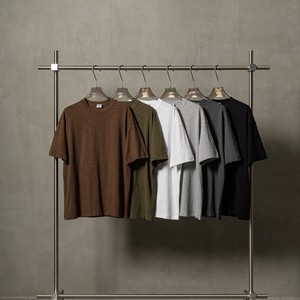
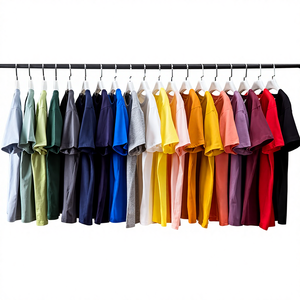

A comprehensive guide for procurement leads, fashion brand owners, and commercial buyers sourcing custom apparel for the Moscow metropolitan region and broader Eurasian markets.
The apparel retail landscape in Moscow is experiencing a profound structural evolution. With traditional European supply routes undergoing reconfiguration, local apparel brands, marketplace sellers on Wildberries, Ozon, and Lamoda, as well as offline retail hubs (such as GUM, TSUM, and wholesale trade hubs like Sadovod and Tyak Moskva) require agile direct-to-factory manufacturing partners. Importing finished garments into the Central Federal District demands higher precision regarding textile specifications, thermal performance grades, and regulatory compliance.
Modern Russian apparel buyers no longer rely on rigid off-the-shelf wholesale stocks. Instead, there is a distinct surge in demand for Contract Cut-and-Sew OEM/ODM Manufacturing. Fashion labels require suppliers who can engineer heavy knitted fabrics (250–500 GSM), perform custom lab-dips for seasonal color palettes, and handle complex decorations (such as high-density 3D puff embroidery and screen printing) while offering flexible Minimum Order Quantities (MOQs starting at 50 pieces).
Moscow’s continental climate presents unique technical challenges for garment construction. Winters regularly fall below -15°C to -30°C, requiring heavyweight thermal layering, whereas summers demand breathable, moisture-wicking knits. Apparel engineered for this region must meet strict fabric integrity standards:
Exporting apparel into Moscow and the Russian Federation requires strict adherence to the Technical Regulations of the Customs Union (TR CU 017/2011 "On Safety of Light Industry Products"). As an experienced apparel manufacturer, Tack Apparel partners with buyers to ensure all export runs are compliant with EAC certification standards.
From material safety and colorfastness tests to detailed garment labeling (including fiber content percentages, care instructions in Russian, and country-of-origin markings), our manufacturing processes integrate seamlessly with Moscow import documentation. Furthermore, garment packaging can be customized with data-matrix sticker positions to facilitate smooth onboarding into the Chestny ZNAK digital track-and-trace monitoring system.
How our tailored garment lines solve practical challenges across key commercial sectors in the Moscow capital region.
Drop-model streetwear brands in Moscow require heavyweight, boxy-fit hoodies (450+ GSM) and drop-shoulder T-shirts (250 GSM). Our low 50-piece MOQ allows fast-turnaround capsule launches to capitalize on trending street culture aesthetic without tying up capital in excessive inventory.
Top sellers on Wildberries and Ozon face intense price-to-quality scrutiny. We provide pre-packed, barcode-labeled, private-label lines with standardized GOST size curves (42–56), guaranteeing low defect rates and minimizing return frequencies on digital storefronts.
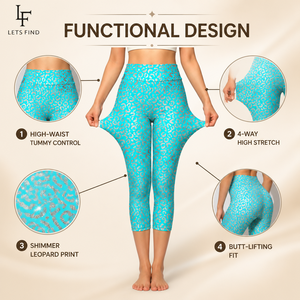
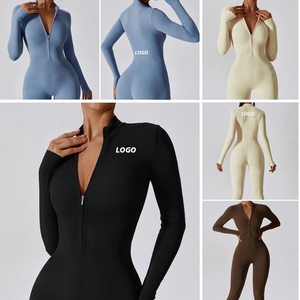
With Moscow’s thriving indoor gym and studio culture, demand for high-waist tummy control leggings and one-piece bodysuits is constant. Our double-brushed spandex blends keep athletes warm during sub-zero commutes while offering high-compression performance indoors.
Strategic dynamics shaping how commercial buyers manage vendor selection and production scaling.
Importers in Moscow are shifting away from ready-made stock buying towards direct tech-pack development. Brands are taking complete ownership of their specification sheets (BOM, measurement charts, grading rules). Tack Apparel’s dedicated design room converts raw sketches and reference samples into digital CAD tech packs, giving Moscow brands complete control over garment geometry and fit consistency across repeat orders.
The Russian consumer market shows a marked preference for tactile quality. Standard 140 GSM light cottons are rapidly being replaced by 220–260 GSM single jerseys for summer tees, while fleece garments standardise at 380–500 GSM. Finishes such as silicone bio-washing, pigment garment dyeing, acid washes, and puff screen printing are becoming standard baseline requirements for high-margin retail collections.
Understanding the trade-offs between local open-market stock procurement and dedicated OEM cut-and-sew production for Moscow brands.
| Evaluation Vector | Local Wholesale Stock (e.g. Open Markets) | Tack Apparel OEM/ODM Custom Manufacturing |
|---|---|---|
| MOQ & Flexibility | Bulk packs only; rigid size ratios | 50 pcs per design; flexible size/color splits |
| Branding & Private Label | Generic tags; costly re-labeling required | 100% Private Label (custom woven neck tapes, hangtags) |
| Fabric Weight & Specs | Unspecified GSM; prone to batch variance | Exact Fabric GSM (180–500 GSM), lab-dip approved colorways |
| Quality Control Standard | No formal inspection; variable defect rates | 4-Stage AQL 2.5 Inspection with photo & measurement reports |
| Compliance Readiness | Undocumented origin; EAC compliance gaps | Full Compliance Support for EAEU customs & Chestny ZNAK |
| Pattern & Sizing Fit | Standard Asian sizes (frequently runs small) | Custom GOST / European Sizing Curves graded to spec |
Over 12 years of garment engineering expertise backing every stitch, seam, and shipment.
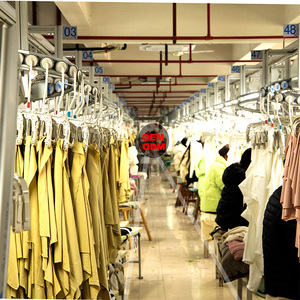
From raw roll cutting to precision marker efficiency planning, our cut-and-sew lines handle jersey, heavy fleece, woven twills, elastane activewear, and denim. We convert complex tech packs into repeatable, retail-ready garments.
Zero compromises on product standards. We enforce incoming raw fabric inspection, in-line stitching audits, spec-sheet measurement checks, and final pre-packing AQL inspection before sealing export cartons.
Equipped with state-of-the-art automatic screen printing presses, high-density 3D puff embroidery, DTF digital transfers, and sublimation printing. All prints undergo stretch-recovery and multi-wash adhesion testing.
Answers to common operational, regulatory, and logistics queries from Russian apparel importers and brand managers.
Our standard baseline MOQ is 50 pieces per design. This can be split across multiple sizes (e.g., S through XXL) and up to two colorways. For specialized product categories like custom wash denim or heavy outerwear, MOQs start at 100 pieces due to dye-house minimum lot sizes.
First proto sampling takes between 7 and 12 working days following approval of the tech pack and fabric swatches. Once pre-production samples are signed off, bulk production takes 15 to 30 working days depending on order volume and decoration complexity. Express air freight to Moscow typically takes an additional 7–10 days.
Yes. Our pattern-making team regularly develops custom grade rules aligned with Russian GOST measurement specifications (e.g., sizes 42, 44, 46, 48, 50, 52, 54+). Alternatively, we can follow your custom brand size charts or reference sample garments.
We provide full technical documentation for fabric compositions, thread densities, safety test reports, and commercial invoices required for EAC (TR CU 017/2011) compliance. We can also print and attach compliant Russian-language care tags and barcode stickers prior to export dispatch.
Absolutely. Every order includes options for custom woven or printed neck labels, satin care/content tags, custom hangtags, size stickers, and printed eco-friendly polybags so garments arrive 100% retail-ready for your Moscow distribution network or marketplace fulfillment centers.
For winter hoodies and trackpants, we strongly recommend 380 to 500 GSM heavyweight cotton fleece or French terry. For streetwear T-shirts, 220 to 250 GSM heavy jersey provides the ideal structure and durability for cold-weather layering.
Connect with our senior apparel engineering team to discuss tech packs, fabric swatches, custom quotations, and fast-track sampling for your next collection.
Send an Inquiry